Written by

Eric
Author from Zeitro

Share this article

Subscribe to updates

Thank you! Your submission has been received!
Oops! Something went wrong while submitting the form.

If you are dreaming of a zero-down-payment home in a rural or suburban area, finding the right lender is half the battle. I remember how overwhelmed I felt comparing rates, hidden fees, and strict government guidelines when I first started in real estate. To save you time, I have analyzed the USDA's 2025 SFH lender rankings and cross-referenced them with current market data to bring you the absolute best USDA loan lenders of 2026.

Choosing a knowledgeable partner dictates your approval odds and closing speed. However, if you want to skip the tedious research entirely, you can simply use Bluerate's AI Chat. It is the most effortless way to instantly match with the perfect local loan officer tailored to your unique financial situation.

10 Top USDA Home Loan Lenders to Pick

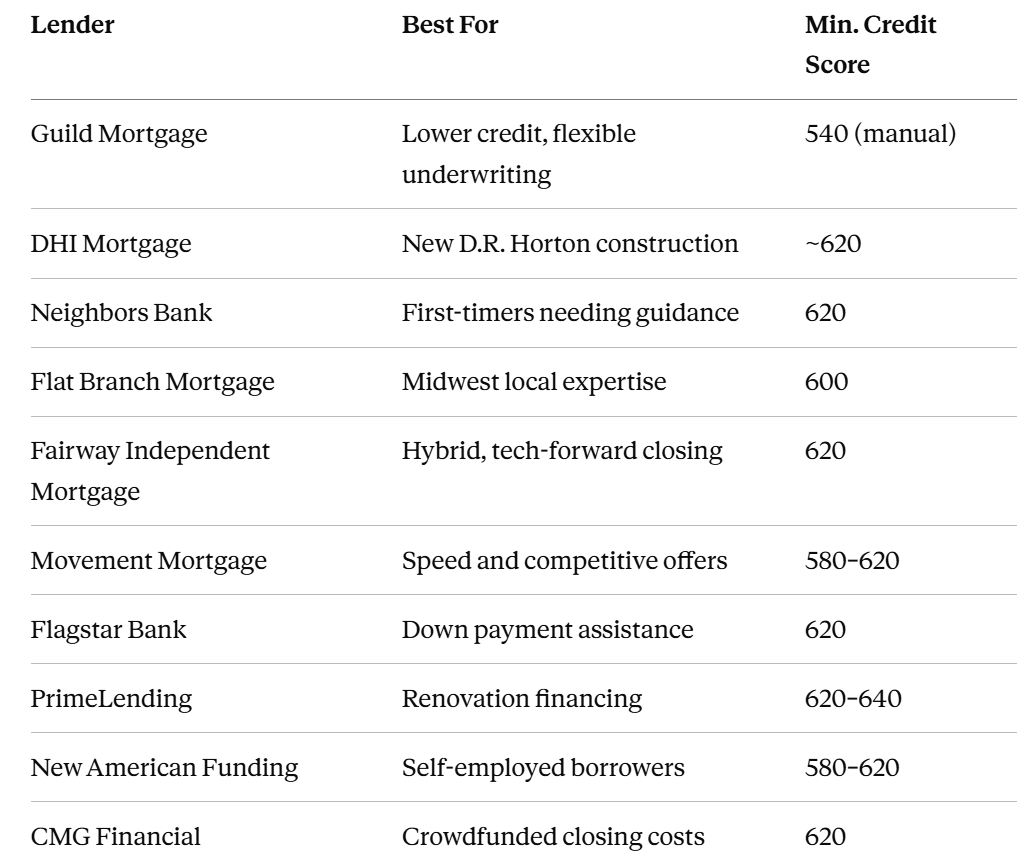
How did I narrow down hundreds of mortgage companies to just 10 top-tier picks? By evaluating their processing speed, dedicated rural housing expertise, minimum credit requirements, and customer satisfaction. Here is my carefully curated list of the best USDA lenders you should seriously consider this year.

Also Read: How to Check Mortgage Eligibility? Quick and Accurate with Sources

#1. Guild Mortgage

NMLS: 3274

Best for: First-time homebuyers with lower credit scores seeking flexible underwriting.

Min. Credit Score: 540 with manual underwriting or 640 for automated approval.

Guild Mortgage consistently ranks at the top of the USDA's own origination volume list, and for good reason. From my experience reviewing their loan products, their deep expertise in rural housing really stands out. They actively work with borrowers who have less-than-perfect financial histories, offering a pathway to homeownership when other banks say no.

I highly recommend them because their loan officers actually understand the complex nuances of USDA guidelines rather than treating them as an afterthought.

Guild Mortgage

Pros:

  • Accepts credit scores as low as 540 through specialized manual underwriting.
  • Allows alternative credit data like rent or utility payment history.
  • Nationwide network of local branches provides excellent face-to-face assistance.
  • In-house processing generally leads to faster, more predictable closing times.

Cons:

  • Specific mortgage rates are not transparently published on their website.
  • Origination fees can occasionally run slightly higher than the national average.
  • The digital application process eventually requires a phone call to proceed.

#2. DHI Mortgage

NMLS: 14622

Best for: Buyers purchasing a brand-new construction home through D.R. Horton.

Min. Credit Score: Not publicly listed, but typically around 620.

As the captive, in-house lender for D.R. Horton, one of America's largest homebuilders, DHI Mortgage is a massive player in the rural housing space. If you are buying a newly built property in an eligible suburban or rural subdivision, keeping your financing and construction under one roof makes the transaction incredibly smooth. I included them because their seamless coordination prevents the usual frustrating delays that occur when third-party lenders wait on builder documents.

DHI Mortgage

Pros:

  • Streamlined financing experience if you are buying a D.R. Horton constructed home.
  • Frequently offers generous seller incentives, like rate buydowns or covered closing costs.
  • Robust online portals allow you to track your new build and loan status simultaneously.
  • Deep knowledge of USDA new-construction property eligibility requirements.

Cons:

  • Only practical if you are purchasing a specific D.R. Horton property.
  • Not the right fit for buyers looking at existing, older rural homes.
  • Customer service reviews are mixed and highly dependent on your local branch.

#3. Neighbors Bank

NMLS: 491986

Best for: Borrowers needing educational resources and dedicated USDA loan specialists.

Min. Credit Score: 620.

Neighbors Bank is an absolute powerhouse when it comes to government-backed mortgages, specifically catering to rural and suburban markets. When I researched their platform, I was thoroughly impressed by their comprehensive educational guides that walk you through complex property eligibility maps and income limits.

They made my list because they do not just process applications. They provide free credit consulting to help you actually qualify. This makes them a fantastic partner for anyone feeling intimidated by the process.

Neighbors Bank

Pros:

  • Highly specialized in USDA lending, ensuring fewer processing hiccups or denials.
  • Offers free credit coaching if your score falls below their minimum threshold.
  • Excellent customer service with a reputation for hand-holding through the paperwork.
  • 100% digital application and secure document upload system.

Cons:

  • Limited physical branch footprint. Operations are mostly handled online or over the phone.
  • Their standard credit minimum of 620 is slightly stricter than a few competitors.
  • Origination and processing fees can vary significantly based on your home's state.

#4. Flat Branch Mortgage

NMLS: 224149

Best for: Midwest homebuyers looking for hyper-local market expertise.

Min. Credit Score: 600.

Established in Missouri and dominating the Midwest, Flat Branch Mortgage is an employee-owned company that truly understands rural communities. They frequently secure top rankings in states like Missouri, Kansas, and Illinois for their USDA origination volume.

I love their community-focused approach. Their loan officers live in the areas they serve, which is crucial when verifying rural property boundaries. I recommend them if you want a regional expert who treats you like a neighbor rather than just another application number.

Flat Branch Mortgage

Pros:

  • Exceptional localized knowledge of Midwest rural property markets and guidelines.
  • Minimum credit score of 600 provides great flexibility for average buyers.
  • Strong commitment to community service and affordable housing initiatives.
  • Consistently fast closing times due to localized, in-house underwriting teams.

Cons:

  • Geographic availability is limited. They do not operate in every U.S. state.
  • Their website lacks advanced rate-comparison tools prior to officially applying.
  • Not ideal if you prefer the vast resources of a nationally recognized banking institution.

#5. Fairway Independent Mortgage

NMLS: 2289

Best for: Buyers wanting a smooth, hybrid closing process with cutting-edge tech.

Min. Credit Score: 620.

Fairway Independent Mortgage Corporation is a giant in the mortgage industry, and their volume of USDA loans is consistently in the national top five. From my perspective, their biggest advantage is how they blend modern technology with local branch support.

Their highly-rated mobile app allows you to track your zero-down loan progress in real-time. I added them to this list because they have the vast resources and hybrid closing options to push complex rural housing files across the finish line quickly.
Fairway Independent Mortgage

Pros:

  • User-first mobile app makes uploading documents and checking statuses totally effortless.
  • Offers convenient hybrid and fully digital e-closing options.
  • Massive national footprint means you can easily find a local loan officer.
  • Known for hitting closing dates accurately without last-minute document surprises.

Cons:

  • Interest rates are not displayed online. You must speak directly to a representative.
  • Can have stricter automated underwriting overlays compared to smaller, boutique brokers.
  • The sheer size of the company can sometimes make the process feel slightly impersonal.

#6. Movement Mortgage

NMLS: 39179

Best for: Buyers who need lightning-fast underwriting and quick closing times.

Min. Credit Score: 620 or 580 with strong compensating factors.

Movement Mortgage revolutionized the lending industry with their goal to underwrite in hours, process in days, and close rapidly. When you are competing for a home, this speed is an incredible advantage. They do a phenomenal job with USDA loans, bypassing the sluggish timelines typically associated with government mortgages. I recommend them if you are in a competitive real estate market where sellers might otherwise be hesitant to accept a zero-down-payment offer due to perceived delays.

Movement Mortgage

Pros:

  • Industry-leading processing speeds that can help your purchase offer stand out.
  • Upfront underwriting means you get full approval before you even find a house.
  • Invests a significant portion of their profits back into community foundations.
  • Willing to review manual underwrites down to a 580 score on a case-by-case basis.

Cons:

  • Mortgage rates and specific fee structures are completely hidden from their website.
  • Origination fees tend to be slightly higher than the national average.
  • The ultra-fast pace can feel a bit overwhelming for borrowers who prefer a slower approach.

#7. Flagstar Bank

NMLS: 417490

Best for: First-time buyers seeking down payment assistance and banking convenience.

Min. Credit Score: 620.

Flagstar Bank is a well-established traditional institution that excels in government-backed lending. What caught my attention is their "Destination Home" program, which pairs beautifully with USDA financing to help low-to-moderate-income families cover remaining closing costs.

Because they are a full-service bank, they have the infrastructure to support buyers through every single step. I included Flagstar because they offer the stability of a major bank while remaining highly competitive with their specialized rural housing division.

Flagstar Bank

Pros:

  • Excellent integration with state-level grants and closing cost assistance programs.
  • Operates in all 50 states with a solid mix of online and in-person branch support.
  • As a traditional bank, you can easily manage your mortgage alongside checking accounts.
  • Generally offers competitive, below-average interest rates for qualified applicants.

Cons:

  • Stricter adherence to standard credit requirements. Does not accept alternative credit data.
  • Origination fees can be higher compared to non-bank independent mortgage brokers.
  • Customer service can sometimes feel bureaucratic due to the bank's large corporate size.

#8. PrimeLending

NMLS: 13649

Best for: Buyers looking to finance home renovations into their USDA purchase.

Min. Credit Score: 620 or 640 for automated approval.

PrimeLending is an established national lender that brings exceptional versatility to the table. In my analysis, their standout feature is their deep expertise in renovation loans, which is perfect if you find an affordable rural property that needs a little TLC.

Their loan officers are highly trained in structuring complex government files. I highly recommend them because they give you the flexibility to transform a fixer-upper into your dream home using a single, manageable mortgage.

PrimeLending

Pros:

  • Incredible variety of loan options, including specialized renovation combinations.
  • Over 300 branch locations nationwide for personalized, face-to-face guidance.
  • Typically closes loans faster than the 40-day mortgage industry average.
  • Features a transparent, educational website that helps demystify the mortgage process.

Cons:

  • Does not openly publish minimum credit scores or interest rates online.
  • Origination fees may be slightly more expensive than strictly online discount lenders.
  • Their digital portal is functional but feels slightly less modern than some tech-first competitors.

#9. New American Funding

NMLS: 6606

Best for: Self-employed individuals and borrowers with non-traditional income streams.

Min. Credit Score: 620 with exceptions down to 580.

New American Funding is a family-owned company known for its incredibly inclusive lending practices. I have always appreciated their manual underwriting capabilities, which specifically benefit gig workers, freelancers, and minority homebuyers who might not fit the traditional W-2 mold.

When it comes to USDA loans, their team takes the time to manually verify complex income situations rather than instantly rejecting them via an automated system. I selected them because they genuinely advocate for underrepresented rural homebuyers.

New American Funding

Pros:

  • Exceptional manual underwriting team that understands complicated self-employed tax returns.
  • Strong focus on diversity, bilingual support, and minority homeownership initiatives.
  • Services the majority of their own loans, meaning your account will not be sold constantly.
  • Offers a highly rated mobile app for seamless document and account management.

Cons:

  • Can have slightly longer processing times due to detailed manual financial reviews.
  • Their customized approach sometimes results in higher upfront lending fees.
  • Current interest rates are not explicitly advertised without submitting personal contact information.

#10. CMG Financial

NMLS: 1820

Best for: Homebuyers wanting to crowdsource their closing costs safely.

Min. Credit Score: 620.

CMG Financial is an innovative lender that constantly pushes the boundaries of traditional mortgages. While USDA loans require zero down payment, closing costs can still be a massive hurdle. CMG solves this with their proprietary "HomeFundIt" platform, a compliant crowdfunding tool that lets friends and family contribute to your home purchase without triggering underwriting red flags.

I added them to this top 10 list because this unique feature, combined with their strong USDA knowledge, provides a brilliant solution for cash-strapped buyers.

#10. CMG Financial

Pros:

  • Exclusive HomeFundIt platform makes raising closing cost funds easy and completely legal.
  • Excellent customer satisfaction ratings and transparent communication throughout the process.
  • Highly competitive interest rates across their government-backed loan portfolio.
  • Knowledgeable staff who are well-versed in complex rural property boundaries.

Cons:

  • The standard 620 credit minimum lacks the deep flexibility of lenders like Guild.
  • They operate primarily as a retail lender, so physical branches are limited in some states.
  • Their myriad of proprietary programs can feel slightly confusing for a novice buyer.

How to Choose the Best USDA Mortgage Lender?

Selecting the perfect lender is just as crucial as finding the right house. Based on my experience, you should not just look at a familiar brand name. You need to evaluate specific, tangible metrics.

  • USDA Expertise: Government loans are notoriously quirky. Ensure the loan officer specifically specializes in USDA property eligibility and local income limits to prevent a heartbreaking last-minute denial.
  • Rates & Fees: Always compare origination fees. While USDA base interest rates are generally low across the board, individual lender fees can vary by thousands of dollars.
  • Processing Time: USDA files require dual approval from both the lender and the regional government office. Always ask the lender for their average closing timeline.

If you do not want to spend hours manually comparing these tedious factors, Bluerate AI Chat can do the heavy lifting. In just minutes, it analyzes your profile and connects you with a vetted, top-performing USDA expert.

FAQs About USDA Loan Lenders

Q1. Are there any downsides to a USDA loan?

Yes, there are strict limitations. You must buy a home in a designated rural or suburban area, and your household income cannot exceed 115% of the area's median income. Additionally, you are required to pay an upfront guarantee fee and an annual fee.

Q2. What is the 20% rule for USDA?

This refers to a common misconception about down payments. Unlike conventional mortgages that often require 20% down to avoid private mortgage insurance (PMI), a USDA loan requires 0% down. However, you will still pay a government guarantee fee regardless of your equity.

Q3. Is USDA or FHA better?

It depends entirely on your location and cash reserves. USDA is better if you are buying in an eligible rural area because it requires zero down payment. FHA is better for city properties or borrowers with very low credit scores, but requires 3.5% down.

Q4. Do all mortgage lenders offer USDA loans?

No, they do not. Only lenders explicitly approved by the U.S. Department of Agriculture can originate and underwrite these specific guaranteed mortgages. This is exactly why checking a specialized list of certified top-tier USDA lenders is essential before starting your application.

Q5. Can I get a USDA loan with a 580 credit score?

Yes, it is possible but definitely challenging. While automatic approval typically requires a 640 score, certain lenders will allow scores down to 580 through a rigorous manual underwriting process. You will need strong compensating factors, like a low debt-to-income ratio or high cash reserves.

Conclusion

Securing a zero-down mortgage does not have to be a stressful, confusing ordeal. Finding the best lender for USDA home loans ultimately depends on your specific credit score, location, and financial goals.

  • If you need maximum flexibility, Guild Mortgage is my top overall pick.
  • For those building a new suburban home, DHI Mortgage offers unbeatable convenience.
  • Meanwhile, Neighbors Bank is excellent for first-timers needing patient guidance.

People Also Read

Keep reading

What is Mortgage Underwriting? A Complete Guide & FAQs

Blog

5 min read
Arrow icon on dark background
What is Mortgage Underwriting? A Complete Guide & FAQs
What is mortgage underwriting? Learn the timeline, the 4 C's underwriters look for, and actionable tips to get your home loan approved faster.

During my years in the mortgage industry, I've seen countless homebuyers bite their nails while waiting for their loan to be approved. If you're a buyer, that waiting period can feel agonizing. This crucial phase is known as mortgage underwriting. I'm writing this guide to demystify the process so you know exactly what to expect.

But while buyers wait anxiously, lenders are actually working incredibly hard behind the scenes. For loan officers and underwriters looking to streamline this complex workflow, modern Loan Origination Systems (LOS) like Zeitro offer unparalleled efficiency and transparent tracking, ensuring a smoother, faster experience for everyone involved.

What is Underwriting for a Home Loan?

So, what exactly is underwriting for a home loan? In simple terms, it is the process where a financial institution evaluates the risk of lending you money. Think of it as a final financial health check. In the homebuying timeline, underwriting typically begins after your offer is accepted, with the full review often occurring after the home appraisal is completed, as the appraisal report is needed, but right before the final closing day.

Why do we even need this step? It comes down to protecting both sides. As a lender, we need to ensure the borrower won't be burdened with a massive debt they simply cannot afford to pay back. At the same time, the bank needs to protect itself from making a bad investment. The core concept here is risk assessment. The underwriter's job is to verify that the information you put on your application is completely true and that you are a reliable candidate for a mortgage.

Decisions from Mortgage Underwriting

After reviewing your file, the underwriter will issue a decision. In my experience, waiting for this verdict is the most nerve-wracking part, but understanding the possible outcomes helps ease the anxiety. Here are the four potential decisions:

  • Approved: Congratulations! Your loan has smoothly passed all checks.
  • Denied: The lender rejected the application, typically due to a high debt-to-income ratio or a severely low credit score.
  • Suspended: The file is paused. This usually means a key document is missing, but it can often be fixed easily.
  • Approved with Conditions: The lender conditionally approves you but needs a bit more information (like a recent pay stub or a letter explaining a large deposit).

Don't panic if you don't get a flat-out "Approved" right away. Approved with Conditions is actually the most common scenario I see on a daily basis.

What is Underwriting for a Home Loan?

What is an Underwriter Looking for?

When I evaluate an application, I don't just look at one single number. We look at your overall financial health using the industry-standard "4 C's" framework. Here is what an underwriter is actually looking for:

  • Capacity (Your ability to repay): We analyze your income, employment history, and current debts. The key metric here is your Debt-to-Income (DTI) ratio. We need to be confident that your monthly income can comfortably cover the new mortgage payment on top of your existing student loans or car payments.
  • Credit (Your track record): This goes beyond just pulling your credit score. We review your entire credit history and credit report. I'll look for any history of bankruptcies, foreclosures, or a pattern of late payments.
  • Capital (Your cash reserves): This covers your savings and assets. We verify that your down payment comes from a legitimate source (to prevent money laundering). We also check if you have enough emergency savings, often called reserves, left over after paying your closing costs.
  • Collateral (The property itself): The home you are buying acts as the collateral. We require a home appraisal to ensure the property's market value is at least equal to the loan amount. We also verify that you have adequate insurance coverage.
What is an Underwriter Looking for?

What is the Underwriting Process for a Home Loan?

The journey from application to closing day involves several moving parts. Here is the step-by-step underwriting process you will typically experience:

STEP 1. Application is reviewed: Your initial financial documents, such as your W-2s, bank statements, and tax returns, are gathered and passed to the underwriting team for a preliminary look.

STEP 2. Appraisal is ordered: We order an independent home appraisal to confirm the property's fair market value and ensure it meets basic safety standards.

STEP 3. Title search: A title company investigates the property's history to guarantee there are no hidden liens, unpaid taxes, or ownership disputes.

STEP 4. Underwriting review: This is the core risk assessment phase. The underwriter scrutinizes the "4 C's" mentioned above, verifying every single detail of your financial profile.

STEP 5. Final decision/Clear to Close: Once all conditions are met and the underwriter is fully satisfied, you receive the magical "Clear to Close" status, meaning you are ready to sign the final papers.

What is the Underwriting Process for a Home Loan?

Tips to Improve the Chance of Being Approved

Based on my firsthand experience guiding clients through this maze, the best strategy during the underwriting phase is simply to maintain the status quo. Here are my top actionable tips to keep your approval on track:

  • Respond quickly: If your underwriter asks for an updated bank statement, try to send it the exact same day. Delays on your end will definitely delay your closing.
  • Don't apply for new credit: This is a major red flag. Never finance a new car, buy expensive furniture on credit, or apply for a new credit card while your mortgage is being processed.
  • Keep your job stable: Avoid changing jobs, quitting, or altering your pay structure, like switching from a stable salary to commission-only, until after you have the keys.
  • Document large deposits: If a sudden $5,000 appears in your checking account, you must provide a solid paper trail showing exactly where that money came from.

How Long Does Mortgage Underwriting Take?

You can generally expect the specific underwriting review phase to take anywhere from 3 to 7 business days, though it can sometimes stretch into a few weeks. Recent data from ICE Mortgage Technology shows the average time to close a new-purchase loan in the U.S. is typically around 42 to 45 days overall with variations by month and year. The actual timeline heavily depends on a few factors: the complexity of your finances, how complete your documents are, and the current housing market volume. Ultimately, your responsiveness dictates the speed. The faster you submit the requested paperwork, the quicker we can clear your loan.

FAQs About Home Loan Underwriting

Q1. What are red flags for underwriters?

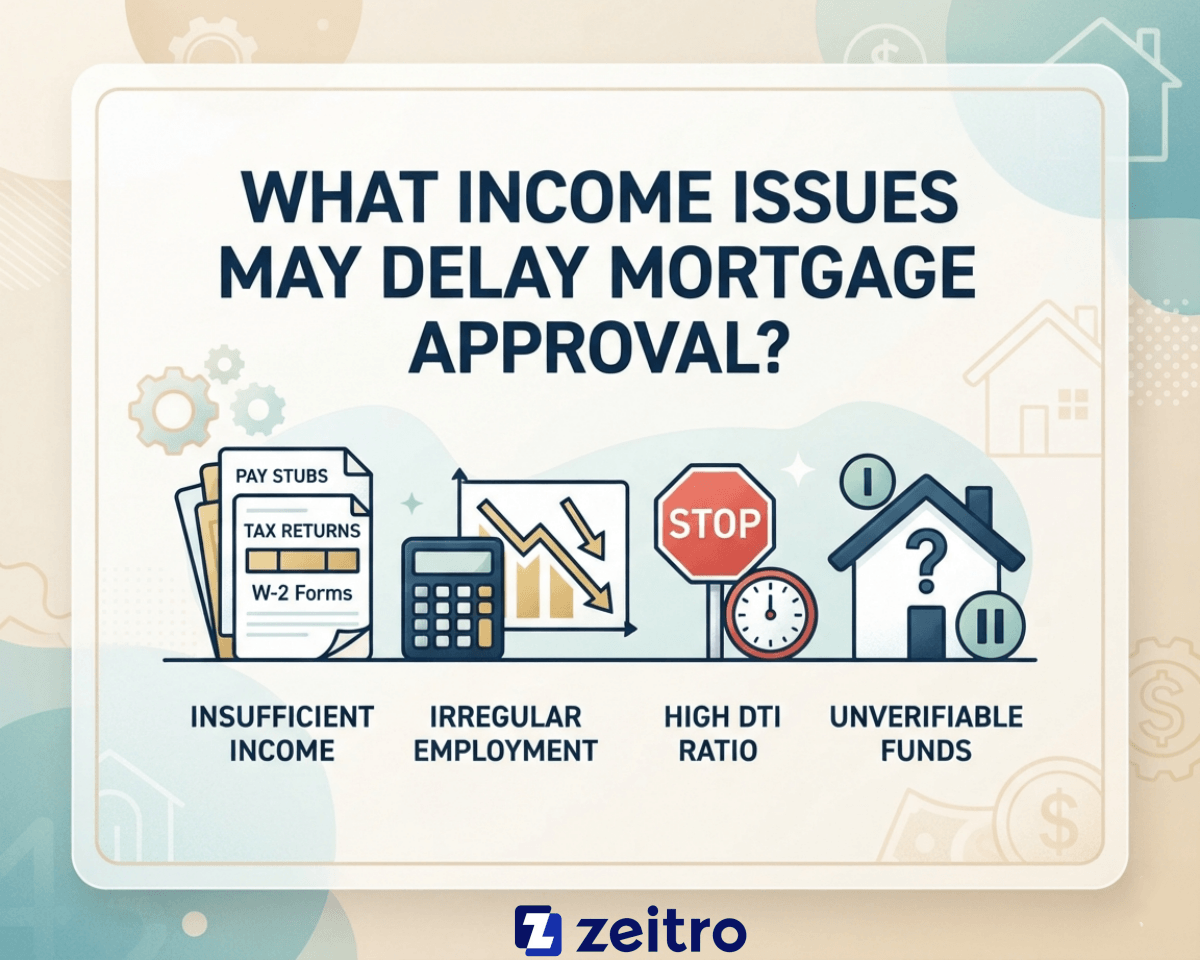
The biggest red flags I watch out for include undisclosed debts, sudden large and unexplained bank deposits, recent late payments, frequent credit inquiries, or a change in your employment status right before closing. We want to see total financial consistency.

Q2. Is underwriting the last step before closing?

Yes, essentially. Once the underwriter completes their final review and issues a "Clear to Close," the heavy lifting is done. You will then receive your Closing Disclosure, wait a mandatory three-day period, and proceed to sign your final contracts.

Q3. Does underwriting mean a loan is approved?

No, entering the underwriting phase does not guarantee an approval. It is merely the evaluation process itself. The outcome could be an approval, a denial, or an "Approved with Conditions" status, which means you still need to provide supplementary documentation.

Q4. What happens after underwriting approval?

After securing final approval, the lender will generate a Closing Disclosure (CD) that details your exact loan terms and costs. You will then enter a mandatory three-day cooling-off period to review these terms before attending your final closing appointment.

Q5. Can you be denied in underwriting?

Absolutely. Even if you hold a solid pre-approval letter, the underwriter can still deny your formal loan application. This usually happens if they uncover hidden debts, if your income unexpectedly drops, or if the property appraisal comes in unacceptably low.

Q6. Automated vs. Manual Underwriting: What's the difference?

Automated underwriting uses algorithms to quickly assess your standard application and suggest a decision. Manual underwriting requires a human expert to evaluate your documents personally. This slower method is often used for borrowers with complex finances or non-traditional income streams.

Conclusion

To sum it up, while mortgage underwriting might sound intimidating, it really isn't a process you should fear. As long as you are honest about your finances and respond to requests quickly, it is just a standard step on your path to homeownership.

However, I also know firsthand that the underwriting process shouldn't be a black box for the professionals managing it. For mortgage professionals, loan officers, and lenders, upgrading to a modern Loan Origination System makes all the difference. Discover how Zeitro can automate workflows, dramatically improve decision-making speed, and provide seamless transparency from the initial application right through to closing. Don't let outdated tech slow down your approvals—book a demo with Zeitro today!

People Also Read

USDA Mortgage Explained: Definition, Requirements, Application

Blog

5 min read
Arrow icon on dark background
USDA Mortgage Explained: Definition, Requirements, Application
Looking for a 0% down payment mortgage? Learn USDA loan requirements, income limits, and application steps. Check your eligibility easily with Zeitro Strata AI.

When I first looked into buying a house, I assumed I needed a massive pile of cash. Then I discovered the USDA loan, one of the best zero-down-payment options available for low-to-moderate-income families buying in rural and suburban areas.

But figuring out if you qualify can feel like solving a complex puzzle. From strict income caps to hyper-specific eligible locations, the rules are rigid. Luckily, you don't have to guess. You can use Zeitro Strata AI to instantly and accurately verify your mortgage eligibility. In this guide, I'll walk you through exactly what this program is, how it works, and how to get approved.

What Does USDA Stand for?

USDA stands for the United States Department of Agriculture. You might wonder why an agriculture department handles mortgages. It's simple: their core mission here is to boost economic growth and improve the quality of life in rural and suburban communities. By backing these mortgages, the government encourages people to settle outside of heavily populated, expensive urban centers.

What is a USDA Loan?

A USDA loan (often referred to as the Section 502 loan program) is a government-backed mortgage designed to help lower- and moderate-income Americans buy homes. Because the government insures a portion of the borrowed amount, private lenders feel completely safe offering 100% financing. That means you can buy a house without putting a single penny down.

When I talk to prospective buyers, their biggest misconception is thinking "rural" means buying a working farm or living miles from civilization. That's simply not true! Many quiet suburbs, small towns, and developments just outside major cities easily qualify. It's an incredible tool for ordinary families who want an affordable path to homeownership without draining their savings accounts.

What is a USDA Loan?

Types of USDA Loans

Not all of these mortgages are exactly the same. Depending on your financial situation, you'll typically look at three distinct options:

  • USDA Guaranteed Loans: This is the most common type. Private lenders issue the funds, and the government guarantees them. It's built for moderate-income buyers who want zero down payment.
  • USDA Direct Loans: Issued directly by the government rather than a bank. This version is strictly for low- and very-low-income applicants who cannot secure traditional financing anywhere else.
  • USDA Home Improvement Loans and Grants: Need a new roof or structural fixes? These funds help homeowners, especially elderly individuals, repair, upgrade, or modernize their existing properties to remove health and safety hazards.

Features of USDA Loans

What makes this mortgage so attractive? Here are the standout features I always highlight to homebuyers:

  • No Down Payment: You get true 100% financing, keeping your savings intact.
  • Competitive Interest Rates: Because of the government backing, lenders can offer slightly lower rates than conventional loans.
  • Upfront Guarantee Fees: 1% of the loan amount, which can be financed into the loan.
  • Annual Guarantee Fee: 0.35% of the remaining principal balance, paid monthly as part of the mortgage payment.
  • Primary Residence Only: You cannot use this program to buy a vacation cabin, a rental duplex, or an investment property. You must live in the house.

How Does a USDA Loan Work?

The way this system works is remarkably straightforward once you look under the hood. For the popular Guaranteed program, the government doesn't actually lend you the cash. Instead, the USDA provides a 90% loan note guarantee to approved lenders, covering up to 90% of the guaranteed portion of the loan in case of default.

Because the bank has this massive safety net, their risk drops dramatically. That reduced risk is exactly why they are willing to hand over a mortgage with zero down payment and a low interest rate to someone whose credit score might not be perfect. The USDA Loan lender provides the capital, the government provides the insurance, and you get the keys to your new home.

USDA Loan Requirements

To get approved for a USDA loan, you have to meet strict guidelines covering both your personal financial profile and the physical property.

  • Income Limits: This program is strictly for low-to-moderate earners. Your total household income cannot exceed 115% of the area's median income. For 2026, standard limits generally sit at $119,850 for a family of 1-4, and $158,250 for 5-8 members. Keep in mind, this includes the income of everyone living in the house, even if they aren't on the actual mortgage application.
  • Credit Score: While the government doesn't set a hard minimum, most private lenders look for a 640 FICO score to run your file through automated approval systems.
  • DTI Ratio: USDA has no strict official DTI limits, but lenders typically prefer a front-end ratio of 29% (housing costs) and back-end ratio of 41% (total debts). Higher ratios may be approved with compensating factors. That means no more than 29% of your gross monthly income goes toward housing, and 41% toward total debts.
  • Location: The house must sit within a designated eligible rural or suburban zone.
USDA Loan Requirements

Pros and Cons of USDA Loans

Every mortgage product has trade-offs. To give you a realistic picture, here is an objective look at the advantages and disadvantages.

Pros

  • Zero Down Payment: Keep your cash in the bank for emergencies, moving costs, or new furniture.
  • Cheaper Mortgage Insurance: The 0.35% annual fee is usually much lower than standard FHA mortgage insurance or conventional PMI.
  • Competitive Rates: Enjoy lower interest rates thanks to federal backing.

Cons

  • Strict Income Caps: If you get a big promotion or raise, you might suddenly make too much money to qualify.
  • Geographic Restrictions: You absolutely cannot buy a house in major metropolitan centers.
  • Slower Closing Times: Because both the lender and the government have to sign off on the file, the underwriting process can occasionally take longer.

How to Get a USDA Loan?

Ready to move forward? The application process takes a little patience, but following these practical steps will keep you on track:

Step 1: Check your eligibility. Before falling in love with a house, confirm your income and target geography align with the rules. Again, plug your numbers into Zeitro Strata AI for a fast, accurate assessment.

Step 2: Find an approved lender. Not every bank offers these mortgages. Look for lenders who specialize in government-backed rural loans using Bluerate AI Agent so they can navigate the specific paperwork efficiently.

Step 3: Get pre-approved. Your lender will pull your credit, review your W-2s, and give you a pre-approval letter. This tells you your maximum purchase budget.

Step 4: Find a qualified property. Work with a real estate agent who understands the mapping restrictions to find a home that meets the safety and location standards.

Step 5: Apply and close. Once your offer is accepted, your lender finalizes the underwriting. After the federal office gives the final thumbs-up, you sign the papers and get the keys!

How to Get a USDA Loan?

USDA Loan VS FHA Loan

When trying to buy a house with minimal cash, most people weigh the USDA against the FHA program. The biggest difference is that FHA loans are available anywhere in the country but require a 3.5% down payment, whereas USDA loans offer zero down but limit where you can live and how much you can earn. I always tell buyers: if you want to live in a suburb and meet the income caps, the agricultural department's option is cheaper overall. If you want city life or have higher earnings, FHA is the way to go.

Here is a quick breakdown to help you compare:

USDA Loan VS FHA Loan

FAQs About USDA Loans

Q1. Are USDA loans hard to qualify for?

No, they aren't inherently difficult to secure. However, they do have strict geographic boundaries and firm household income caps. As long as you meet those two unique hurdles, the actual credit score and debt-to-income requirements are quite reasonable. A 640 score usually ensures smooth sailing.

Q2. Is USDA better than FHA?

There is no absolute winner. It depends entirely on your situation. If you are buying in an eligible suburban area and want to save cash, the USDA is better because of the zero down payment and cheaper fees. However, if you earn a high salary or prefer city living, FHA is the clear choice.

Q3. What is the maximum income for a USDA loan?

The maximum limit usually cannot exceed 115% of your specific local area's median income. For 2026, standard regions cap out at $119,850 for households of up to four people, and $158,250 for larger families. High-cost counties will feature significantly higher thresholds to match local living expenses.

Q4. What disqualifies you from a USDA loan?

Making too much money is the most common reason for denial. Other disqualifications include trying to buy a home within a major urban center, having a credit score severely below 580, or intending to use the property as an investment rental rather than your primary residence.

Q5. What is the 20% rule for USDA?

A common real estate myth says you need 20% down to avoid mortgage insurance. USDA completely ignores this rule by allowing 0% down. However, instead of private mortgage insurance (PMI), you are required to pay government guarantee fees (1% upfront and 0.35% annually) regardless of your down payment size.

Q6. Who is eligible for a USDA direct loan?

This specific tier is reserved strictly for low-to-very-low-income households who currently lack safe, sanitary housing and are completely unable to secure financing from traditional banks. The government funds these directly, often providing payment assistance subsidies that can temporarily drop the effective interest rate to 1%.

Q7. What is the USDA eligibility map?

It is an interactive online tool maintained by the agricultural department. It highlights which addresses sit in approved rural or suburban zones. Because borders shift during census updates, a house that qualified last year might not today, making this map crucial during your home search.

Conclusion

Buying a house doesn't have to drain your life savings. In my experience, the USDA loan remains one of the most powerful, underutilized tools for middle-class Americans looking to achieve homeownership without a down payment. While navigating the income caps and geographic boundaries might seem intimidating at first, the financial payoff of 100% financing and reduced mortgage insurance is absolutely worth the effort.

People Also Read

What is Mortgage Eligibility Checker? Best Tool to Verify Guidelines
Blog

5 min read
Arrow icon on dark background
What is Mortgage Eligibility Checker? Best Tool to Verify Guidelines
Looking for the best mortgage eligibility checker? Discover how AI tools help loan officers verify guidelines in seconds and save 7+ hours per loan.

As a mortgage professional, I know firsthand how exhausting the loan origination process can be. The constant battle of matching borrower profiles against hundreds of pages of complex investor rules is not just labor-intensive—it's a massive bottleneck. If you are searching for a way to quickly and accurately verify mortgage guidelines, you aren't alone.

We all need a reliable tool to stop wasting hours on manual underwriting. In this guide, I'll explain what a mortgage eligibility checker does and show you why leveraging an AI-powered assistant is the absolute best way to cut your research time down to literal seconds.

What is a Mortgage Eligibility Checker?

A mortgage eligibility checker is a specialized system that cross-references borrower data against vast investor guidelines to determine loan qualification. Historically, this meant flipping through massive PDFs or relying on clunky spreadsheets. Today, the most effective solution is a dedicated AI Agent.

After testing several platforms, my top recommendation for the US market is Zeitro. Founded in 2018 by engineering leaders from Google and Apple, it's an AI-native, completely neutral tech company with no lender affiliations. What gives me real peace of mind is their SOC 2 Type II certification, meaning your borrowers' sensitive data is protected by enterprise-grade security.

Their standout feature is Zeitro Strata AI, a wildly powerful guideline assistant. It uses a "DeepSearch" function to cross-check over 100 investors and 300+ guidelines simultaneously. Whether you are dealing with standard conventional loans or tricky Non-QM scenarios, like DSCR, ITIN, or Bank Statement loans, it delivers pinpoint accurate answers in seconds. Best of all, it provides exact source citations so you can confidently verify the information yourself. If a rule seems confusing, the "Explain" feature breaks it down further. You can even type your queries in multiple languages, including Chinese.

What is a Mortgage Eligibility Checker?

Beyond just guideline verification, Zeitro offers a complete ecosystem to streamline your entire workflow:

  • GrowthHub: Lets you launch a personalized microsite to boost your SEO, display live rates, and capture organic leads.
  • Digital 1003 (POS): Automates the borrower application, calculates DTI instantly with AI, and exports seamlessly in FNM 3.4 format.
  • Pricing Engine: A real-time rate quote tool for both conventional and Non-QM products to help you offer competitive pricing on the spot.

Who is a Mortgage Eligibility Checker for?

In today's highly competitive housing market, the professional who delivers accurate pre-qualifications the fastest usually wins the deal. A robust eligibility checker is practically mandatory for anyone involved in loan origination.

Loan Officers & Brokers: If you interact directly with borrowers, this tool is a total game-changer. By automating the heavy lifting, you can deliver pre-qualifications 2.5 times faster and save over 7 hours per loan file. This frees you up to focus on relationship-building and bringing in new business.

Wholesalers & Lenders: For teams managing high volumes or complex lending criteria, eliminating 100% of manual guideline research is crucial. Using an AI system ensures an 85%+ income calculation accuracy, allowing your team to close loans up to 20% faster and ultimately increase your total closed loans by 30%.

Who is a Mortgage Eligibility Checker for?

Also Read:

How to Use a Mortgage Eligibility Checker?

Ditching the old method of manually hitting "CTRL+F" through endless PDFs is incredibly liberating. To show you how simple it is, here is how I use Zeitro Strata AI to check mortgage eligibility in my own daily workflow:

STEP 1. Input Your Scenario: Simply type your question into the chat interface. You can ask broad "what is" questions or highly specific eligibility queries. It even natively supports both English and Chinese inputs.

STEP 2. Customize Your Scope: Apply custom tags like DSCR, ITIN, loan-type, or specific investor names. This instantly narrows the DeepSearch to the exact programs you actually care about.

STEP 3. Get Instant, Sourced Answers: Within seconds, the AI provides a precise answer. I always click the provided citation link to double-check the source for 100% accuracy. If a specific caveat is unclear, I just use the "Explain" function for a deeper breakdown.

STEP 4. Share & Proceed: Once verified, you can easily share the results via a link or email to keep your clients and real estate partners perfectly in the loop.

How to Use a Mortgage Eligibility Checker?

FAQs About a Mortgage Eligibility Checker

Can an AI eligibility checker handle Non-QM loans?

Absolutely. In my experience, this is where a tool like Zeitro Strata AI truly shines. It continuously updates over 300 guidelines from major US lenders like AAA Lending, AD Mortgage, and AmWest, with deep support for complex Non-QM products like Profit and Loss, Foreign National, and DSCR loans.

How accurate are the AI-generated guideline answers?

They are highly accurate because the AI doesn't just guess or hallucinate. It actively cross-checks the most up-to-date guidelines and provides exact citations. You can always trace the answer back to the original source document, which virtually eliminates human error.

How much does a mortgage eligibility checker cost?

Pricing is surprisingly accessible. Zeitro offers a Freemium model. Their popular Explorer plan is completely free, giving you 3  queries per day, a personal website, and 10 lifetime FNM 1003 exports. For power users, it's just $8/month per user or $35/month per company.

Is my borrowers' data secure?

Yes. Security is a non-negotiable top priority in our industry. Zeitro is SOC 2 Type II certified. This means they maintain strict, enterprise-grade operational controls, ensuring all your sensitive customer data is fully protected from start to finish.

Final Word

Navigating the complexities of the US mortgage market shouldn't mean drowning in endless paperwork. A reliable mortgage eligibility checker is no longer just a luxury. It's an absolute necessity for modern loan professionals who want to scale their business. By adopting an AI Agent like Zeitro Strata AI, you can drastically improve your client satisfaction, speed up the lending process, and see a real boost in your overall ROI.

If you are tired of wasting hours on manual guideline research and want to close loans faster, it is time to make a change. I highly recommend taking advantage of Zeitro's Free Explorer Plan. You get three free queries every single day. So go ahead, test a complex scenario, and experience the magic of instant, accurate guideline verification for yourself.

Try Zeitro today and transform your loan origination workflow!

Get started free