Written by

Eric
Author from Zeitro

Share this article

Subscribe to updates

Thank you! Your submission has been received!
Oops! Something went wrong while submitting the form.

As a loan officer who navigates the non-QM market daily, I hear the same frustration from real estate investors constantly. You go to a forum like Reddit, and the thread is filled with horror stories: a lender promised a 6.5% rate, dragged the process out for 45 days, and then killed the deal—or worse, changed the terms—three days before closing.

Finding the "best" DSCR (Debt Service Coverage Ratio) lender in 2026 isn't just about scanning a rate sheet for the lowest number. It is about certainty of execution. In this high-rate environment, a cheap rate is useless if the lender can't fund. Based on current guidelines, closing speeds, and underwriting consistency, I have analyzed the top players in the market to help you avoid the "bait and switch."

People Also Read:

Who is the Number One DSCR Lender?

If any loan officer tells you there is a single "Number One" lender for everyone, run the other way. That's not how the secondary mortgage market works. Every lender has a specific "buy box" (risk appetite). A lender that is aggressive on Airbnb properties might have terrible pricing for a standard long-term rental.

Instead of a ranking, here is a quick "Cheat Sheet" based on where these lenders are winning right now in 2026:

  • Best for "No Income/No Ratio" (CDFI): Change Wholesale
  • Best for Short-Term Rentals (Airbnb/VRBO): Visio Lending
  • Best for Fix-and-Flip Transition: RCN Capital
  • Best for Speed & Technology: Kiavi
  • Best for Complex Credit Profiles: Angel Oak Mortgage Solutions
  • Best for Customer Service & Exceptions: Lendsure

6 Best DSCR Lenders to Consider In 2026

The following list isn't just based on marketing brochures. It is based on track records, funding reliability, and how they handle the underwriting process when things get complicated.

1. Change Wholesale

Change Wholesale is arguably the most unique lender on this list because of their status as a CDFI (Community Development Financial Institution). While most lenders are fighting over DSCR ratios, Change operates with a different playbook. CDFIs like Change Wholesale (part of Change Lending, a certified CDFI) are exempt from CFPB's Ability-to-Repay/Qualified Mortgage (ATR/QM) rule (12 CFR § 1026.43), allowing lighter documentation for certain loans, though they still assess repayment ability under CDFI principles.

This makes them a powerhouse for investors who might have plenty of cash flow but messy paperwork that would scare off a traditional bank. Note that as a wholesale lender, you generally need to access them through an approved mortgage broker.

Highlights:

  • Product Type: Community Investor & DSCR.
  • LTV: Up to 80% on purchases (depending on FICO).
  • Loan Amounts: Can handle Jumbo loans up to $3M+.
  • Documentation: Extremely light doc requirements due to CDFI status.

Change Wholesale

Pros & Cons:

  • Pros: They can close loans that literally no one else can touch due to regulatory exemptions. Excellent for investors focusing on underserved markets.
  • Cons: Their customer service can be "volume-based" (slower response times during peak periods). You cannot apply directly. You need a broker.

2. RCN Capital

If you have been in the investing game for a while, you know RCN Capital. They are a nationwide direct private lender that has successfully bridged the gap between "Hard Money" and long-term rental loans. In 2026, they remain a top choice for investors who are finishing a rehab project and want to seamlessly refinance into a 30-year fixed DSCR loan without changing lenders.

They are reliable, heavily capitalized, and their guidelines are very clear—they rarely issue a denial at the last minute if the file was set up correctly.

Highlights:

  • Term: 30-Year Fixed, ARM, and Interest-Only options.
  • Property Types: 1-4 Units, Condos, and Townhomes.
  • Min FICO: Generally looking for 620+.
  • Foreign Nationals: Allowed (with specific LTV restrictions).
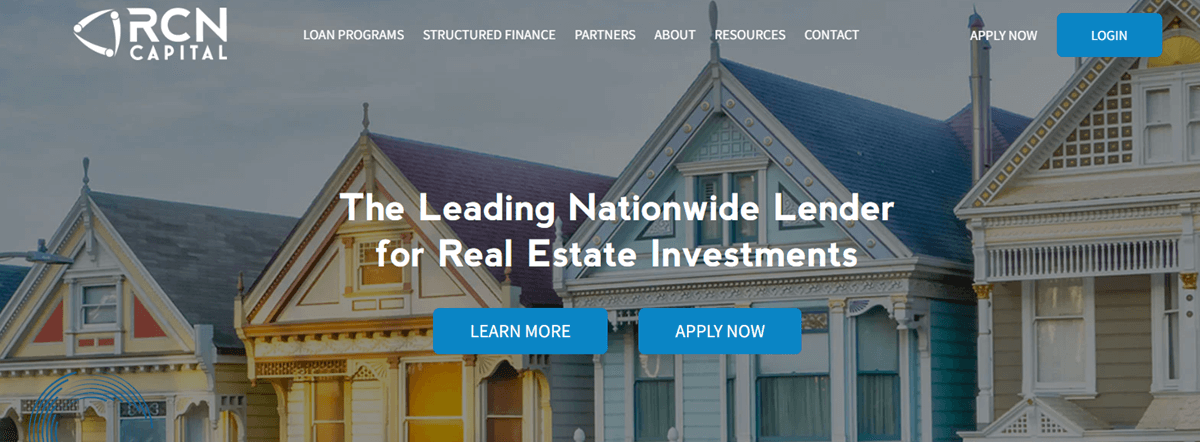
RCN Capital

Pros & Cons:

  • Pros: They are a direct lender (balance sheet lender), meaning they have full control over their funds. Great reputation for "Flip-to-Rent" scenarios.
  • Cons: They are strict on property condition. If your rental is in disrepair, you might need a bridge loan first.

3. Kiavi

Kiavi (formerly LendingHome) is the fintech answer to mortgage lending. If you hate phone calls and prefer uploading documents to a slick online portal, Kiavi is your best bet. They use algorithmic underwriting to speed up the process.

For experienced investors with standard single-family homes, Kiavi is incredibly fast. They rely heavily on data, often using internal valuation models that can be quicker and sometimes more generous than traditional appraisals in specific markets.

Highlights:

  • Speed: Closing timeline can be as short as 10-15 days.
  • Leverage: Competitive LTVs for experienced investors.
  • Process: 100% Online dashboard tracking.
  • Appraisals: Often utilize advanced data analytics to streamline valuation.
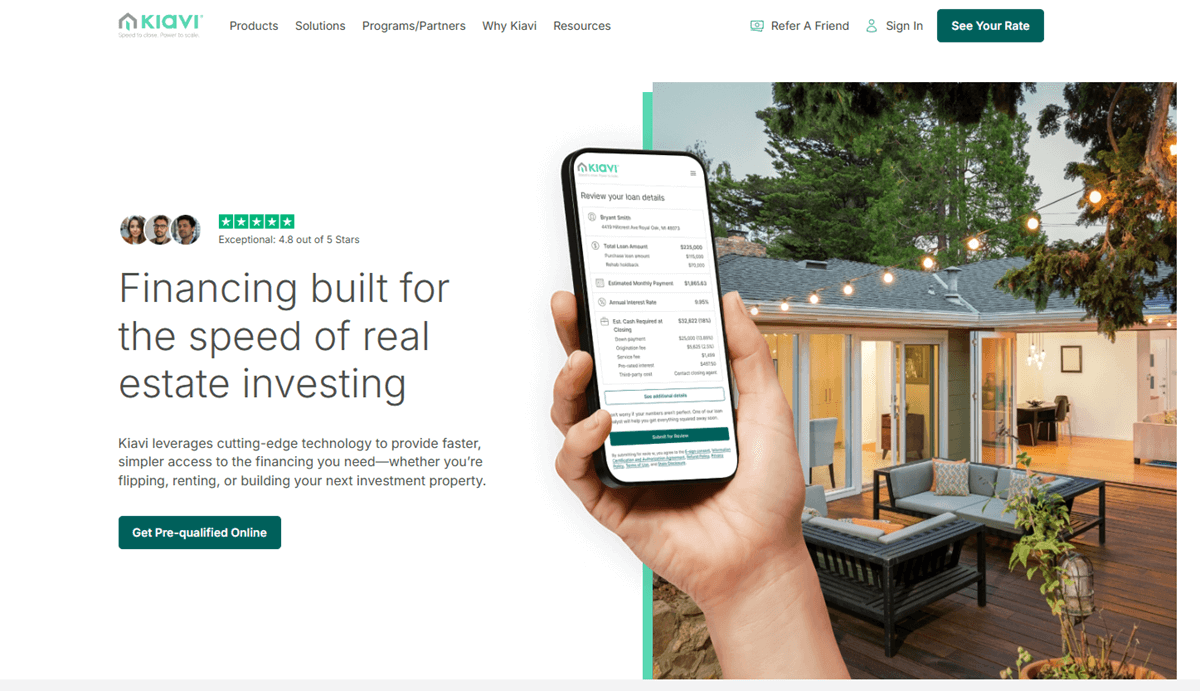
Kiavi

Pros & Cons:

  • Pros: User experience is unmatched. Low fees compared to traditional hard money lenders.
  • Cons: They are very "in the box." If your deal has hair on it (complex ownership structure, unique rural property), their algorithm might just say "No."

4. Angel Oak Mortgage Solutions

Angel Oak is effectively the grandfather of the modern Non-QM market. When everyone else pulled out of the market during past volatilities, Angel Oak kept lending. They specialize in the "story" behind the borrower. If you had a foreclosure four years ago or a bankruptcy that is just settled, Angel Oak has a manual underwriting team that actually reads the explanation letters rather than just looking at a credit score.

Highlights:

  • Credit Tolerance: Angel Oak's DSCR (Investor Cash Flow) programs typically require minimum FICO scores of 700 for most cases (lower middle score), with higher thresholds like 700+ for LTV ≤80%. Lower scores may apply in select non-DSCR Non-QM programs, not standard DSCR.
  • Loan Limits: High balance options available for luxury rentals.
  • Vesting: Full LLC and Corporation vesting allowed.
  • Experience: One of the largest Non-QM securitization issuers in the US.

Angel Oak Mortgage Solutions

Pros & Cons:

  • Pros: Deep expertise. If a deal is complex, their account executives know how to structure it to make it work.
  • Cons: Because they are a large institution, their turn times (underwriting speed) can sometimes lag behind smaller, nimbler shops.

5. Visio Lending

Visio Lending positions itself specifically as a landlord-focused lender. They were one of the first to aggressively market the DSCR program specifically for Short-Term Rentals (STRs). While many banks struggle to calculate income for an Airbnb property (often wrongly using long-term rental estimates), Visio understands how to use AirDNA data or actual 12-month remittance history to justify the income.

Highlights:

  • STR Focus: Specialized underwriting for vacation rentals.
  • No DTI: They do not look at personal debt-to-income ratio.
  • Doc Prep: streamlined closing process for entities (LLCs).
  • Cash-Out: Aggressive cash-out options for portfolio expansion.
Visio Lending

Pros & Cons:

  • Pros: They understand the vacation rental market better than most.
  • Cons: Their fee structure can sometimes be higher (points/fees) compared to a generic bank, but you pay for the specialized underwriting.

6. Lendsure

Lendsure is famous for one thing: Pre-flighting. Before you spend $600 on an appraisal, Lendsure's underwriters will review your scenario to give you a thumbs up or down. This saves investors thousands of dollars in wasted fees. They also have a very strong "exception" policy.

If your DSCR ratio is 0.9 (meaning the rent doesn't quite cover the mortgage) but you have a 780 FICO score and huge cash reserves, Lendsure is the type of lender that might make an exception and fund the deal anyway.

Highlights:

  • DSCR Ratio: LendSure's standard DSCR minimum is >1.0 for 1-4 units (calculated as gross rents / PITIA). Ratios under 1.0 indicate insufficient cash flow to cover debt service, though exceptions may exist for strong profiles like high FICO/reserves, often at higher rates. "No Ratio" likely refers to alternative quals, not sub-1.0 standard.
  • Property Types: Experienced in Condotels and non-warrantable condos.
  • Customer Service: High-touch, dedicated account executives.
  • Terms: 40-Year Interest Only options (to help cash flow).

Lendsure

Pros & Cons:

  • Pros: Great for "edge cases" where you barely miss the guidelines of other lenders. Excellent communication.
  • Cons: Interest rates for their "exception" programs will naturally be higher than standard DSCR loans.

How to Choose a Top DSCR Loan Lender?

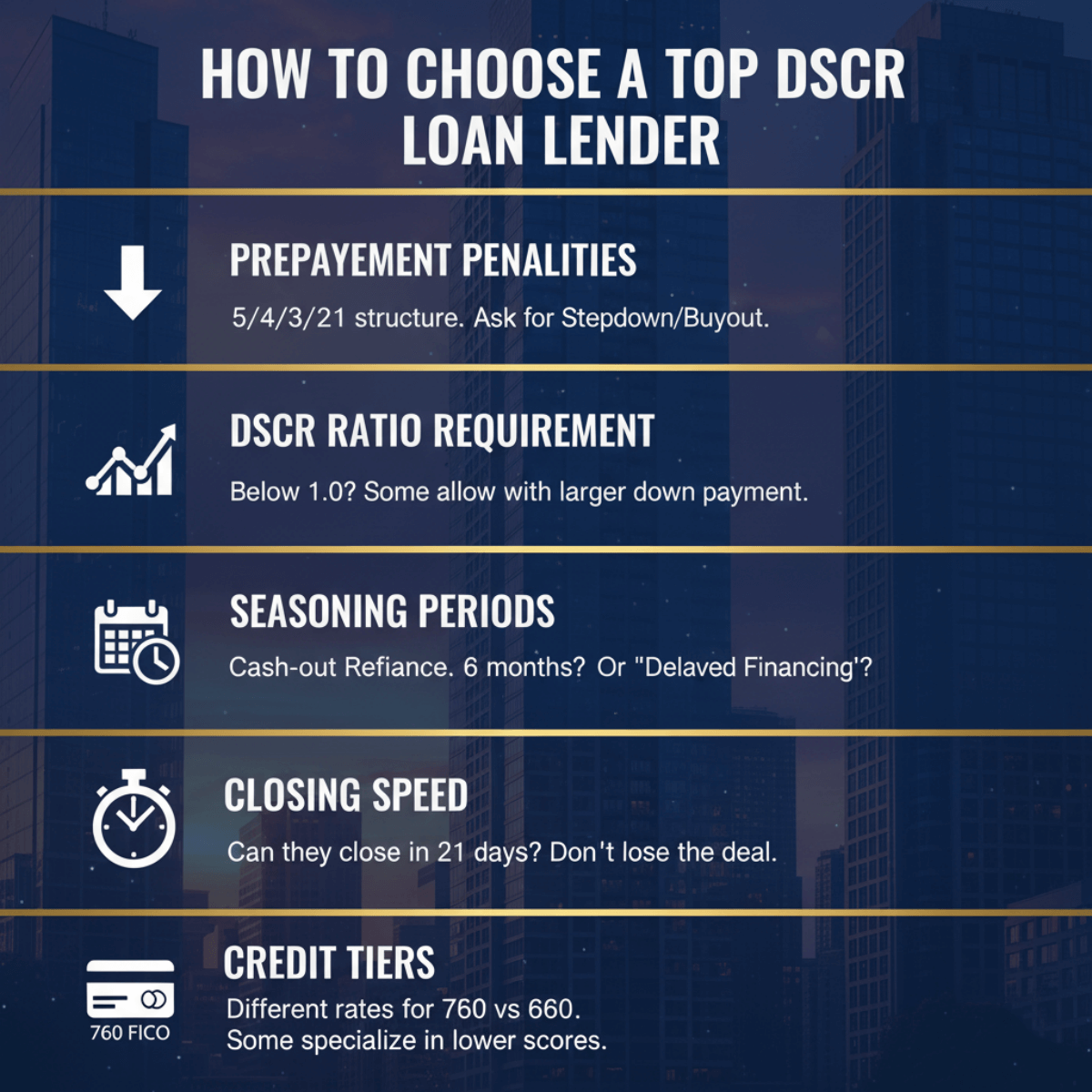
Choosing the best DSCR lender is not like shopping for a pair of shoes. It's about matching your financial profile to the lender's guidelines. When I compare lenders on a pricing engine like Loansifter, here are the critical factors I look at beyond just the interest rate:

  • Prepayment Penalties (PPP): This is the "gotcha" clause. Most DSCR loans come with a "5/4/3/2/1" penalty structure (5% penalty if sold in year 1, 4% in year 2, etc.). Ask if the lender offers a "Stepdown" or a buyout option. A lower rate often means a harsher penalty.
  • DSCR Ratio Requirement: Can the lender handle a ratio below 1.0? If your rent is $2,000 but the mortgage is $2,200, lenders like Lendsure or Change might still do the deal with a larger down payment, whereas others will instant-deny.
  • Seasoning Periods: If you just bought a house cash and want to do a "Cash-Out Refinance," how long do you have to wait? Some lenders require 6 months on title (Seasoning). Others, like RCN or Kiavi, might allow "Delayed Financing" immediately.
  • Closing Speed: In a competitive market, can they close in 21 days? If you are buying a property off the MLS, a slow lender will cost you the deal.
  • Credit Tiers: Understand that a 760 FICO score gets a wildly different rate than a 660 FICO. If your score is lower, focus on lenders like Angel Oak who specialize in that tier, rather than wasting time with a strict fintech lender.
How to Choose a Top DSCR Loan Lender

Final Word

In 2026, the "best" lender is the one that actually gets you to the closing table. As an investor, you should stop viewing the interest rate as the only metric. In the DSCR world, Cash Flow is King, but Liquidity is Queen.

My advice? Don't try to navigate this alone. Many of the wholesale lenders mentioned above offer their best pricing exclusively through mortgage brokers. Find a loan officer who has access to multiple outlets, someone who can run your scenario through RCN, Angel Oak, and Change simultaneously to see who offers the best combination of leverage and rate.
Keep reading

How to obtain an NMLS license in 2026?

Blog

5 min read
Arrow icon on dark background
2026 Guide: How to Get NMLS License? All the Details
How to obtain an NMLS license in 2026? Access the ultimate guide covering PE education, the SAFE exam, fees, and background checks. Start your MLO career here.

I remember when I first decided to look into becoming a Mortgage Loan Originator (MLO). I searched Google for a simple roadmap, but 90% of the results were just ads trying to sell me a $300 course or confusing government jargon that didn't make sense. It was frustrating.

That is why I am writing this guide. I want to cut through the noise. This is the exact, no-nonsense roadmap to obtaining your NMLS license in 2026. Whether you are looking to work for a mortgage broker or a direct lender, the core process is federal, but the execution requires attention to detail. This guide is not selling you a course. It is designed to help you navigate the NMLS Resource Center, pass the "beast" of an exam, and actually get your license active so you can start your career.

People Also Read

What is an NMLS License?

First, let's clear up a common misconception. The NMLS (Nationwide Multistate Licensing System) is just the database, and it doesn't actually "issue" the license. Your specific state government, like the DRE or DFPI in California, or the DFS in New York, issues the license through this system.

If you want to originate loans for a non-bank lender like a mortgage broker, you are required by the federal SAFE Act to be state-licensed. This is different from working at a big bank like Chase or Wells Fargo, where you only need to be "registered."

When you start this process, you will be assigned an NMLS Unique Identifier (NMLS ID). Think of this like a "Social Security Number" for your mortgage career. It stays with you for life, regardless of which company you work for or which state you move to. It allows consumers to look you up and verify your history, which is a key part of maintaining public trust in our industry.

What is an NMLS License?

Step-by-Step Guide: How to Obtain NMLS License?

Getting licensed involves a mix of federal mandates and state-specific rules. It can feel overwhelming, so I have broken it down into a logical 7-step roadmap.

The Roadmap at a Glance:

  1. Account: Create NMLS Login & Get ID
  2. Education: Complete 20-Hour Pre-License Course
  3. Testing: Pass the SAFE MLO Exam
  4. Application: Submit Form MU4
  5. Clearance: Background Checks (Fingerprints/Credit)
  6. Sponsorship: Find an Employer
  7. State Rules: Complete specific state requirements
Step-by-Step Guide: How to Obtain NMLS License?

STEP 1. Create an NMLS Account & Get Your ID

Your journey begins at the NMLS Resource Center. You need to request an account to get into the system. When you visit the site, look for the "Log in to NMLS" button and select "Request an Account."

You will be filing as an Individual. The system will ask for your personal information to generate your account. Once you complete this, you will immediately receive your NMLS ID number. Write this number down. You will need it for everything: signing up for classes, scheduling your exam, and eventually printing it on your business cards.

During this setup, ensure your name matches your government ID exactly. If your driver's license says "Jonathan" but you register as "John," you will be turned away at the testing center later.

STEP 2. Complete Pre-License Education (PE)

Before you can even touch the exam, federal law requires you to complete 20 hours of Pre-Licensure Education (PE). You cannot just read a book. You must take a course from an NMLS-Approved Course Provider.

The 20 hours are strictly structured:

  • 3 Hours: Federal Law
  • 3 Hours: Ethics (Fraud, Consumer Protection)
  • 2 Hours: Non-Traditional Mortgage Lending
  • 12 Hours: Electives

Most people take this online. You can choose "Online Instructor-Led", similar to a Zoom class, or "Online Self-Study." Be warned: NMLS requires a security measure called BioSig ID. You will have to draw a password with your mouse every time you log in to prove it is really you taking the course. It's annoying, but mandatory for compliance.

STEP 3. Pass the SAFE MLO Exam

This is the biggest hurdle. The SAFE MLO Test with Uniform State Content (UST) is not easy. It consists of 125 multiple-choice questions (115 scored, 10 unscored experimental), and you are given 190 minutes to finish." You need a score of 75% to pass.

Do not underestimate this test. The questions are designed to be tricky, often using double negatives or asking for the "BEST" answer among four "correct" looking options. It covers federal laws (TILA, RESPA, ECOA), ethics, and general mortgage knowledge.

What if I fail? Don't panic. You can retake it after waiting 30 days for the first three attempts. After failing a third time, you must wait 180 days before a fourth attempt. Study hard so you don't get stuck in that 6-month penalty box.

STEP 4. Apply for Your License

Once you pass your exam, you need to formally ask the state for your license. This is done by filing Form MU4 (Individual Form) inside the NMLS portal.

Log in, go to the "Filing" tab, and pay the fees. The fees usually include an NMLS processing fee around $30, a credit report fee, and the specific application fee for your state. For example, if you are applying in California via the DRE or DFPI, the state fee will be added here.

Once you submit the MU4, your license status will likely show as "Pending-Incomplete" or "Pending-Review." This is normal. It just means the state regulators are now looking at your file.

STEP 5. Complete Background Checks

Technically, you often initiate this step while filing your MU4, but it is a distinct requirement. You must authorize a Criminal Background Check (CBC) and a Credit Report.

  • Fingerprints: You cannot just go to a local police station. You must schedule an appointment through the NMLS-approved vendor Fieldprint, which links directly to the NMLS system, to send your prints to the FBI.
  • Credit Report: Regulators aren't necessarily looking for a perfect 800 credit score. They are looking for "financial responsibility." If you have current tax liens, government debt, or recent foreclosures, you might have to provide a detailed letter of explanation.
  • Disqualifiers: A felony conviction involving fraud, dishonesty, or money laundering at any time is an automatic ban. Other felonies within the last 7 years are also usually disqualifiers.

STEP 6. Find an Employer

Here is the catch that trips up many new LOs: You can pass the test and pay the fees, but your license will not become "Active" until a licensed employer sponsors you.

Until you are hired, your status will sit as "Approved - Inactive." You need to interview with Mortgage Brokers or Lenders. Once you accept an offer, their compliance manager will log into NMLS and request "Sponsorship" of your license. Once the state approves that relationship, your license flips to "Active," and you can officially start originating loans.

Also Read: Best Mortgage Companies for New Loan Officers in 2026

STEP 7. Meet State-Specific Rules

While the "Uniform State Test" (UST) covers most states, some regulators have extra homework.

For instance, to obtain a DRE MLO endorsement in California, you must hold an active DRE real estate license. Under the DFPI for CRMLA or CFL, you obtain a separate individual MLO license without needing a real estate license, but you might need specific education. Other states like Texas or Florida may have their own specific education modules (e.g., a 2-hour state law course) that must be taken in addition to the standard 20-hour PE. Always check the State Licensing Requirements Checklist on the NMLS website for your specific target state.

How Long Does It Take to Get NMLS License?

Realistically, you should budget 4 to 8 weeks for the entire process.The 20-hour course can be done in a week if you treat it like a full-time job. Studying for the exam typically takes another 2 weeks. Once you pass, the background check and state review can take anywhere from a few days to a month, depending on how backed up the FBI or state regulators are. If you have a "clean" history (no criminal hits, clear credit), the approval is usually faster.

How Long Does It Take to Get NMLS License?

How Hard Is It to Get NMLS?

I won't lie to you. The exam is difficult. The first-time pass rate for the SAFE MLO test is around 58%. It is generally considered harder than the Real Estate Agent exam because it is less about common sense and more about memorizing specific federal regulations and timelines (e.g., "How many days does a lender have to send a Loan Estimate?"). However, the process itself isn't "hard" technically. It's just bureaucratic. If you follow the steps and actually study for the test, it is 100% achievable.

FAQs About Getting an NMLS License

Q1. How much does it cost to take the NMLS?

National Exam fee (typically $110), NMLS processing fee ($30), Credit Report ($15), FBI Background Check (around $36.25), plus 20-hour course ($200–$400) and state fees. Total often $600–$1,000, depending on state.

Q2. How long does it take to study for NMLS?

Most successful candidates spend 2 to 4 weeks preparing. I recommend taking the exam immediately after your course while the laws are fresh in your mind.

Q3. Can I take a NMLS test online?

Yes. You can take the test online from home through the approved remote proctoring service, such as ProProctor by PSI, with strict security like room inspections via webcam. However, the security is intense. They will inspect your room via webcam, and you cannot have paper, pens, or even a watch near you.

Q4. What is the NMLS exam pass rate?

The national pass rate for first-time test takers is typically in the mid-50% range. It drops to the mid-40% range for subsequent attempts, which highlights the importance of studying correctly the first time.

Q5. Is getting a mortgage loan officer license worth it?

If you are self-driven, absolutely. The income potential is uncapped (commission-based), and with interest rates predicted to stabilize in 2026, demand for refinancing and purchases is expected to rise.

Q6. How many times can I take the NMLS test?

You can take it 3 times, with a 30-day wait between each attempt. If you fail the 3rd time, you must wait 180 days before you can book a 4th attempt.

Final Word

Obtaining your NMLS license is the barrier to entry for a lucrative career in financial services. It protects consumers and ensures you know the laws. My advice? Do not rush the education part. The laws you learn in that 20-hour course are the same ones that will keep you out of trouble when you start signing loans.

If you are ready to start, head over to the NMLS Resource Center today and create your account. The process might seem long, but ticking off that first box is the most important step you will take. Good luck!

Breakdown: How Much Does It Cost to Refinance a Mortgage?

Blog

5 min read
Arrow icon on dark background
Breakdown: How Much Does It Cost to Refinance a Mortgage?
Wondering how much it costs to refinance a mortgage in 2026? We break down national averages, hidden fees, and real cost examples. See if it's worth it.

It's finally happening. After years of "holding the line," we are seeing current mortgage refinance rates average 6.14% to 6.23% for 30-year conventional loans, with top-tier borrowers accessing rates around 5.5-5.6% on 15-year terms, but 30-year rates remain above 6% for most. If you bought your home in late 2023 or 2024 with a rate near 7.5% or 8%, the math for refinancing is starting to look undeniably attractive.

But here is the catch that trips up homeowners every single day: The headline rate isn't the price you pay.

I've sat across from countless borrowers who were ready to sign, only to be blindsided by the "Cash to Close" line item. Refinancing isn't free. It is a reinvestment in your financial future. To make it work, you need to understand exactly where every dollar goes and, more importantly, when you'll earn it back.

In this guide, I'm breaking down the real cost of refinancing in 2026, cutting through the industry jargon to show you the hidden fees, the negotiable line items, and the exact math to decide if this move is right for you.

Average Cost to Refinance a Mortgage

Let's cut straight to the chase. In 2026, the average cost to refinance a mortgage typically falls between 2% and 6% of your total loan amount.

For a standard $300,000 refinance, this means you should expect to pay anywhere from $6,000 to $18,000 in total costs.

Why is that range so wide? It comes down to geography and loan specifics.

  • The Base Cost: Recent ClosingCorp data shows average refinance closing costs (including taxes and recording) at about $2,403 or 0.72% of the loan amount for 2024, with median non-tax fees around $1,802. Freddie Mac aligns with 3-6% total, but no specific $2,400-$3,000 core figure is confirmed for 2026. For a $300,000 refinance, total costs range from $6,000-$18,000 (2-6%), which matches industry standards.
  • The Variable Cost: The rest of that 2-6% chunk usually comes from prepaid items like property taxes, homeowners insurance, and daily interest.

In refinances, transfer taxes (mortgage recording taxes) vary: New York has high mortgage recording taxes (0.8-1.8%+ depending on amount), but Florida and Pennsylvania have low or no transfer taxes on refinances. Florida exempts them entirely. States like New York, California, or D.C. with high mortgage recording taxes push costs higher.

Average Cost to Refinance a Mortgage

Breakdown of Refinance Costs

When you receive your Loan Estimate (LE), it can look like a wall of numbers. To make it digestible, I categorize these costs into three distinct buckets: Lender Fees, Third-Party Fees, and Prepaids.

Lender Fees

This is the money you pay directly to the mortgage company to process your loan. This category is also where you have the most room to negotiate.

  • Origination Fee: This is the commission the lender charges for their service. It typically ranges from 0.5% to 1% of the loan amount ($1,500 - $3,000 on a $300k loan).
  • Discount Points: This is optional. You can choose to pay an upfront fee ("points") to lower your interest rate permanently. In 2026, many borrowers are paying 1 point to get that rate under 6%.
  • Application & Underwriting Fees: These are administrative costs for verifying your income and assets. These fees typically total $400-$1,400 combined (application $75-$500, underwriting $400-$900), often lower than stated.

Third-Party Fees

These are "pass-through" fees. Your lender doesn't keep this money. They collect it to pay the vendors who verify the property and your legal standing.

  • Appraisal Fee ($600 - $1,000): Refinancing almost always requires a new appraisal to confirm the home's current market value. Prices have risen lately due to high demand and a shortage of appraisers in some areas.
  • Title Search & Lender's Title Insurance ($400 - $900): This protects the lender against past ownership disputes. Note: You do not need to buy Owner's Title Insurance again, but Lender's Insurance is mandatory.
  • Credit Report Fee ($50 - $100): The cost to pull your tri-merge credit report.

Prepaid & Escrow Costs

This is the most misunderstood section. Borrowers often get angry seeing these numbers, but this is technically your money.

  • Prepaid Interest: You pay interest from the day you close until the end of the month.
  • Escrow Reserves: Your new lender will likely require you to deposit 3-6 months' worth of property taxes and home insurance into a new escrow account.

Here's the good news. If you have an escrow account with your current lender, you will get a refund check for that balance about 30 days after you pay off the old loan. It eventually washes out, but you need the cash upfront to fund the new account.

Breakdown of Refinance Costs

Factors That Influence Refinance Costs

Not everyone pays the same price tag. I've seen two neighbors refinance the same floor plan but pay drastically different closing costs. Here is what moves the needle:

  • Credit Score: This is the biggest driver. If your score is below 720, you might get hit with "Loan-Level Price Adjustments" (LLPAs). These are essentially risk fees added to your closing costs or your rate.
  • Loan-to-Value (LTV) Ratio: If you have less than 20% equity in your home, you might have to pay higher fees or continue paying Private Mortgage Insurance (PMI).
  • Loan Amount: There is an economy of scale here. A $500,000 loan doesn't cost much more to process than a $150,000 loan in terms of fixed fees like appraisal and title, so the percentage cost is often lower on larger loans.
  • Property Type: Condos and multi-family homes often carry higher interest rates and origination fees than single-family detached homes because lenders view them as slightly riskier.
Factors That Influence Refinance Costs

Real Refinance Cost Examples

To give you a realistic picture, let's look at the numbers for a standard $300,000 mortgage in three different situations.

Rate-and-Term Refinance Example

The Goal: Lower the interest rate and the monthly payment.

  • Borrower Profile: 760 Credit Score, Single-Family Home.
  • Lender Fees: $2,500
  • Third-Party Fees: $2,200
  • Prepaids/Escrow: $1,800
  • Total Cost: $6,500

Verdict: This is the "cleanest" refinance with the lowest fees.

Cash-Out Refinance Example

The Goal: Take out $50,000 in equity for home renovations.

  • Borrower Profile: 740 Credit Score, increased loan balance to $350,000.
  • Lender Fees: $3,500 (Higher due to cash-out risk adjustments).
  • Third-Party Fees: $2,500
  • Prepaids/Escrow: $2,200
  • Total Cost: $8,200

Verdict: Cash-out loans are viewed as riskier, so lenders often charge higher origination fees or slightly higher interest rates.

Investment Property Refinance Example

The Goal: Refinance a rental property.

  • Borrower Profile: 720 Credit Score, Non-Owner Occupied.
  • Lender Fees: $4,500 (Includes "points" to buy down the rate).
  • Third-Party Fees: $2,500
  • Prepaids/Escrow: $2,500
  • Total Cost: $9,500+

Verdict: Investment properties always come with a premium. Expect to pay 0.5% to 0.75% more in rate or fees compared to your primary home.

How to Lower the Cost to Refinance a Mortgage

You are not helpless when it comes to these fees. Here are four proven strategies to reduce your "Cash to Close":

  • Ask for an Appraisal Waiver: If you have significant equity (usually 30%+), ask your Loan Officer to run the automated underwriting system. You might get a waiver, instantly saving you $600−$1,000.
  • Negotiate the "Reissue Rate": If you bought your home or refinanced within the last few years, ask the title company for a "reissue rate" on the lender's title insurance. This can slash the premium by up to 40%.
  • Boost Your Credit Score: Even a 20-point bump can move you into a better pricing tier, reducing those hidden LLPA fees.
  • Shop Around (The Smart Way): This is the single most effective way to save. However, avoid the "lead aggregator" websites that sell your phone number to 50 aggressive cold-caller.

I recommend using platforms like Bluerate.ai. Unlike traditional sites, Bluerate connects you directly with experienced Loan Officers rather than assigning you a random salesperson. You can compare real, transparent quotes and fees from different officers side-by-side without the spam. It puts the control back in your hands.

Can You Refinance with No Closing Costs?

You will often see ads screaming "No Closing Cost Refinance!" It sounds amazing, but as an insider, I have to tell you: There is no such thing as a free lunch.

In a "No-Cost" refinance, the fees don't disappear. they just move.

  • The Trade-off: The lender gives you a "Lender Credit" to cover your $6,000 in closing costs. In exchange, they charge you a higher interest rate (e.g., 6.5% instead of 6.0%).
  • When to do it: If you plan to sell the house or move in less than 5 years, this is a brilliant strategy. You save the upfront cash, and you won't hold the loan long enough for the higher interest rate to hurt you.
  • When to avoid it: If this is your "forever home," take the lower rate and pay the closing costs upfront. Over 30 years, that 0.5% difference will cost you tens of thousands of dollars, far more than the closing costs you "saved."

Refinance Cost vs Savings: How to Calculate the Break-Even Point

Before you sign any paperwork, you must do this one calculation. It determines if the refinance is an investment or a waste of money.

The Formula: Total Closing Costs ÷ Monthly Savings = Months to Break Even

Example:

  • Total Closing Costs: $5,000
  • New Monthly Savings: $250
  • Calculation: $5,000 ÷ $250 = 20 Months

Here's the rule. If you plan to stay in the home longer than 20 months, the refinance is a win. If you think you might move in a year, don't do it. You will lose money.

Checklist: Ideal Candidates for Refinancing in 2026

Is this guide for you? If you can check at least one of these boxes, you should be getting a quote today:

  • Rate Drop: Your current rate is at least 0.75% to 1% higher than today's market rate (e.g., you are at 7.25% or higher).
  • Credit Improvement: Your credit score has improved by 50+ points since you bought the house (qualifying you for cheaper insurance or rates).
  • PMI Removal: Your home value has risen enough that you now have 20% equity and can eliminate expensive Mortgage Insurance.
  • ARM Expiration: You have an Adjustable Rate Mortgage (ARM) that is about to reset to a higher rate.

Cost to Refinance Mortgage: FAQs

How much does it cost to refinance a $300,000 mortgage?

On average, for a $300,000 loan, you can expect total closing costs to range between $6,000 and $18,000. This includes lender fees, title work, and your prepaid escrow items. The "sunk costs" (fees that don't go toward your escrow) are typically around $3,000 - $5,000.

Are refinance costs tax-deductible?

Generally, no. Unlike when you buy a home, standard closing costs on a refinance for a primary residence are not deductible. However, if you pay discount points to lower your rate, you can deduct them over the life of the loan. Note: For rental properties, these rules differ, and costs are often deductible as business expenses.

Is it better to roll closing costs into the loan?

If you are short on cash, rolling costs into the loan balance is a convenient option. However, be aware that you will pay interest on those costs for the next 30 years. It's better to pay cash upfront if you can afford it to keep your loan balance low.

Why is my refinance quote higher than expected?

If your quote seems high, check the Prepaids section. You might be funding a brand new escrow account for taxes and insurance. Also, if your credit score has dipped or you are taking cash out, lenders may have applied risk-based fees (LLPAs) that drove up the cost.

Final Verdict: Is Refinancing Worth the Cost in 2026?

Refinancing is not just about bragging rights for the lowest interest rate at a dinner party. It is a mathematical decision.

In 2026, with rates stabilizing and offering relief from the highs of the past two years, the opportunity is real. If you can lower your rate by 0.75% or more and plan to stay in your home past the break-even point, the upfront cost is a temporary hurdle for years of long-term savings.

My final piece of advice? Do not accept the first offer you receive. Loan Officers have different compensation structures, and fees can vary wildly.

To ensure you aren't overpaying, I highly recommend using Bluerate.ai. It's the modern way to shop: you get direct access to top-rated Loan Officers who compete for your business, giving you a clear, transparent view of the costs without the middleman markups.

Run the numbers, shop the rate, and make 2026 the year you take control of your mortgage.

Blog

5 min read
Arrow icon on dark background
Best Mortgage Companies for New Loan Officers in 2026
Struggling to choose? Discover the best mortgage lenders for new loan officers in 2026. From retail giants to niche brokers, find the best mentorship and pay here.

Passing the NMLS exam is the easy part. The real challenge, and where 50% of new Loan Officers (LOs) fail within their first year, is choosing the right seat. In 2026, the mortgage landscape has shifted. We aren't just looking for who pays the highest splits anymore. We are looking for who offers the best survival kit: training, mentorship, and legitimate leads.

If you are reading this, you are likely standing at a crossroads. You might be worried about the lack of a base salary, or perhaps you are terrified of the idea of cold-calling Realtors who already have "a guy." I've been there. The "best" company isn't the same for everyone. It depends entirely on whether you need a high-volume call center to teach you the ropes or a boutique shop that will hold your hand through your first complex file. Below, I've broken down the 8 top contenders for 2026 that actually invest in rookie talent.

People Also Read

8 Top Mortgage Companies for New Loan Officers

Based on training infrastructure, commission structures, and current employee sentiment, here are the companies setting the standard for new originators this year.

1. Rocket Mortgage

Type: National Retail Lender

Best For: The "Trial by Fire" Education

If you have absolutely zero sales experience and want the Harvard of mortgage training, Rocket is still the heavyweight champion. As a new banker, you aren't thrown to the wolves immediately. You go through their legendary training program (often referred to as ISE - Income Specialized Banker training).Rocket solves the #1 problem for newbies: Leads. You don't have to hunt for business. It is fed to you. Their technology stack, Rocket Logic, automates much of the processing work, allowing you to focus strictly on sales. In 2026, their training has evolved to include more advisory-based selling, not just rate pitching.

Pros:

  • World-class training: You will learn how to sell, overcome objections, and structure loans better than anyone else.
  • Inbound Leads: You will take live transfers daily.
  • Base Salary: Unlike brokers, you typically get a modest base pay plus overtime.

Cons:

  • The Grind: It is a high-pressure, call-center environment. Burnout is real.
  • Lower Commission: Because they give you the leads, your basis points (bps) per loan are significantly lower than the street average.

Verdict: Go here for 2 years to learn the trade, then decide if you want to stay or become a broker.

2. Fairway Independent Mortgage

Type: Retail Branch Model

Best For: Culture & Local Networking

Fairway operates differently than the centralized call centers. They focus heavily on the branch model, meaning your experience depends largely on your local branch manager. However, the corporate support is phenomenal. Their internal motto, "Humble, Hungry, Smart," isn't just a poster on the wall. It's a palpable culture.

Fairway invests heavily in "Fairway Ignite," a coaching platform designed to get you producing quickly. Unlike Rocket, Fairway teaches you how to be a Realtor-facing LO. If you want to build a self-sourced business in your local community, this is a fantastic starting point.

2. Fairway Independent Mortgage

Pros:

  • Marketing Support: They provide excellent CRM tools and marketing assets to help you woo real estate agents.
  • Speed: They are known for closing loans fast, which helps you build a reputation with agents.
  • Mentorship: You are usually physically sitting near experienced LOs, not just headsets.

Cons:

  • Tech variance: While corporate tech is good, some branches are more old-school than others.
  • Pricing: Rates can sometimes be slightly higher than wholesale brokers, requiring you to sell on value and service, not just price.

Verdict: The best home for the social butterfly who wants to build a local referral empire.

3. Guild Mortgage

Type: Retail/Community Lender

Best For: Long-term Retention & Product Mix

Guild Mortgage is a company that people join and rarely leave. Their retention rate is among the highest in the industry. For a new LO in 2026, Guild offers stability and a massive array of products that help you capture "tough" business that other banks turn away."Guild University" provides structured learning, but the real win is their product menu. They are experts in Down Payment Assistance (DPA) and government loans. As a rookie, your first clients will likely be First-Time Homebuyers (FTHB). Guild gives you the tools to actually get them approved.

3. Guild Mortgage

Pros:

  • Servicing Retained: Guild services most of their own loans. This means your client remains your client, not sold off to a big bank that steals your future refinance.
  • Niche Programs: Access to hundreds of DPA programs gives you a unique wedge to get in with Realtors.

Cons:

  • Traditional: It feels more like a traditional bank environment compared to the "tech-bro" vibe of some fintechs.
  • Self-Gen: You largely need to generate your own business. they don't hand out leads like candy.

Verdict: Perfect for the "Community Banker" who wants to specialize in first-time homebuyers.

4. Full Circle Home Loans

Type: Boutique Brokerage (Regional focus)

Best For: High-Touch Mentorship

Moving away from the giants, Full Circle Home Loans represents the "Boutique" option. While smaller in footprint (check licensing for your state, heavily active in California), this is where you go if you want to be treated like family, not a number.

In a massive company, you might struggle to get your manager on the phone. At a shop like Full Circle, you often work directly with the broker-owner or top producers. This apprenticeship model is arguably the fastest way to learn the nuance of underwriting guidelines.

4. Full Circle Home Loans

Pros:

  • Flexibility: Less bureaucracy and red tape than the big retail banks.
  • Better Splits: As a brokerage, the commission potential is typically higher than retail.
  • Environment: A supportive, tight-knit team culture where competition is replaced by collaboration.

Cons:

  • Brand Recognition: You won't have a Super Bowl commercial backing you up. You have to sell yourself.
  • No Automatic Leads: You eat what you kill. You need to be a self-starter.

Verdict: Ideal for the independent spirit who wants a mentor, not a boss.

5. Meridox Real Estate and Mortgage

Type: Hybrid (Real Estate + Mortgage)

Best For: The "One-Stop Shop" Strategy

Meridox offers a unique angle: they integrate real estate services with mortgage lending. In 2026, the "Hybrid Agent" or working closely within a dual-agency brokerage is a powerful trend.

The hardest part of being a new LO is finding homebuyers. At a company that also houses Real Estate Agents, the "leads" are sitting at the desk next to you. This ecosystem allows for a more natural flow of business compared to cold-calling strangers.

Pros:

  • Captive Audience: Easier access to purchase transactions through internal agents.
  • Streamlined Ops: Processing and real estate sides talk to each other, reducing friction.
  • Cross-Training: You gain a better understanding of the Real Estate side, making you a better LO.

Cons:

  • Distraction: It can be easy to lose focus if you are trying to learn both sides of the business at once.
  • Niche: This model is specific and may not be available in all markets.

Verdict: A strategic hack for LOs who want to bypass the cold-calling phase by integrating into a real estate office.

6. Method Mortgage

Type: Regional Service Specialist

Best For: Process-Driven Success

Method Mortgage markets themselves on, you guessed it, their Method. They are a prime example of a strong regional lender, prominent in the Southeast, that wins based on process and reputation rather than volume.

They emphasize education and advisory services over transaction volume. For a new LO, this takes the pressure off "selling" and puts the focus on "consulting." Their operational support is designed to ensure you never miss a closing date, which is critical for your early reputation.

Pros:

  • Reputation: In their markets, they are known for reliability. Using their name gets your offer accepted.
  • Process: A clearly defined workflow helps new LOs avoid chaotic mistakes.

Cons:

  • Geography: Highly regional. If you aren't in their licensed footprint, this isn't an option.
  • Strict Standards: They likely protect their brand reputation fiercely, meaning high expectations for file quality.

Verdict: Best for the detail-oriented professional who values quality over quantity.

7. CV3 Financial Services

Type: Private Lender/Business Purpose Loans

Best For: The Investment Niche (Fix & Flip/DSCR)

Stop if you want to do standard FHA loans for families, skip this one. But if you want to tap into the booming real estate investment market in 2026, CV3 is a powerhouse. They specialize in "Business Purpose Loans", think Fix & Flip, Bridge Loans, and DSCR (Debt Service Coverage Ratio) rentals.

Residential mortgage lending (QM) is heavily regulated (TRID, licensing education). Investment lending is often faster, with less red tape. You aren't dealing with emotional homebuyers. You are dealing with investors who just want to know the numbers.

Pros:

  • Speed: Loans close in weeks, sometimes days.
  • Repeat Business: Investors buy multiple homes a year. One client = 5 loans.
  • Less Emotional: It's strictly business.

Cons:

  • Niche Skillset: You won't learn standard Fannie/Freddie guidelines here.
  • Market Volatility: Highly susceptible to interest rate spikes affecting investor appetite.

Verdict: The "Rich Niche" play for LOs who want to work with investors, not homeowners.

8. VanDyk Mortgage

Type: Government Loan Specialist

Best For: Serving Those Who Serve

VanDyk has a longstanding reputation for excellence in government lending, particularly FHA and VA loans. They maintain a "family" culture despite being a substantial lender.

Government loans are complex. VanDyk's support staff and underwriters are specialists in this arena. If you are located near a military base or a working-class community, having a lender that actually supports lower credit scores or complex VA files is a game changer.

Pros:

  • Underwriting Access: Management and underwriting are generally accessible to help you structure tough deals.
  • Marketing: Strong focus on educational marketing for FTHBs.
  • Culture: High employee tenure suggests a supportive environment.

Cons:

  • Retail Margins: Like other retail lenders, pricing may not be as sharp as a penny-pinching broker shop.

Verdict: The honorable choice for LOs passionate about helping veterans and first-time buyers get into homes.

Tips for New Loan Officers from Reddit

I spent hours scouring the trenches of r/loanoriginators and r/RealEstate to see what the "old guard" is telling the Class of 2026. Here is the unfiltered reality:

  • Don't Buy Leads (Yet): The consensus is unanimous, buying mortgage leads as a rookie is a quick way to go broke. The conversion rates are abysmal (1-2%). Focus on "Warm" referral partners first.
  • Retail vs. Broker: This debate never ends. Retail (like Fairway/Guild) offers better training and a safety net. Brokers offer better rates and higher commission but require you to be independent. Most Redditors suggest starting Retail to learn, then moving to Broker once you have a book of business.
  • Find a Mentor: "I learned more in 3 months sitting next to a top producer than I did in 40 hours of SAFE education." Do not join a company if you are going to be working alone from home immediately. You need to overhear how pros talk to clients.
  • Use Zeitro to Enhance Efficiency and Get Free Leads:This is the "cheat code" popping up in recent threads. New LOs often get bogged down by the Loan Origination System (LOS) clunkiness. Zeitro is an AI-driven layer that integrates with your LOS to automate document collection and income calculation.But here is the real kicker for new LOs: Zeitro allows you to create a Personal Brand Page. Instead of sending a boring 1003 link, you send a branded, professional page that captures leads naturally. It builds your "Organic Warm Leads" pipeline so you aren't reliant solely on your company. It effectively acts as your 24/7 digital assistant.

Key Factors to Consider As a New Loan Officer

When you are sitting in that interview, don't just ask "What's the comp?" Ask these three questions instead:

1. "What does the first 90 days of training look like?"

If the answer is "We give you a login and a phone," run. You need a structured curriculum, specifically on structuring files and analyzing income.

2. "Do you provide a marketing tech stack?"

You cannot survive in 2026 with an Excel spreadsheet. You need a CRM that automates birthday emails and loan anniversary checkpoints. Look for companies using modern stacks (or allowing tools like Zeitro).

3. "Who is my direct support?"

Will you have a dedicated processor? Or do you have to process your own loans? As a rookie, processing your own loans is good for learning, but bad for sales volume. Know what you are signing up for.

FAQs About Best Mortgage Companies for New LOs

Q1. What company pays loan officers the most?

Strictly speaking, Mortgage Brokerages pay the highest commission per loan, often ranging from 150 to 275 basis points (1.5% - 2.75%). Retail lenders (like Rocket or Fairway) typically pay less (50 - 120 bps) because they cover overhead, benefits, and sometimes provide leads. However, a lower percentage of a high volume of loans (Retail) can sometimes equal more take-home pay than a high percentage of zero loans (Broker).

Q2. How much commission do loan officers make on a $500,000 loan?

It depends on your "split" (commission rate).

At a Retail Bank (e.g., 100 bps/1%): You would make $5,000.

At a Broker Shop (e.g., 200 bps/2%): You would make $10,000.

At a Call Center (with base salary): You might make $2,500 commission, but you also have a guaranteed monthly paycheck.

Q3. Will MLO be replaced by AI?

No, but MLOs who don't use AI will be replaced by those who do. Best CRM tools for loan officers like Zeitro can handle data entry, income calculation, and document sorting, but they cannot hold a crying client's hand when an appraisal comes in low, or negotiate a complex counter-offer with a listing agent. The role is shifting from "Paperwork Gatherer" to "Strategic Advisor."

Q4. Is becoming an MLO worth it?

It is a career of high risk and high reward. The first 12-24 months are brutally hard. You will likely make less money than you expect. However, once you build a pipeline, it is one of the few careers where you can earn $200k+ without a college degree, with complete schedule flexibility.

Conclusion

The "best" company for you depends entirely on your personality. If you need structure and leads, go to Rocket. If you want a family feel and local presence, look at Fairway or Guild. If you are an independent hunter, find a mentor at a shop like Full Circle.

Regardless of where you land, remember that in 2026, efficiency is your currency. Don't let paperwork drown your sales time. Tools like Zeitro are essential for the modern LO, not just for processing loans faster, but for building a personal brand that generates business while you sleep. Start building your own pipeline today with Zeitro's intelligent tools and give yourself the fighting chance you deserve.

Check out Zeitro to see how it works.

Try Zeitro today and transform your loan origination workflow!

Get started free