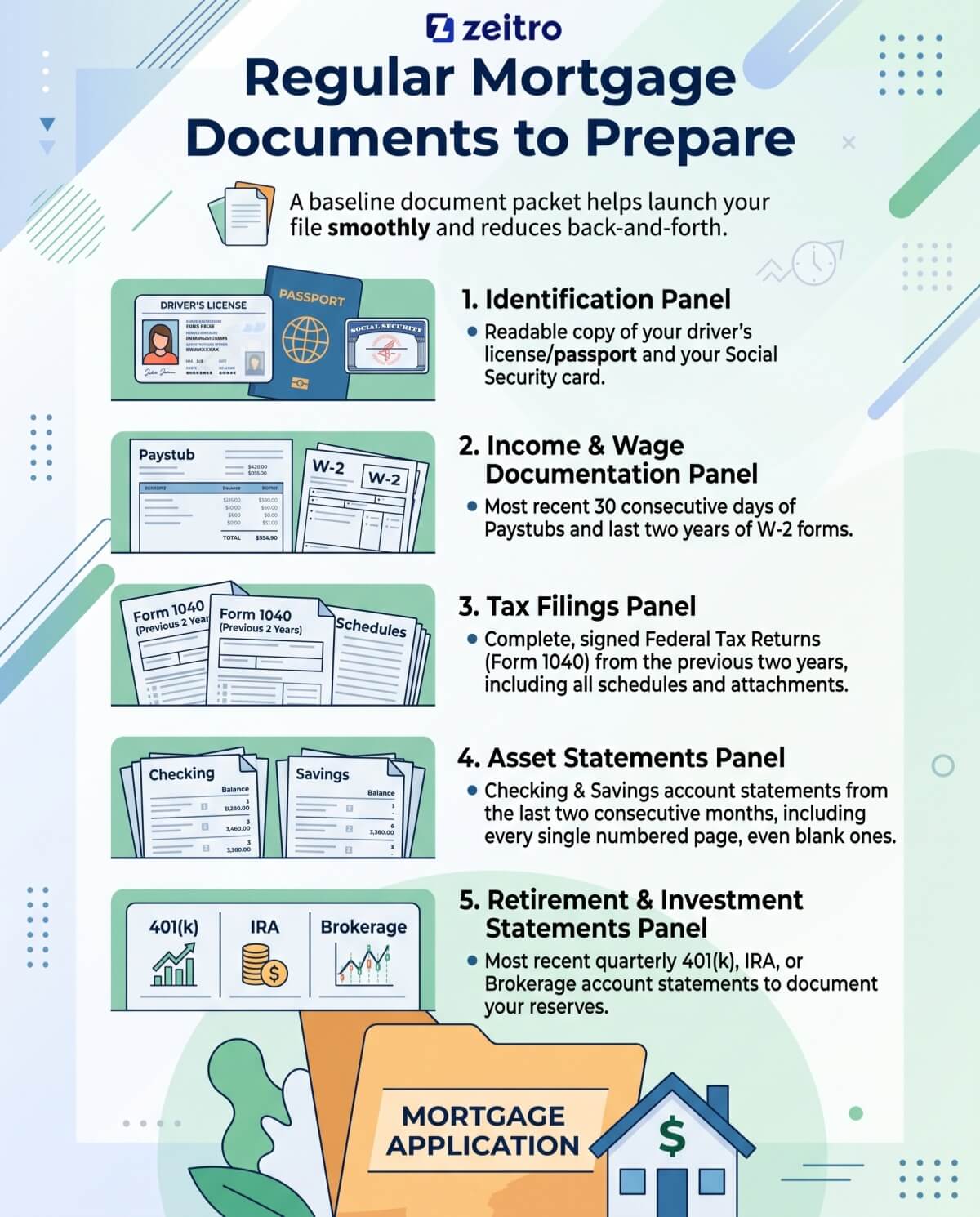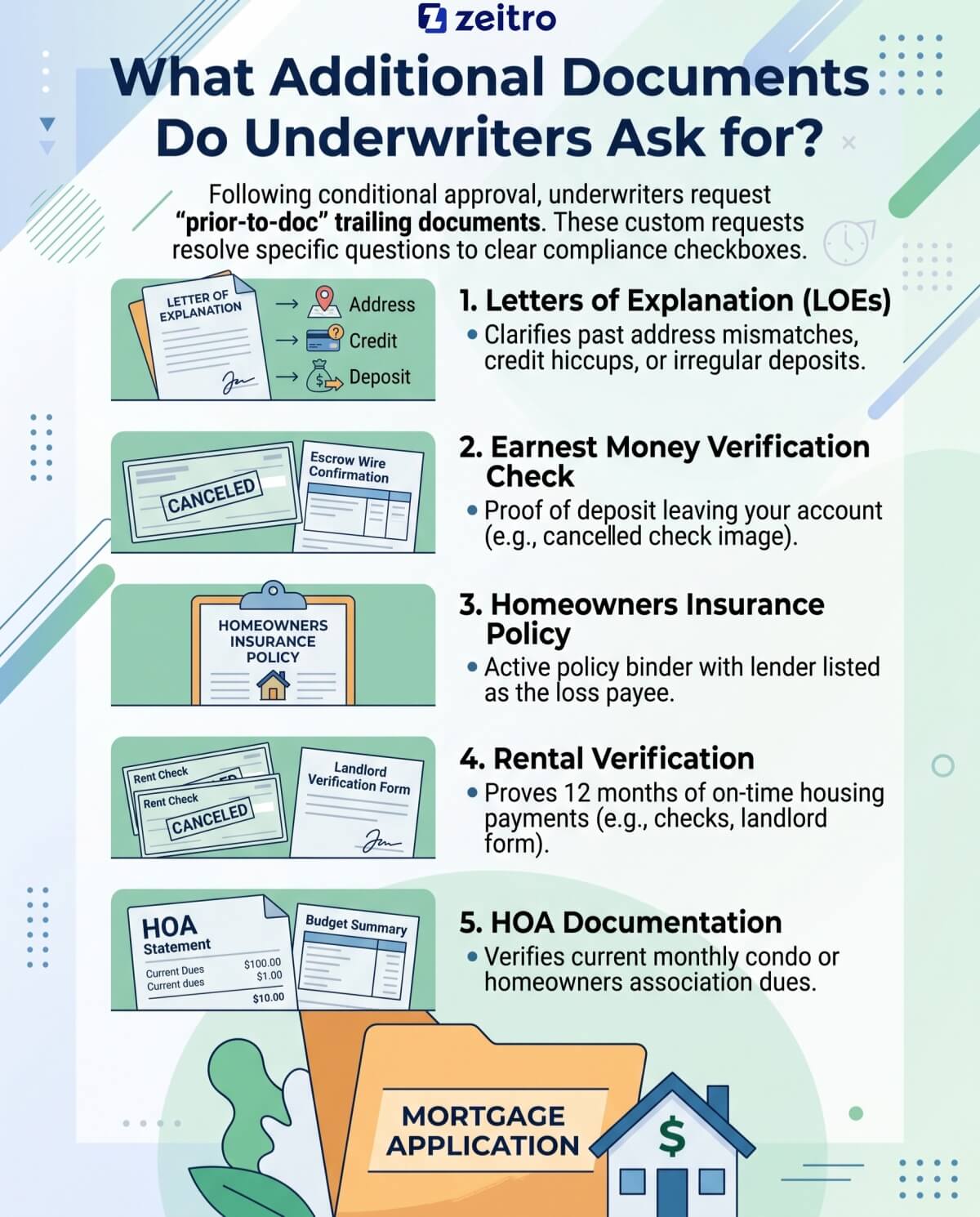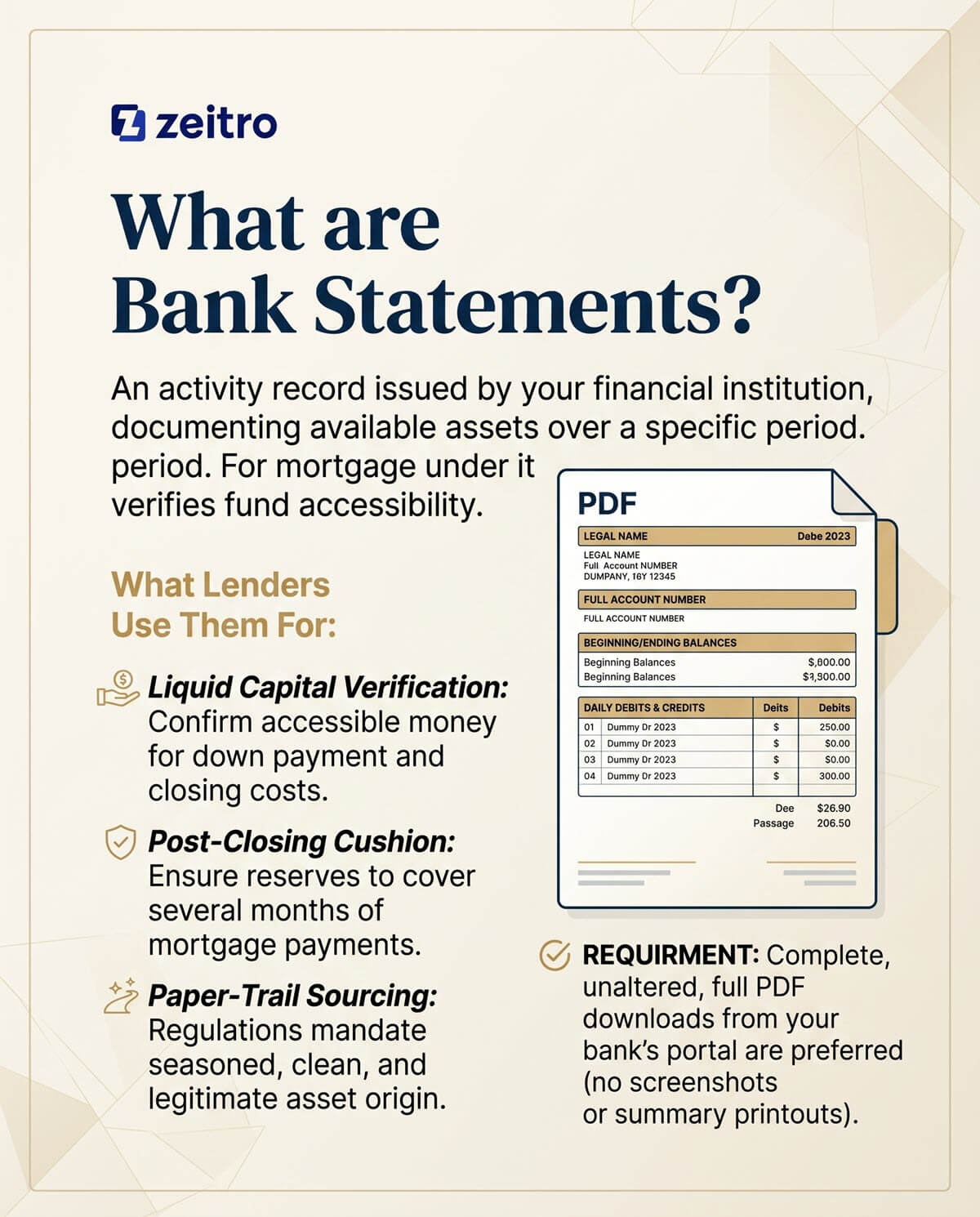

As a loan officer, I often sit with hopeful buyers whose dream homes slip away because their back-end debt-to-income (DTI) ratio is hovering just above 45%. When paying off debt quickly isn't an option, our best strategy is uncovering overlooked, legally permissible earnings. Expanding your qualifying gross monthly income lowers your overall ratio, turning an automatic loan denial into a clear-to-close approval.
Key Takeaways
- Boosting qualifying gross income lowers your back-end DTI percentage by expanding the denominator.
- Variable pay like overtime, bonuses, and commissions requires a consistent two-year receipt history.
- Nontaxable income, such as disability and Social Security, can be grossed up by 15% to 25% to inflate qualifying earnings.
- Liquid assets can convert into monthly qualifying cash flow via asset depletion programs.
- Lenders demand verified stability, documentation, and a clear three-year expectation of continuance.
Can You Increase DTI Qualification?
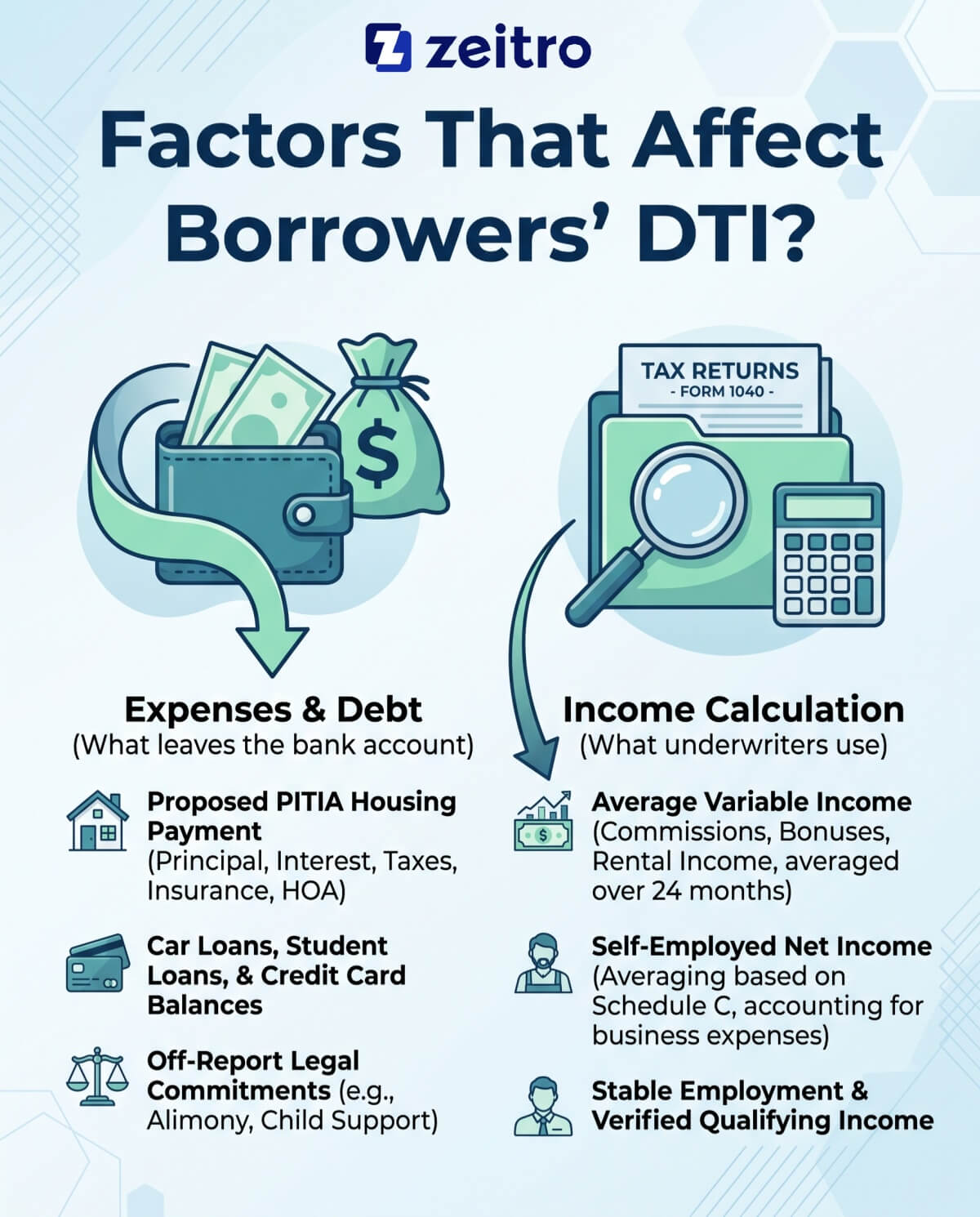
Yes, you can significantly improve your qualification standing. In mortgage underwriting, your DTI is a fraction: total monthly debt obligations divided by gross monthly income. While you want your DTI percentage to go down, you improve your qualification status by pushing the income denominator up. If paying off car notes or student loans isn't feasible, unlocking underutilized, compliant income streams achieves the exact same mathematical result.
Also Read:
- What Debt-to-Income Ratio is Needed for a Mortgage?
- How to Calculate DTI Ratio for Mortgage?
- Mortgage Debt-to-Income Ratio: Guide & Max DTI Limits
Requirements for Lenders to Count Income
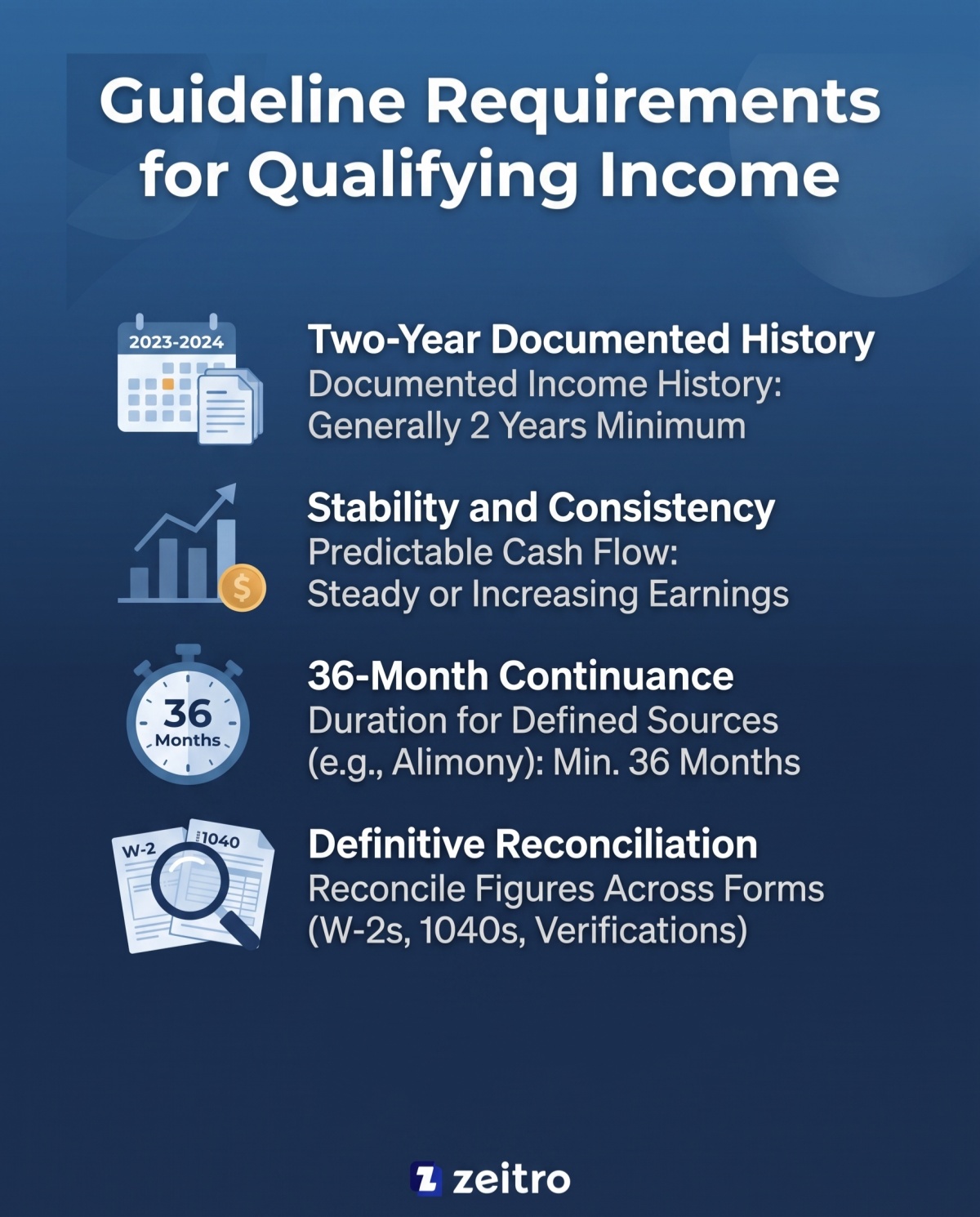
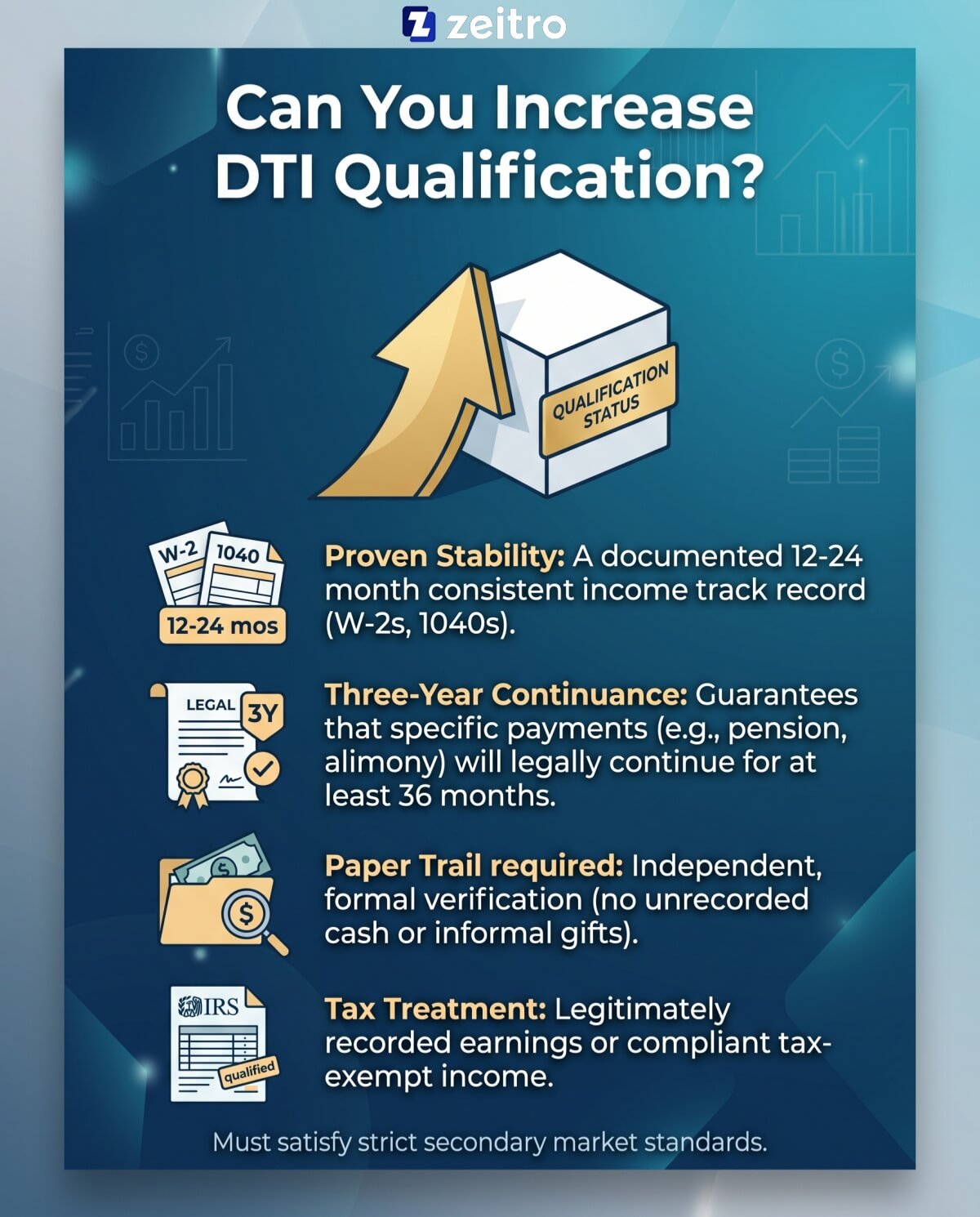
Underwriters never count arbitrary deposits hitting your checking account. Every dollar must satisfy strict secondary market standards established by Fannie Mae, Freddie Mac, or government agencies. To be counted toward your mortgage application, income must meet four baseline tests:
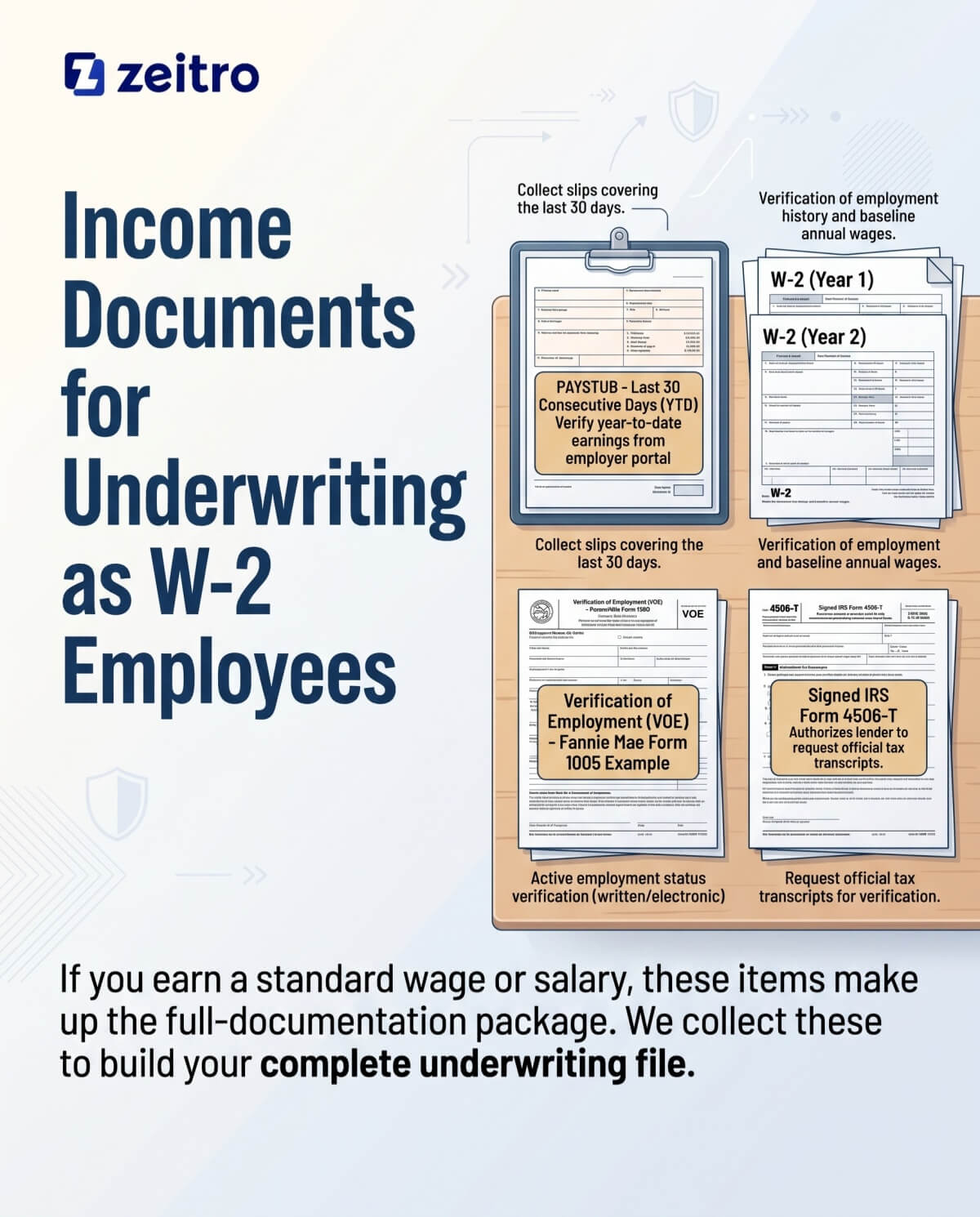
- Documented Stability: You must prove a consistent track record, typically supported by W-2s, 1040 tax filings, or formal written verifications spanning 12 to 24 months.
- Three-Year Continuance: For certain income types, such as alimony, child support, separate maintenance, and some pension or annuity payments, lenders must document that payments are legally guaranteed or highly likely to continue for at least 36 months from the note date. Other income sources (e.g., Social Security, VA disability, employment income) follow different continuance standards based on eligibility, age, or employment history.
- Independent Verifiability: Paper trails matter. Cash-in-hand arrangements, informal side gigs, or unrecorded family gifts cannot be used to qualify.
- Legitimate Tax Treatment: Earnings must either show on federal returns or qualify under specific agency rules governing tax-exempt earnings.
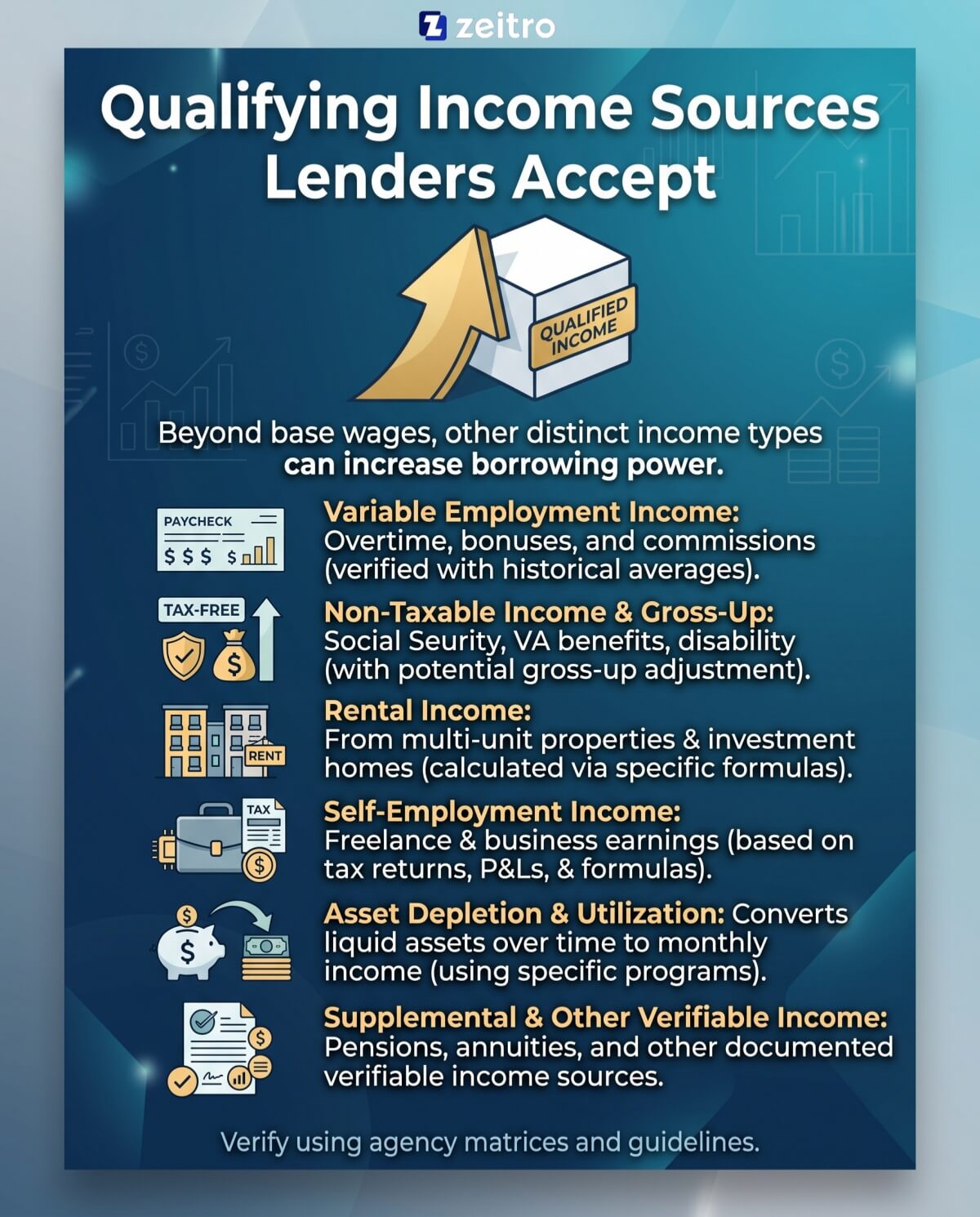
Qualifying Income Sources Lenders Accept
When clients need to suppress an elevated DTI, we review their financial profile beyond base hourly wages. Agency matrices and non-conforming guidelines recognize several distinct income categories that can push your borrowing power over the finish line.
#1 Variable Employment Income (Overtime, Bonuses & Commissions)
If a sizable chunk of your earnings comes from irregular compensation, lenders can include it, but they will not accept your highest recent paystub at face value. Underwriters look for stability across full economic cycles before averaging these funds into your baseline earnings:
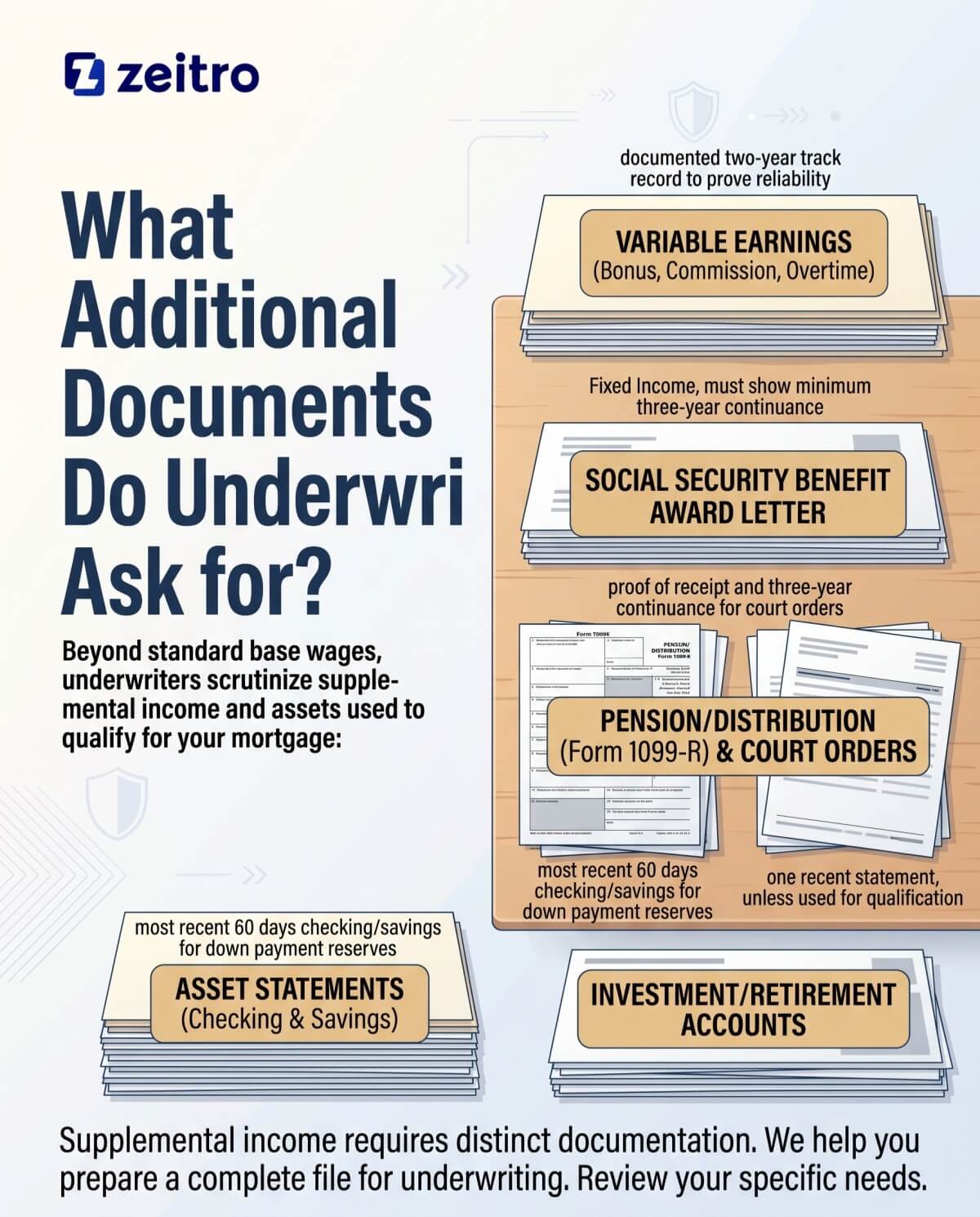
- Two-Year Track Record: Conventional and USDA rules typically mandate 24 continuous months of bonus or commission history with your employer or line of work.
- The 12-to-24 Month Window: FHA or agency guidelines may permit 12 to 23 months if backed by strong compensating factors, like high credit scores or significant cash reserves.
- Declining Earnings Treatment: If variable income (e.g., commissions, bonuses) decreases year-over-year, underwriters typically qualify using the lower recent year's amount. However, if the decline is due to temporary or explainable factors (e.g., market conditions, medical leave), lenders may consider averaging or apply compensating factors per agency guidelines.
- Restricted Stock Units (RSUs): Vested RSUs may be averaged over two years if accompanied by a written verification from the employer confirming future vesting schedules, and only if the shares have been sold and proceeds deposited into the borrower's account. Unvested or unsold RSUs do not qualify as income.
#2 Non-Taxable Income & The "Gross-Up" Advantage
One of my favorite levers for helping clients qualify is the "gross-up" rule. Because standard underwriting measures gross pre-tax earnings, non-taxable funds give you an unfair disadvantage unless adjusted upward. Mortgage guidelines allow us to artificially elevate these tax-free payments to reflect their true purchasing power:
- The 15% to 25% Boost: Fannie Mae, Freddie Mac, VA, and USDA guidelines allow lenders to gross up tax-exempt income by 25%. FHA guidelines cap the gross-up at 15% unless the borrower's documented effective tax rate justifies a higher adjustment.
- Eligible Payments: On conventional, FHA, and USDA loans, this policy applies to VA disability compensation (grossed up 25% on conventional/USDA, 15% on FHA), Social Security benefits (if non-taxable), and court-ordered child support. Note: VA loans count VA disability income at face value without gross-up.
- No Additional Debt Required: A borrower receiving $2,000 monthly in tax-free disability can be credited with $2,500 in qualifying monthly income under a 25% gross-up (conventional/VA/USDA) or $2,300 under a 15% gross-up (FHA), without taking on new debt or increasing liabilities.
- Minimal Documentation: Many government programs, including VA loans, permit grossing up without requiring personal tax returns, relying solely on your award letter.
#3 Rental Income & Multi-Unit Cash Flow
Real estate holdings can actively reduce your debt ratio if properties generate positive net cash flow. Whether you own an existing rental, purchase a multi-unit primary home, or add an accessory dwelling unit (ADU), lenders apply specific formulas to determine usable rental figures:
- The 75% Rule: Freddie Mac and Fannie Mae deduct a 25% vacancy and maintenance buffer from gross lease amounts, counting only 75% toward debt relief or income.
- Offsetting Liabilities: If 75% of your rental income exceeds the full principal, interest, taxes, and insurance (PITIA), the surplus directly elevates your qualifying monthly income.
- Landlord Experience Factor: Claiming full net profits on an investment purchase usually requires at least one documented year of property management experience. Otherwise, rent might only offset the payment.
- Short-Term Rentals: Certain Non-QM lenders allow verified Airbnb or VRBO earnings using trailing bank deposits or professional market rent analyses.
#4 Self-Employment & Small Business Income
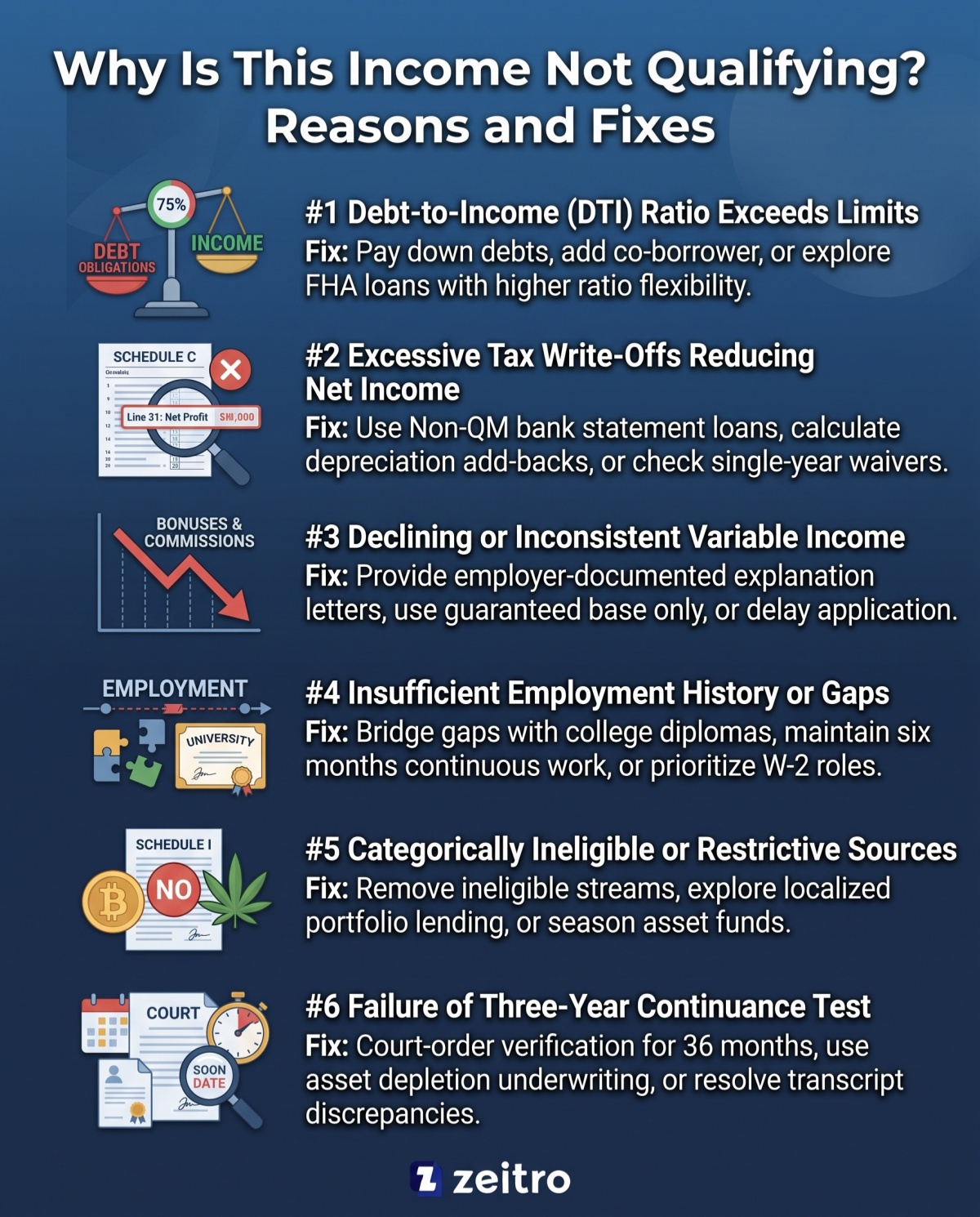
Self-employed borrowers often write off extensive business expenses to reduce taxes, inadvertently destroying their W-2 equivalent purchasing power. Fortunately, standard underwriting guidelines and alternative documentation loans provide structured paths to recapture that lost borrowing capacity:
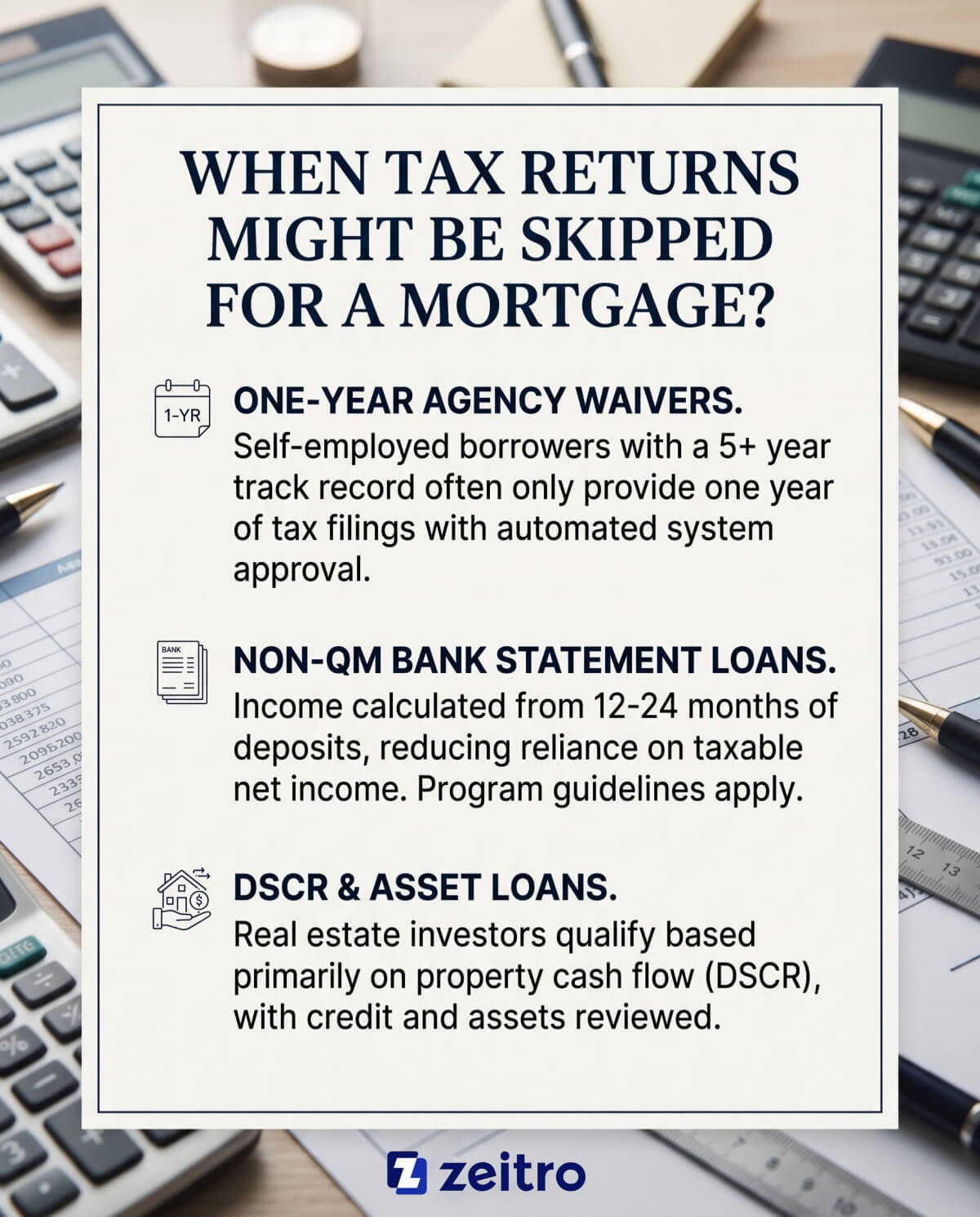
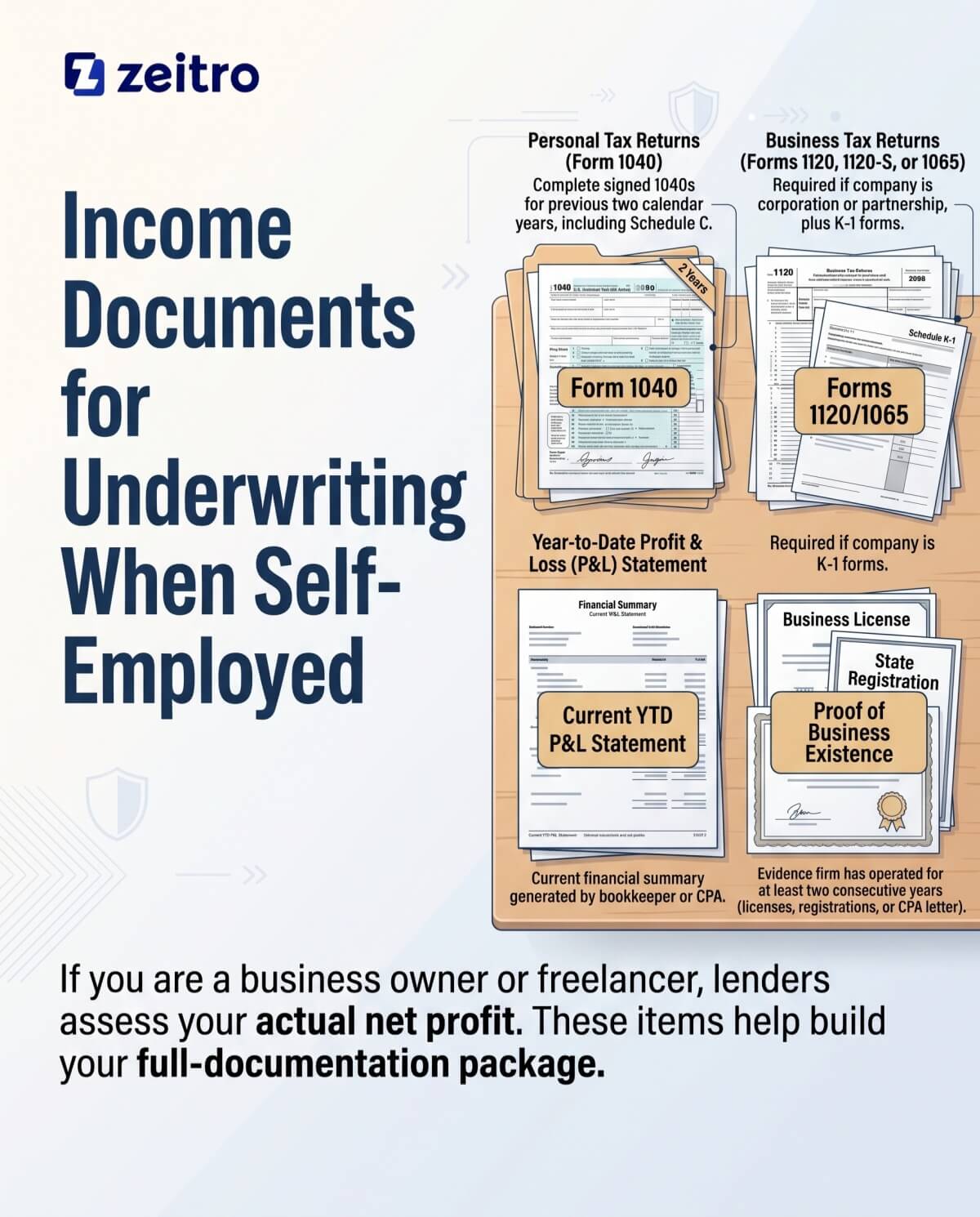
- Tax Add-Backs: On standard two-year tax return reviews, underwriters add back non-cash paper losses, such as equipment depreciation, business depletion, and business-use-of-home deductions.
- Two-Year Operating History: Traditional agency loans demand two full operating tax years, though 12 to 24 months can suffice if prior W-2 work aligns identically.
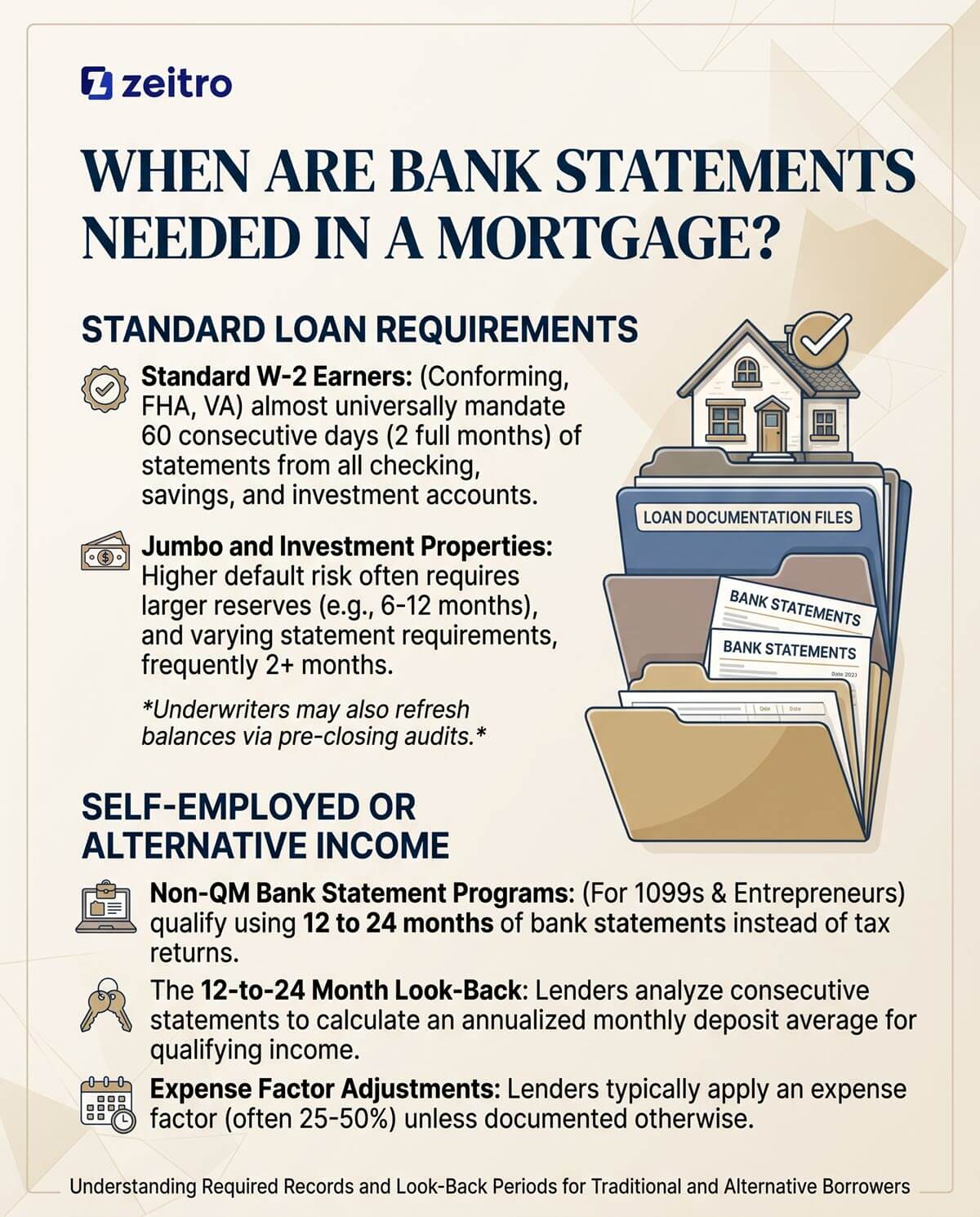
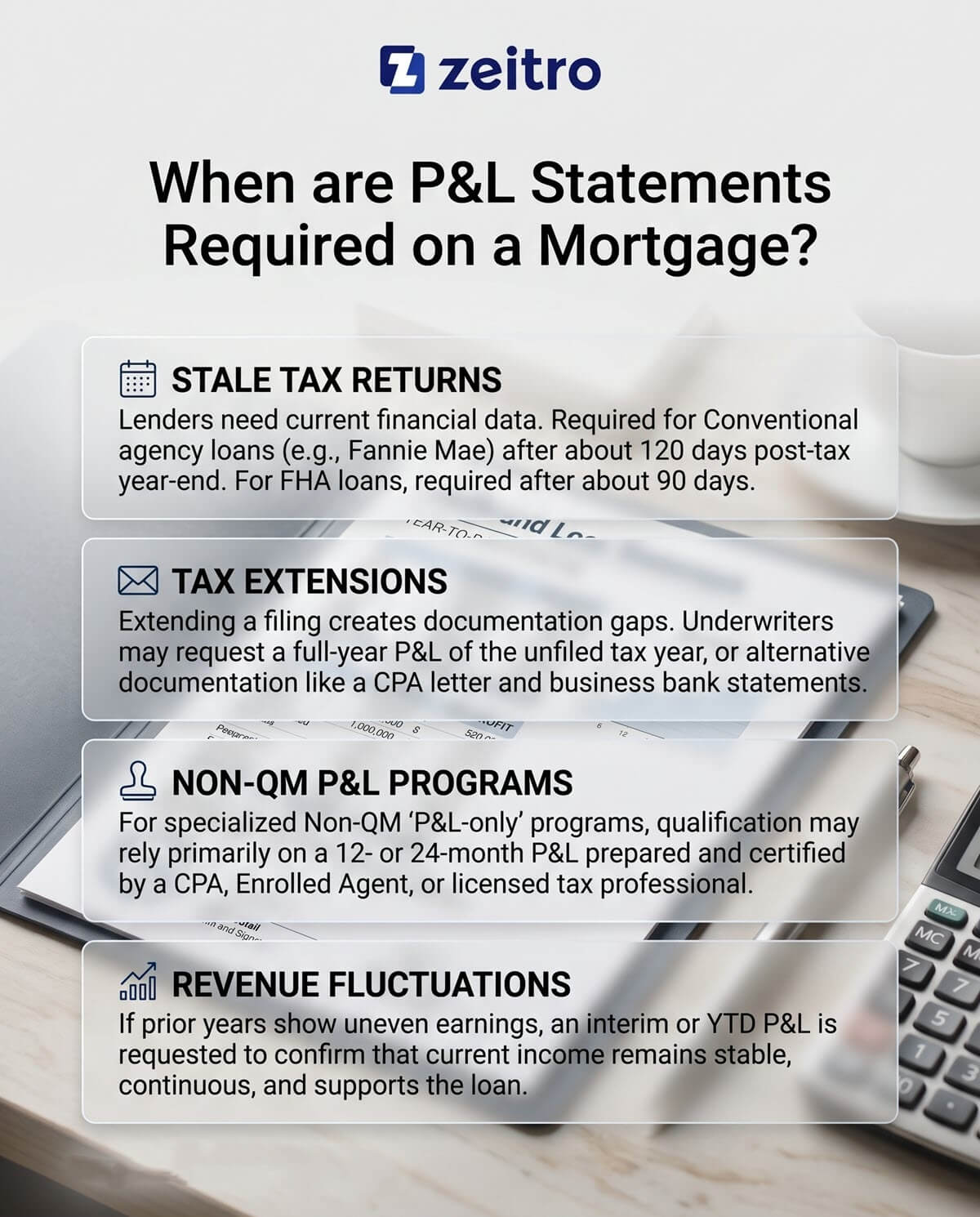
- Bank Statement Programs: When tax write-offs remain too aggressive, Non-QM lenders review 12 or 24 months of business bank deposits, establishing qualifying income based on average net cash flow.
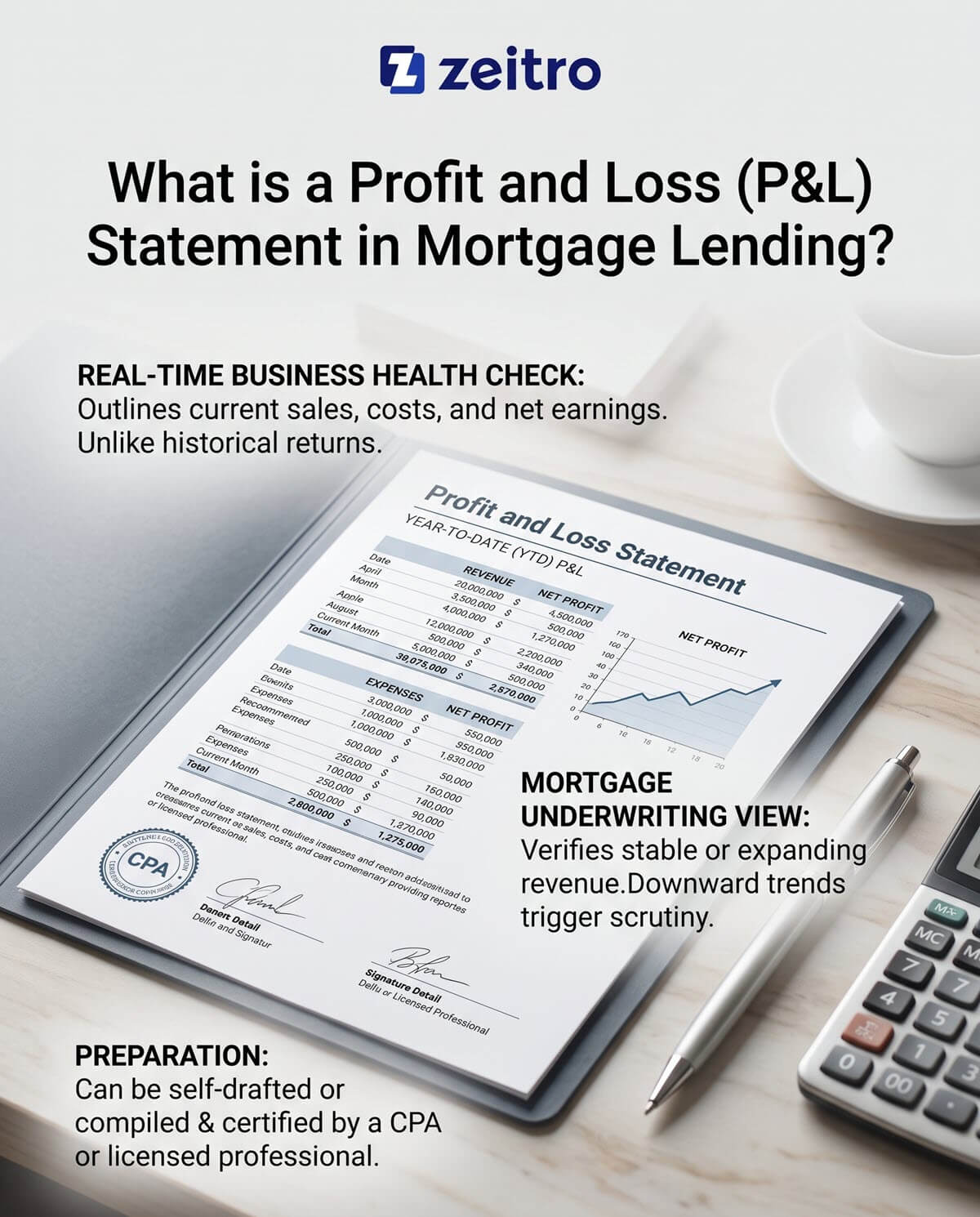
- Expense Ratio Adjustments: Specialized programs allow CPA-certified profit-and-loss statements, avoiding standard arbitrary expense haircut percentages and maximizing the final counted earnings.
#5 Asset Depletion & Utilization Programs
High-net-worth buyers, retirees, and individuals between careers often have deep asset reserves but low taxable monthly pay. Asset depletion programs solve this mismatch by mathematically converting accumulated liquid wealth into phantom monthly income streams:
- Standard Amortization Divisors: Conventional loans follow agency rules—Fannie Mae divides net eligible assets by the loan's amortization term (e.g., 360 months for a 30-year fixed), while Freddie Mac currently uses a 180-month divisor (per Bulletin 2026-10). Non-QM and jumbo programs often use shorter divisors such as 60, 84, or 120 months to generate higher qualifying income.
- Net Asset Calculation: Lenders deduct required down payments, closing fees, and post-closing reserves before running the asset calculation.
- Eligible Financial Accounts: Usable assets include checking accounts, savings, publicly traded stocks, mutual funds, and vested retirement accounts (discounted for early withdrawal penalties if applicable).
- Hybrid Income Structuring: Several wholesale lenders allow asset utilization to supplement traditional W-2 or pension earnings, providing the extra monthly margin needed to squeeze past a restrictive DTI barrier.
#6 Supplemental & Other Verifiable Income Sources
When standard earnings fall just short of approval thresholds, secondary financial agreements and municipal programs can provide the necessary cushion. We routinely leverage several specialized income streams to pull a client's ratio down:
- Alimony and Child Support: Recognized by lenders when documented via court order or divorce decree showing at least 6 months of consistent receipt (12 months preferred by many lenders) and at least 3 years of remaining continuance from the note date. FHA may accept 3 months of receipt history if payments are court-ordered.
- Automobile Allowances: Corporate vehicle allowances may be counted as income if documented on paystubs or W-2s, received consistently for at least 12 months, and expected to continue for 3+ years. The associated auto loan or lease payment must be included in monthly liabilities, and lenders may net out documented business-related expenses if applicable.
- Mortgage Credit Certificates (MCC): Through state housing finance agencies, MCCs provide an annual federal tax credit. Lenders may divide the certified annual credit amount by 12 and add it as supplemental monthly qualifying income, subject to program guidelines and borrower eligibility (e.g., first-time homebuyer status).
- Guaranteed Annuities and Trusts: Structured settlements, trust disbursements, and defined benefit pensions qualify seamlessly once documented with continuous payment history and three-year ongoing duration guarantees.
FAQs About Income Increasing DTI Qualification
Q1. Does a higher income lower my DTI?
Yes, absolutely. Your debt-to-income ratio is calculated by dividing monthly recurring debts by gross monthly qualifying income. Because income serves as the mathematical denominator, increasing your recognized earnings while keeping debt balances static naturally drives down your DTI percentage, instantly expanding your mortgage purchasing capacity.
Q2. How to increase DTI qualification?
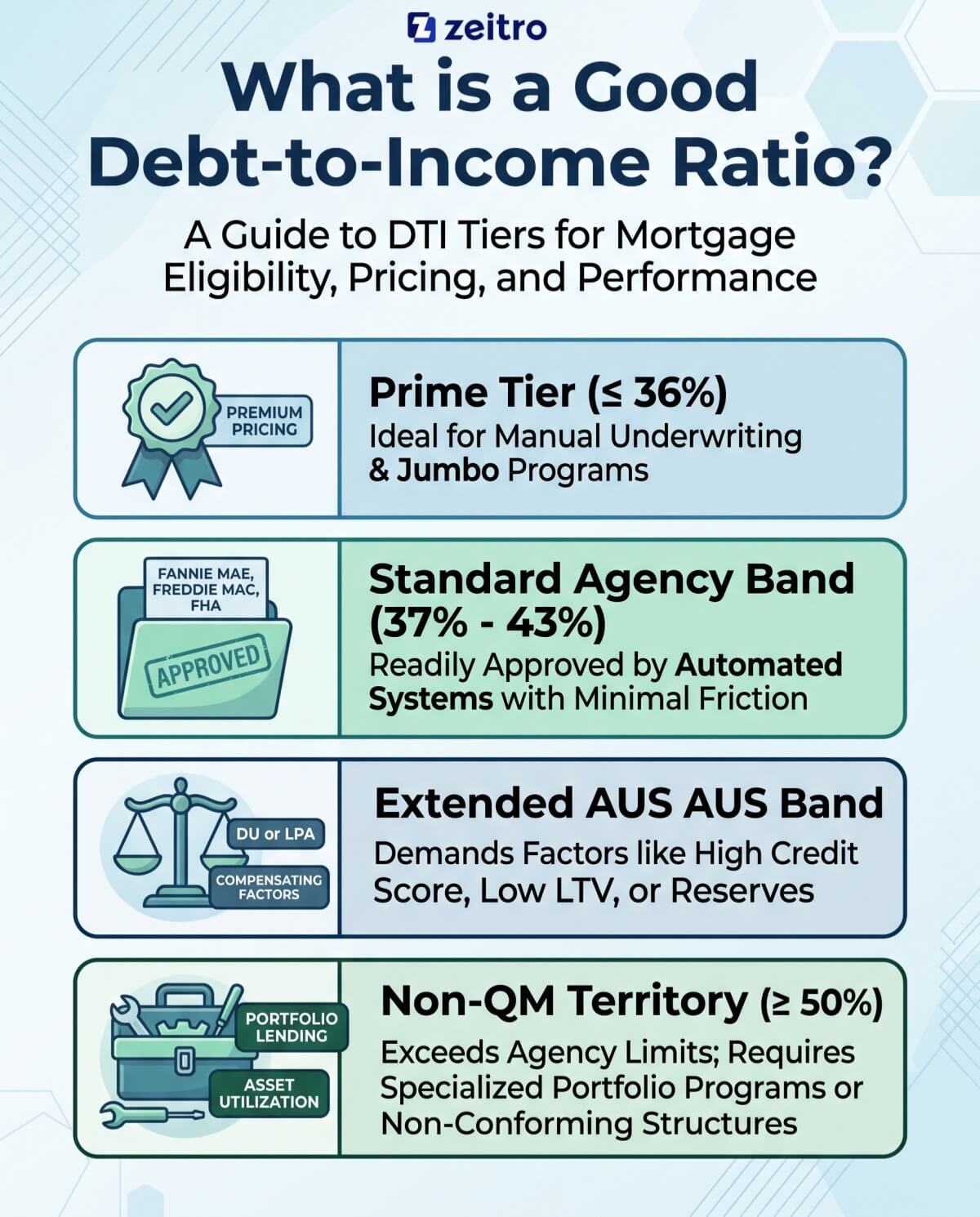
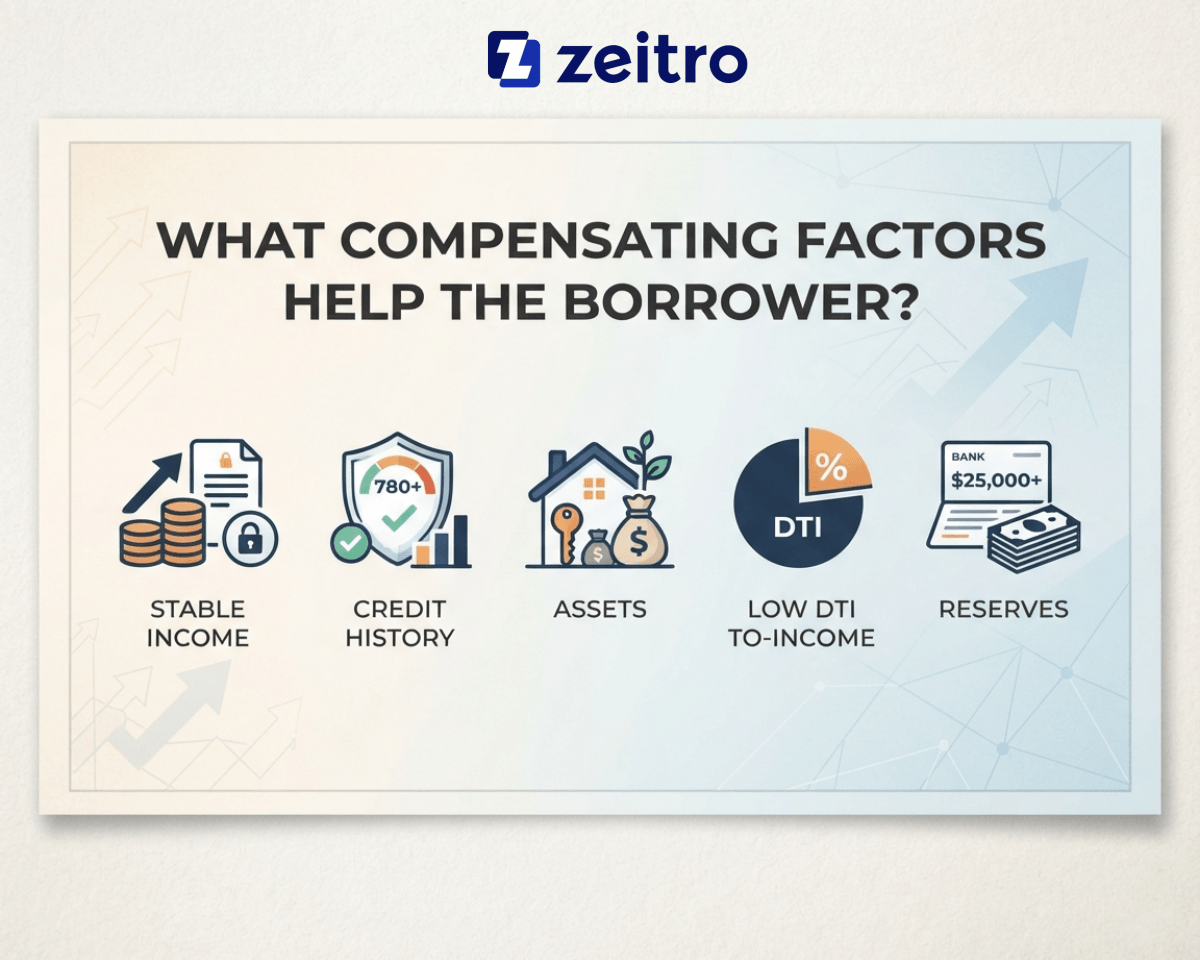
To strengthen qualification, either reduce your actual DTI or obtain an approval at a higher threshold. You can lower your ratio by grossing up non-taxable benefits, documenting two-year variable pay, or adding an eligible co-borrower. Alternatively, you can secure higher DTI allowances up to 50% by strengthening compensating factors, such as raising your credit score and holding six months of liquid reserves.
Q3. What are common DTI mistakes?
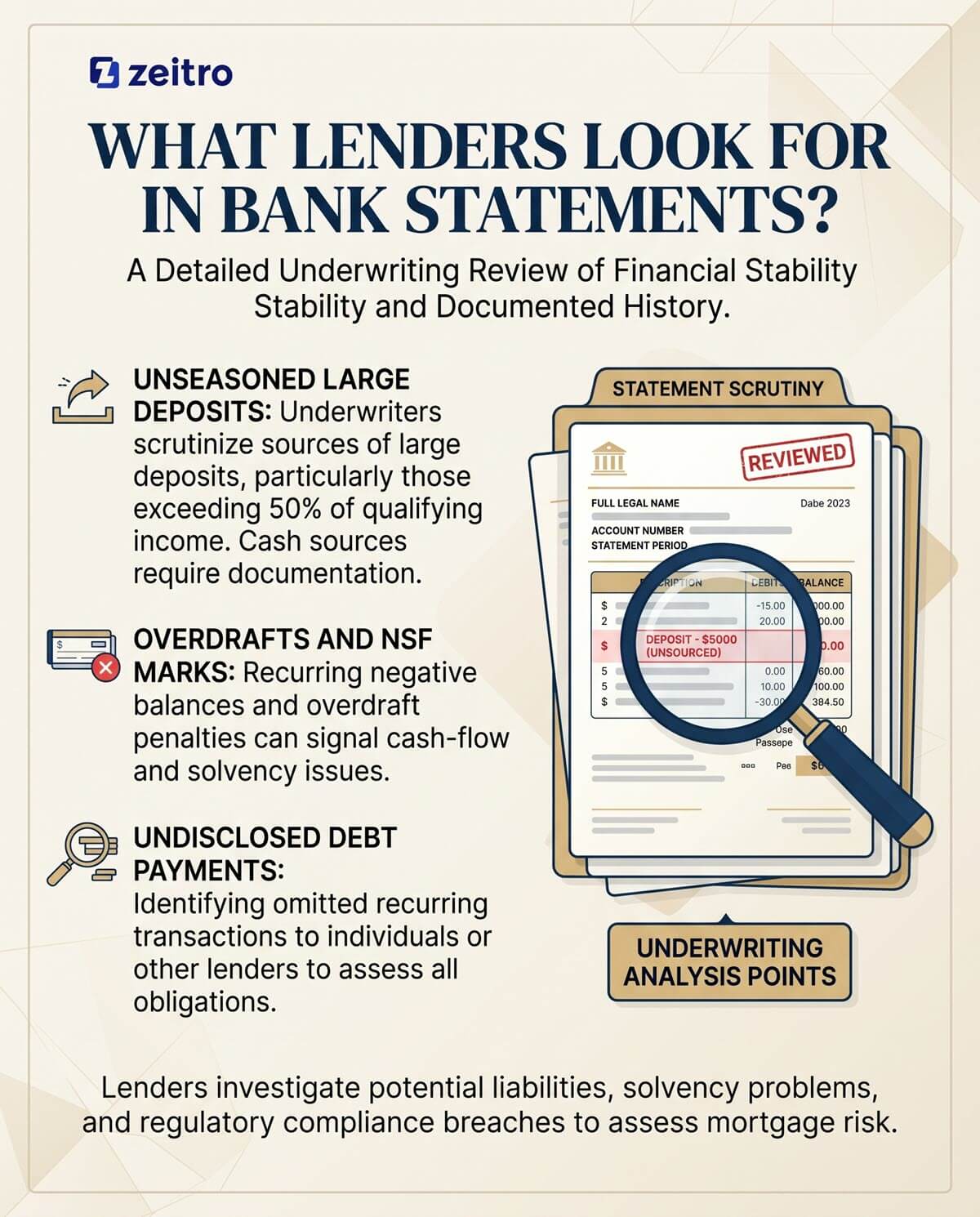
A frequent mistake is assuming gross sales deposits equal mortgage income. Underwriters evaluate net taxable earnings after deductions. Another costly error involves changing pay structures, such as switching from a W-2 salary to 1099 contract work right before applying. Finally, many buyers fail to disclose all deferred debts or open new credit lines, triggering unexpected ratio spikes during final underwriting review.
Q4. How can I lower my debt-to-income (DTI) ratio?
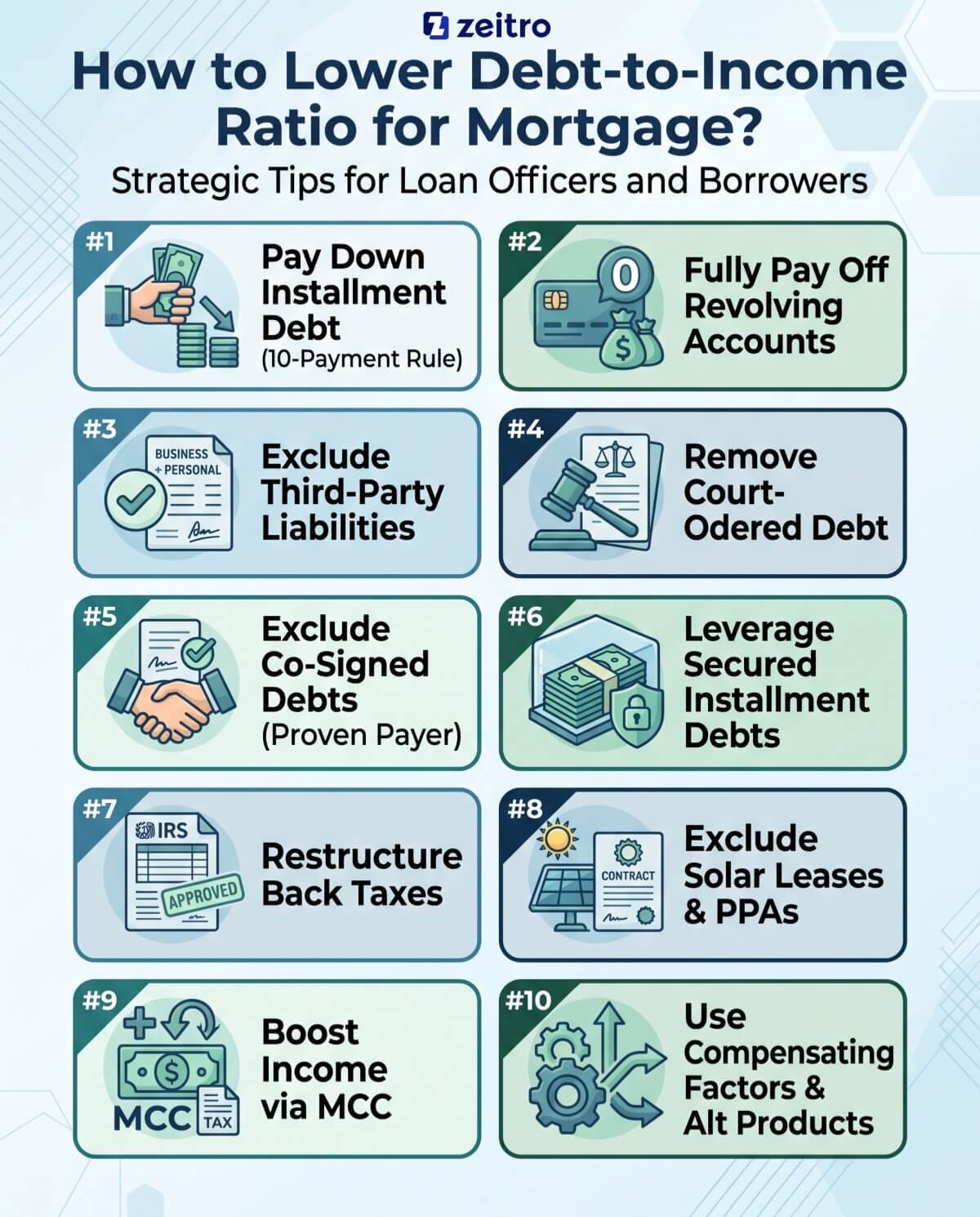
The fastest method to drop your ratio is targeting small revolving debts that carry disproportionately high monthly minimums. Paying off credit card balances eliminates those monthly liabilities entirely from underwriting calculations. If cash is tight, examine student loans to see if an income-driven repayment plan lowers required reporting payments, or utilize non-taxable gross-ups to mathematically expand income.
Q5. Can I get a mortgage with a high DTI?
Yes, many programs accommodate elevated debt levels. Conventional loans via Fannie Mae Desktop Underwriter often permit DTIs up to 45% or 50% with strong credit and reserves. FHA loans frequently allow back-end ratios up to 50% or even higher with automated approval. Meanwhile, VA loans have no rigid ceiling, relying instead on leftover residual income calculations.
Conclusion
Qualifying for a home loan does not mean you must rush to wipe out every liability overnight. By auditing your complete financial picture, from grossed-up disability to two-year bonus averages and rental revenue, you can systematically expand your counted income.
Before settling for a denial or downsizing your expectations, review your W-2s, tax returns, and bank statements with an experienced loan officer to uncover hidden borrowing capacity.
People Also Read
- Can I Use Child Support Income for a Mortgage?
- Can I Use Social Security Income for a Mortgage?
- Can I Use Pension Income to Qualify for a Mortgage?
- Can I Use Part-time Income to Qualify for a Mortgage?
- How Do I Calculate Tip Income for a Mortgage?



![[Tips for Loan Officers] How Can I Lower Borrower DTI?](https://cdn.prod.website-files.com/6731bc6e813a541b54c30b10/6aa3b89e281a639e7a5c6fca_lower-debt-to-income-ratio-banner.jpg)
![[Solved] What Red Flags Would a Mortgage Underwriter See?](https://cdn.prod.website-files.com/6731bc6e813a541b54c30b10/6aa24ca70b95e62dd7bbeefd_red-flags-mortgage-underwriting-banner.png)
![[Solved] Why is Loan Product Advisor (LPA) Rejecting Income?](https://cdn.prod.website-files.com/6731bc6e813a541b54c30b10/6aa11d2cb785a137b728997d_loan-product-advisor-reject-income-banner.jpg)


![[Solved] Why is Desktop Underwriter (DU) Rejecting Files?](https://cdn.prod.website-files.com/6731bc6e813a541b54c30b10/6aa11212d02666b337b8d2f4_desktop-underwriter-reject-file-banner.jpg)