Written by

Eric
Share this article

.svg)
Subscribe to updates
Last checked and updated on August, 2026.
As a Loan Officer or broker, you already know the paperwork side of a VA file is rarely the hard part. The hard part is the moment a lender's overlay contradicts what you thought was VA policy. VA Mortgage Guidelines are the rulebook the Department of Veterans Affairs uses to define how these loans get originated, processed, and underwritten for the people who served.
Here's the catch nobody tells new LOs: knowing the VA Handbook cover to cover still isn't enough. Every investor layers its own rules on top. How do you find out, in real time, whether a borrower with a 580 FICO clears Lender A but gets declined at Lender B, without opening five different PDFs?
In this guide, I'll walk through the VA guidelines that actually matter day to day, plus a workflow I've leaned on for the past few months: Zeitro Strata AI (formerly Scenario AI), a chat-based assistant that lets me check lender-specific VA rules in seconds instead of digging through guideline manuals.
People Also Read:
- What Are FHA Mortgage Guidelines? How to Verify FHA & Overlays Quickly?
- Conventional Mortgage Guidelines: What and How to Check Quickly?
- Jumbo Mortgage Guidelines: Check Eligibility Quickly and Accurately
- Should Mortgage Lender and Broker Build In-House AI Tools
- Mortgage Guidelines 2026: What Are They? How to Verify?
What Are VA Mortgage Guidelines?
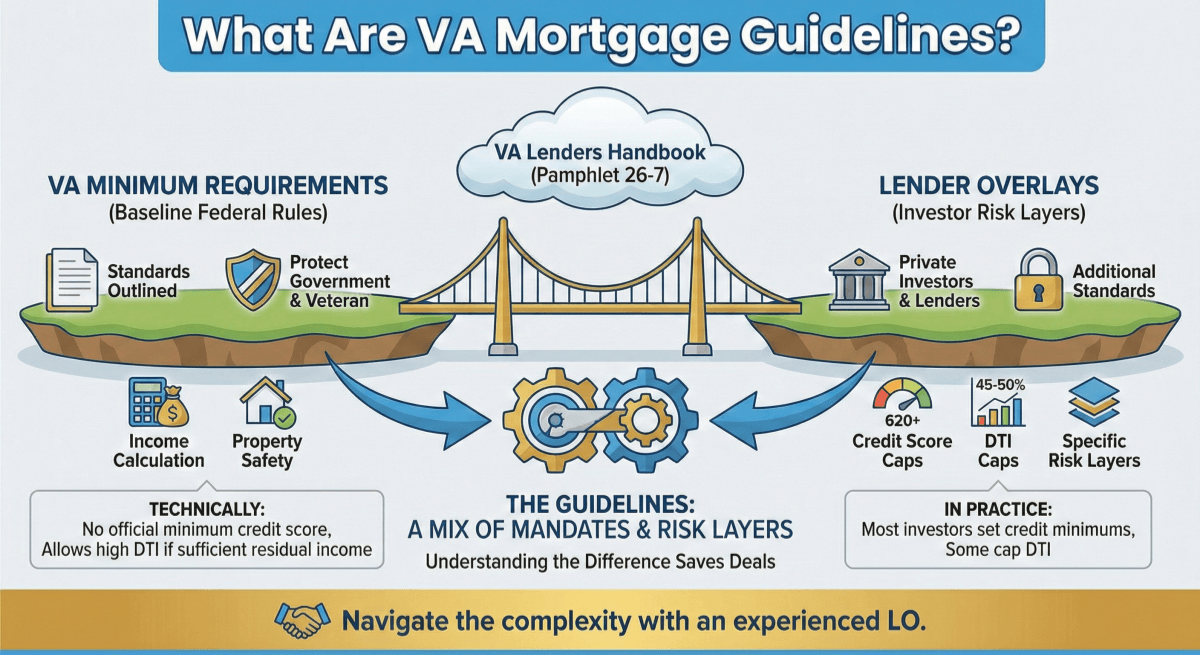
At the core, VA Mortgage Guidelines are the standards laid out in the VA Lenders Handbook (Pamphlet 26-7). They cover everything from how income gets calculated to what makes a property safe to finance. The rules exist to protect both the government, which guarantees a portion of every VA loan, and the veteran taking it out.
From years of working these files, the real skill isn't memorizing the handbook. It's telling the difference between "VA minimum requirements" and "lender overlays." The VA itself sets no minimum credit score. Most investors do anyway. The VA allows high debt-to-income ratios when residual income supports it, yet plenty of lenders still cap DTI at 45% or 50% regardless. This gap between federal baseline and investor risk appetite is where most confusion, and most denials, actually come from.
Who Do VA Mortgage Guidelines Apply To?
These guidelines aren't open to everyone. They apply only to those who've served, and eligibility always starts with a Certificate of Eligibility (COE) before credit or income even enters the conversation.
Broadly, the guidelines apply to:
- Veterans: Those who served the required length of time and were discharged under conditions other than dishonorable.
- Active-duty service members: Currently serving personnel, typically eligible after 90 continuous days of active duty.
- National Guard and Reserve members: Generally qualify with 6 creditable years in the Selected Reserve, or 90 cumulative days of active duty under Title 10, or 90 cumulative days of qualifying Title 32 service (sections 316, 502, 503, 504, or 505) with at least 30 of those days consecutive. This Title 32 path was expanded through recent legislation, which is why plenty of Guard members activated for COVID response or state missions qualify without realizing it.
- Surviving spouses: Unremarried spouses of veterans who died in service or from a service-connected disability.
If your client doesn't fall into one of these categories, VA financing and its zero-down benefit aren't on the table.
Why Are VA Mortgage Guidelines Important?
"Can we just wing it and let the underwriter sort it out?" No. Sticking to these guidelines matters for three reasons that go beyond compliance box-checking:
- The VA guaranty: The government backs a portion of the loan against default. Miscalculate residual income or overlook a Minimum Property Requirement, and VA can void that guaranty entirely, which is a disaster for the lender holding the loan.
- Secondary market salability: Most lenders don't hold VA loans on their books. They pool them into Ginnie Mae securities. A file that doesn't meet guidelines becomes unsalable, which can force a buyback that's painful for a small shop to absorb.
- Veteran protection: Rules like the 1% origination fee cap and tightly regulated closing costs exist to keep veterans from being taken advantage of. Following the rules isn't just about staying compliant. It's about doing right by the people these loans were built for.
VA Mortgage Eligibility Requirements 2026
The core pillars of VA lending haven't shifted much heading into 2026, but a few details are worth getting right.
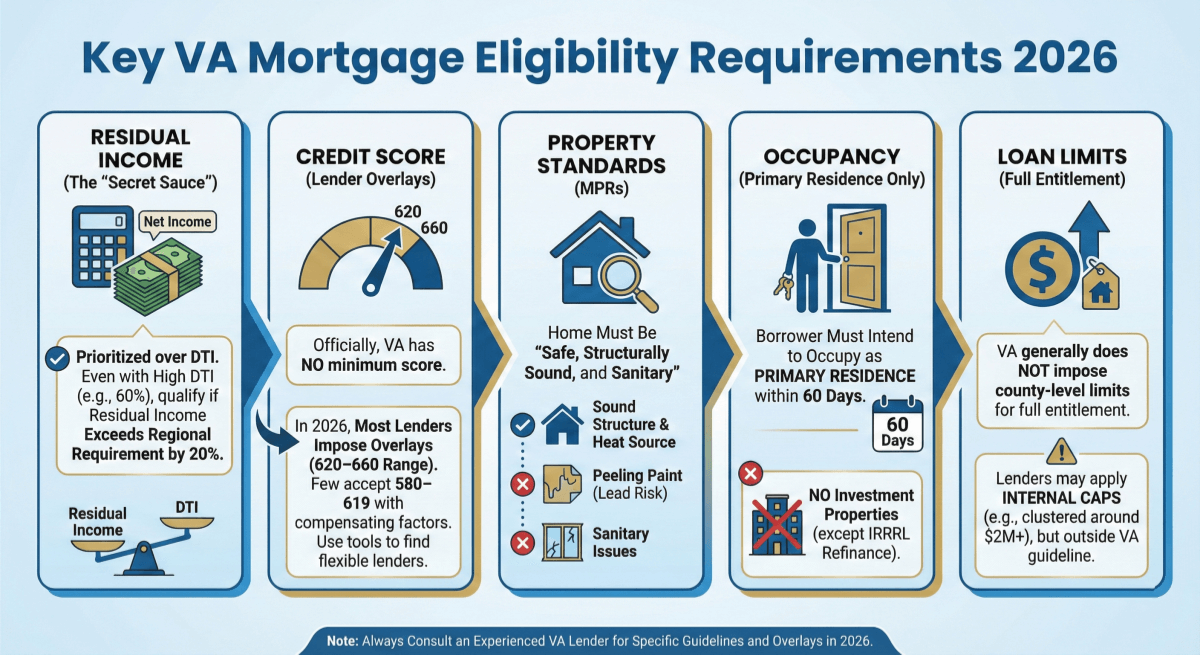
- Residual income, the real "secret sauce." Unlike conventional or FHA loans that lean heavily on DTI, VA underwriting prioritizes residual income, meaning what's actually left over for the family after debts and expenses. A borrower with a DTI as high as 55-60% can still qualify if residual income clears the regional threshold by a healthy margin.
- Credit score and manual underwriting. VA doesn't publish a minimum score. In practice, most investors set their own floor somewhere in the 620-660 range for automated approvals, with a handful going as low as 580-619 given strong compensating factors. Here's the part a lot of borrowers never hear about: when a file lacks a credit score or enough active tradelines, automated underwriting returns a "Refer" and the loan moves to manual underwriting instead of an automatic decline. At that point, an underwriter can qualify the borrower using 12 months of alternative credit, things like rent, utilities, insurance, and phone payments, provided there are enough clean tradelines to work with. Not every lender does manual underwriting, so this is exactly the kind of overlay question worth confirming before you submit a marginal file.
- Property standards (MPRs). The home has to be safe, structurally sound, and sanitary. This isn't a cosmetic checklist. Peeling paint on a pre-1978 home (lead risk) or the absence of a permanent heat source will stop an appraisal cold.
- Occupancy. The borrower needs to intend to occupy the property as a primary residence, generally within 60 days of closing. Investment properties don't qualify unless it's an IRRRL refinance.
- Loan limits. Borrowers with full entitlement aren't subject to a VA-imposed county loan limit, so a lender can finance a high loan amount at zero down as long as the veteran qualifies on income, credit, and appraised value. Many investors still apply their own internal ceiling, often clustered around $2M or higher, but that's a lender decision layered on top of the guideline, not a VA rule itself.
VA Loss Mitigation: What Happened to VASP?
If you've spent any time searching guideline manuals lately, you've probably run into references to VASP, the VA Servicing Purchase program, and specific handbook sections like Chapter 9 or 9.08(c)(3). It's worth clearing up where that program actually stands, because a lot of what's floating around online is outdated.
VASP launched in 2024 as a last-resort tool to help veterans facing foreclosure, giving eligible borrowers a fixed 2.5% modified rate through VA's Servicer Handbook (M26-4), Chapter 9. It worked. Tens of thousands of Veterans avoided foreclosure through it. But VA stopped accepting new VASP submissions as of May 1, 2025, and stopped issuing VASP payments after September 30, 2025. If a borrower is still asking about it today, VASP itself is no longer an option for new cases.
What replaced it is the VA Partial Claim Program, created under the VA Home Loan Program Reform Act signed in July 2025 and rolled out to accept submissions starting in June 2026. Instead of modifying the loan's rate the way VASP did, a partial claim moves the missed payments into a separate subordinate lien, bringing the primary loan current without changing its terms. It's still early in the rollout, so expect servicer procedures to keep evolving through the rest of 2026.
For loan officers and servicers, the practical takeaway is simple: if a borrower or file references VASP eligibility today, redirect the conversation toward the current loss mitigation waterfall, which now includes forbearance, standard loan modification, and the new partial claim option, rather than a program that's already closed.
Pro Tip: How to Verify VA Mortgage Guidelines in Seconds with AI?
Picture this scenario: a borderline borrower with a Chapter 13 bankruptcy buyout and a clean 0x30 payment history. You need to know which investor will actually accept that file today, not which one accepted it last quarter.
I used to handle this by logging into four or five different lender portals, downloading their guideline PDFs, and Ctrl+F-ing through hundreds of pages hoping I hadn't missed an update. It ate hours out of my week and left plenty of room for human error.
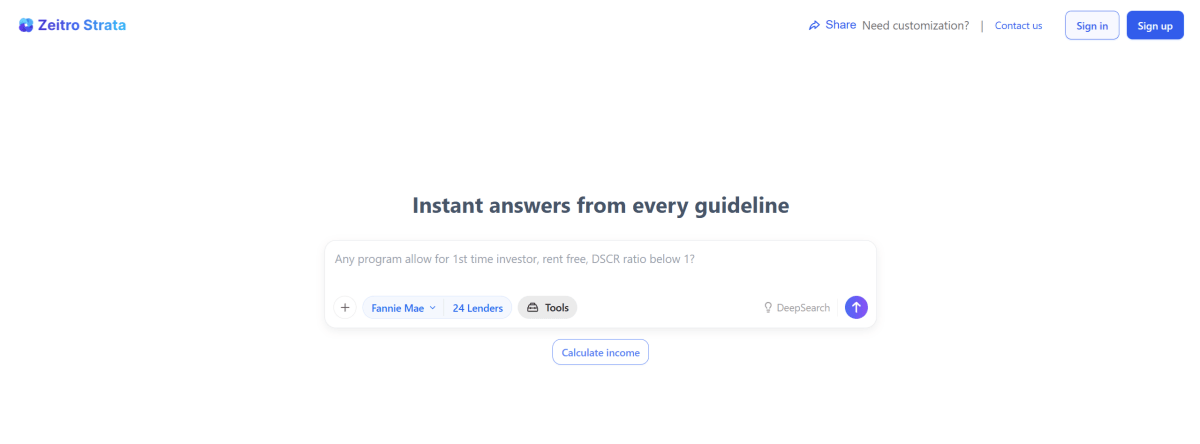
These days I run that same question through Zeitro Strata AI (the platform formerly known as Scenario AI), and it's changed how I work these files. It's an AI assistant built specifically for mortgage guidelines, pulling from more than a thousand guideline documents across FHA, VA, USDA, Conventional, and Non-QM programs, including VA rules from investors like Freedom Mortgage, AD Mortgage, CMG Financial, and HomeXpress.
What actually makes it useful in daily work:
- Lender-specific answers, not generic VA rules. I can ask something like "Does Freedom Mortgage require a lower DTI than the standard VA guideline?" and get a direct comparison instead of a textbook summary.
- Citations you can actually check. Every answer links back to the exact source page, which matters when you need to show an underwriter or manager where a rule came from, not just take a chatbot's word for it.
- Handles messy, specific scenarios. Whether it's a vague eligibility question or a detailed prequal edge case, the tool works from the context you give it rather than forcing you into a generic FAQ.
- Fast. It searches across hundreds of pages of guideline text in seconds, which beats waiting on hold with an account executive.
- Explain feature. When a guideline reads like legal boilerplate, the Explain option breaks it down in plain language without making you start a whole new research thread.
Instead of calling an account executive and waiting hours for a callback, I usually have my answer before I've finished my coffee.
FAQs About VA Mortgage Guidelines
Q1. What disqualifies a house from a VA loan?
The property has to meet Minimum Property Requirements. Common disqualifiers include serious structural damage, a leaking roof, broken windows, no permanent heating system, or peeling paint on a home built before 1978 due to lead paint risk. If it isn't safe, structurally sound, and sanitary, it won't pass.
Q2. What is the VA 5-year rule?
The "5-year rule" gets used loosely by originators, but it isn't an official VA term for loan eligibility itself. It shows up most accurately in surviving-spouse Dependency and Indemnity Compensation criteria, where a veteran must have been rated totally disabled for at least 10 years before death, or for at least 5 years immediately following release from active duty, under specific conditions. For purchase-loan underwriting, individual lenders apply their own seasoning periods (a foreclosure might need roughly 2 years, for example), but there's no single VA-wide 5-year rule that applies across every scenario.
Q3. What is the VA 1% fee rule?
VA caps a lender's origination fee at 1% of the loan amount. When a lender charges that flat 1%, they generally can't separately itemize their own overhead charges, like processing, underwriting, or document prep, on top of it. Third-party costs such as appraisal, title work, recording fees, and certain administrative services can still show up as separate line items on the Closing Disclosure even when the 1% cap applies.
Q4. Does VA have Identity of Interest guidelines?
Yes, though they work differently than FHA's version. An identity-of-interest (or non-arm's-length) transaction happens when the buyer and seller have a personal or business connection, like family members or an employer and employee. FHA typically caps these deals at 85% loan-to-value, forcing a 15% down payment. VA doesn't apply that same LTV penalty. Instead, the relationship needs to be disclosed upfront, and individual lenders may ask for extra documentation or a second appraisal to confirm the price reflects fair market value.
Q5. What is the downside of a VA loan?
The main tradeoff is the VA funding fee, which runs as high as 3.3% of the loan amount for a subsequent use with no money down (veterans receiving VA disability compensation are exempt). Beyond that, strict property standards make fixer-uppers harder to finance, and VA loans are limited to primary residences, so they're not an option for investment purchases.
Final Word
Mastering VA Mortgage Guidelines is one of the more useful skills in this business. It's what lets you get veterans into homes when other loan types fall short. The tradeoff is that lender overlays and program changes, VASP's wind-down being the latest example, shift often enough that manual research can quietly eat your whole day.
That's exactly why I keep Zeitro Strata AI open while I work. Whether it's a tricky Non-QM file or a standard VA purchase, it gives cited, lender-specific answers in seconds instead of hours, and you can try it free before committing to anything.
Stop guessing, stop digging through PDFs, and close more files with confidence.

![[Tips for Loan Officers] How Can I Lower Borrower DTI?](https://cdn.prod.website-files.com/6731bc6e813a541b54c30b10/6aa3b89e281a639e7a5c6fca_lower-debt-to-income-ratio-banner.jpg)