Written by

Eric
Share this article

.svg)
Subscribe to updates
Last checked and updated in July, 2026
Passing the NMLS exam is the easy part. The real challenge, and where 50% of new Loan Officers (LOs) fail within their first year, is choosing the right seat. In 2026, the mortgage landscape has shifted. We aren't just looking for who pays the highest splits anymore. We are looking for who offers the best survival kit: training, mentorship, and legitimate leads.
If you are reading this, you are likely standing at a crossroads. You might be worried about the lack of a base salary, or perhaps you are terrified of the idea of cold-calling Realtors who already have "a guy." I've been there. The "best" company isn't the same for everyone. It depends entirely on whether you need a high-volume call center to teach you the ropes or a boutique shop that will hold your hand through your first complex file. Below, I've broken down the 8 top contenders for 2026 that actually invest in rookie talent.
People Also Read
- Best Mortgage Loan Officer Training in 2026: Which to Pick?
- 6 Best Loan Origination Software for LOs/Brokers in 2026
- 6 Top Loan Origination Systems 2026: Close More Loans Quicker
- [Proven] How to Generate Mortgage Leads for Free? 6 Methods
- 8 Best Mortgage Lead Generation Companies in 2026: Don't Miss
- 11 Best Loan Officer Schools for Newbies: Online & Local
8 Top Mortgage Companies for New Loan Officers
Based on training infrastructure, commission structure, and current employee sentiment, here's a quick side-by-side before we get into the details:

Now, the full breakdown.
1. Rocket Mortgage
Type: National Retail Lender
Best For: Learning the Trade Fast
If you're coming in with zero sales background and want the most structured onboarding in the industry, Rocket is still the heavyweight. As a new banker, you're not handed a phone and a login on day one — you go through a genuinely rigorous, weeks-long training track before you ever take a live call.
Rocket also solves the number-one problem every rookie faces: where the leads come from. You don't have to hunt for business early on; it's routed to you. Their internal platform, Rocket Logic, automates a large chunk of the processing work, freeing you up to focus on selling and structuring the loan. Their 2026 curriculum has also shifted noticeably toward advisory-style selling instead of pure rate-shopping scripts.
Pros:
- Structured onboarding: You'll learn objection handling and loan structuring in a real classroom setting, not by trial and error.
- Inbound leads: Live transfers come in daily, so prospecting isn't your first job.
- Base salary: Unlike most brokerages, you get a modest base plus overtime while you ramp up.
Cons:
- High-pressure floor: It's a call-center environment, and burnout is a real risk if you don't pace yourself.
- Thinner commission: Since leads are handed to you, your basis points per loan run below street average.
Verdict: A strong two-year training ground. Learn the trade here, then decide whether to stay or go independent.
2. Fairway Independent Mortgage
Type: Retail Branch Model
Best For: Culture & Local Networking
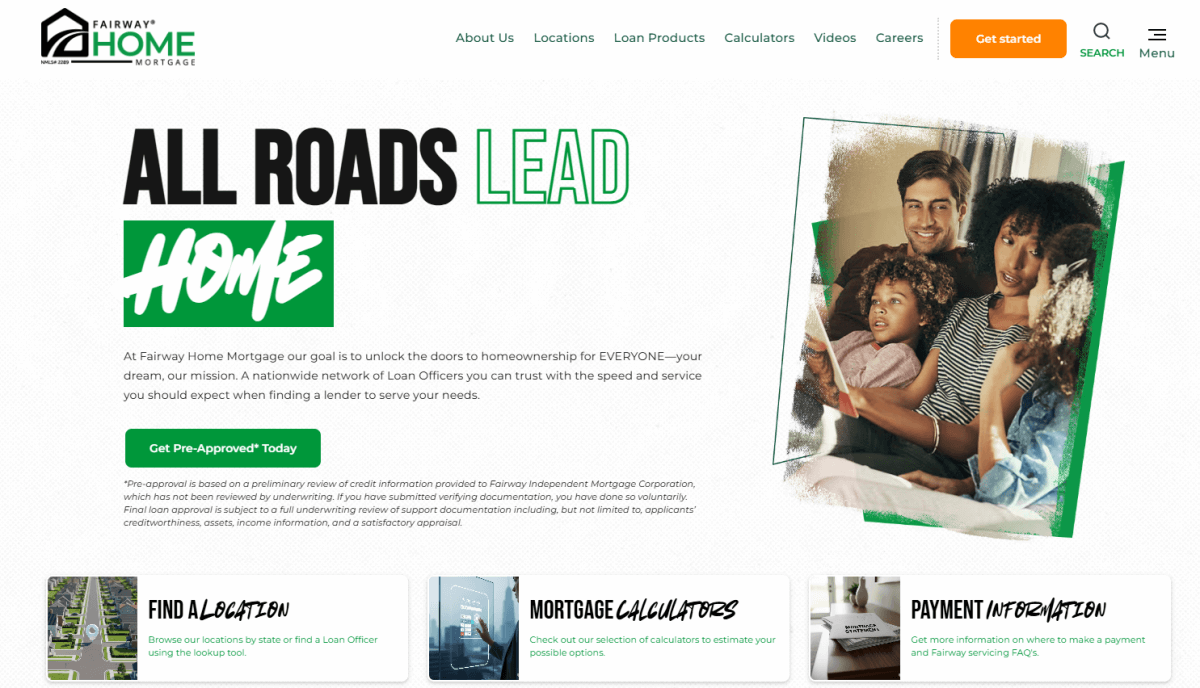
Fairway (NMLS #2289) runs on a branch model rather than a centralized call floor, so your day-to-day depends heavily on your local branch manager. That said, the corporate backbone is genuinely strong. "Humble, Hungry, Smart" isn't just a wall poster here — it shows up in how the culture actually operates.
The company invests heavily in Fairway Ignite, its internal coaching platform built to get new originators producing quickly. Unlike a lead-fed retail floor, Fairway trains you to be Realtor-facing from day one. If your plan is to build a self-sourced business inside your own community, this is a solid launchpad.
Pros:
- Marketing Support: They provide excellent CRM tools and marketing assets to help you woo real estate agents.
- Speed: They are known for closing loans fast, which helps you build a reputation with agents.
- Mentorship: You are usually physically sitting near experienced LOs, not just headsets.
Cons:
- Tech variance: While corporate tech is good, some branches are more old-school than others.
- Pricing: Rates can sometimes be slightly higher than wholesale brokers, requiring you to sell on value and service, not just price.
Verdict: The best home for the social butterfly who wants to build a local referral empire.
3. Guild Mortgage
Type: Retail/Community Lender
Best For: Long-term Retention & Product Mix
Guild Mortgage (NMLS #3274) has been in business since 1960, and it shows in how it treats people. In the 2025 J.D. Power U.S. Mortgage Servicer Satisfaction Study, Guild ranked second nationwide among mortgage servicers — a meaningful signal in an industry where "servicing" complaints are common.
For a new LO in 2026, Guild's real advantage is its product menu. "Guild University" gives you structured learning, but the bigger win is access to hundreds of down payment assistance (DPA) programs and government loan options that let you say "yes" to borrowers other lenders turn away. As a rookie, your first clients will likely be first-time homebuyers, and Guild gives you the tools to actually get them across the finish line.

Pros:
- Servicing Retained: Guild services most of their own loans. This means your client remains your client, not sold off to a big bank that steals your future refinance.
- Niche Programs: Access to hundreds of DPA programs gives you a unique wedge to get in with Realtors.
Cons:
- Traditional: It feels more like a traditional bank environment compared to the "tech-bro" vibe of some fintechs.
- Self-Gen: You largely need to generate your own business. they don't hand out leads like candy.
Verdict: Perfect for the "Community Banker" who wants to specialize in first-time homebuyers.
4. Full Circle Home Loans
Type: Boutique Brokerage (Regional focus)
Best For: High-Touch Mentorship
Moving away from the national names, Full Circle Home Loans is the boutique option on this list. Its footprint is smaller and heavily concentrated in California, so check licensing in your state before applying — but this is where you go if you want to be treated like family instead of a headcount number.
At a massive retail shop, getting your manager on the phone can take days. At a shop like Full Circle, you're often working directly alongside the broker-owner or a top producer. That apprenticeship-style setup is arguably the fastest way to absorb the nuance of underwriting guidelines that no training manual really teaches.

Pros:
- Less red tape: Fewer layers of bureaucracy than a large retail bank.
- Stronger splits: As a brokerage, commission potential typically runs higher than retail.
- Collaborative culture: A tight-knit team where people help each other instead of competing for scraps.
Cons:
- Limited brand recognition: No national ad campaigns backing you up — you have to sell yourself first.
- No handed-out leads: You eat what you kill, so self-motivation is non-negotiable.
Verdict: A great fit for the independent-minded LO who wants a mentor, not a manager.
5. Meridox Real Estate and Mortgage
Type: Hybrid (Real Estate + Mortgage)
Best For: The "One-Stop Shop" Strategy
Meridox offers a unique angle: they integrate real estate services with mortgage lending. In 2026, the "Hybrid Agent" or working closely within a dual-agency brokerage is a powerful trend.
The hardest part of being a new LO is finding homebuyers. At a company that also houses Real Estate Agents, the "leads" are sitting at the desk next to you. This ecosystem allows for a more natural flow of business compared to cold-calling strangers.
Pros:
- Captive Audience: Easier access to purchase transactions through internal agents.
- Streamlined Ops: Processing and real estate sides talk to each other, reducing friction.
- Cross-Training: You gain a better understanding of the Real Estate side, making you a better LO.
Cons:
- Distraction: It can be easy to lose focus if you are trying to learn both sides of the business at once.
- Niche: This model is specific and may not be available in all markets.
Verdict: A strategic hack for LOs who want to bypass the cold-calling phase by integrating into a real estate office.
6. Method Mortgage
Type: Regional Service Specialist
Best For: Process-Driven Success
Method Mortgage leans into exactly what its name suggests. It's a strong example of a regional lender — prominent across the Southeast — that competes on process and reputation rather than sheer transaction count.
The company emphasizes education and advisory-style service over pure sales volume. For a new LO, that takes some of the pressure off "closing the deal today" and puts the focus on consulting instead. Its operational support is built to protect closing dates, which matters more than almost anything for your early reputation with agents.

Pros:
- Reputation: In their markets, they are known for reliability. Using their name gets your offer accepted.
- Process: A clearly defined workflow helps new LOs avoid chaotic mistakes.
Cons:
- Geography: Highly regional. If you aren't in their licensed footprint, this isn't an option.
- Strict Standards: They likely protect their brand reputation fiercely, meaning high expectations for file quality.
Verdict: Best for the detail-oriented professional who values quality over quantity.
7. CV3 Financial Services
Type: Private Lender/Business Purpose Loans
Best For: The Investment Niche (Fix & Flip/DSCR)
If standard FHA loans for families sound boring, skip ahead — but if you want to tap into the real estate investment side of the market, CV3 is worth a serious look. It specializes in business-purpose lending: fix-and-flip, bridge loans, and DSCR (Debt Service Coverage Ratio) rental financing.
Traditional residential lending (QM) comes with heavy regulation — TRID, ongoing licensing education, the works. Investment lending moves faster and carries less red tape, largely because you're working with investors who care about the numbers, not the emotional weight of buying a family home.

Pros:
- Speed: Loans close in weeks, sometimes days.
- Repeat Business: Investors buy multiple homes a year. One client = 5 loans.
- Less Emotional: It's strictly business.
Cons:
- Niche Skillset: You won't learn standard Fannie/Freddie guidelines here.
- Market Volatility: Highly susceptible to interest rate spikes affecting investor appetite.
Verdict: The "Rich Niche" play for LOs who want to work with investors, not homeowners.
8. VanDyk Mortgage
Type: Government Loan Specialist
Best For: Serving Those Who Serve
VanDyk has a longstanding reputation for excellence in government lending, particularly FHA and VA loans. They maintain a "family" culture despite being a substantial lender.
Government loans are complex. VanDyk's support staff and underwriters are specialists in this arena. If you are located near a military base or a working-class community, having a lender that actually supports lower credit scores or complex VA files is a game changer.

Pros:
- Underwriting Access: Management and underwriting are generally accessible to help you structure tough deals.
- Marketing: Strong focus on educational marketing for FTHBs.
- Culture: High employee tenure suggests a supportive environment.
Cons:
- Retail Margins: Like other retail lenders, pricing may not be as sharp as a penny-pinching broker shop.
Verdict: The honorable choice for LOs passionate about helping veterans and first-time buyers get into homes.
Two Paths Most Guides Skip
Net Branching: The Middle Ground Between Employee and Broker
If retail employment feels too restrictive and running your own brokerage feels too far out of reach, a net branch is worth understanding. In this setup, you operate your own branch — with your own name, your own local marketing, and a good deal of independence — while sitting under a larger company's NMLS license, compliance infrastructure, and warehouse lines.
It's rarely the right starting point for a first-year LO with no book of business, since you're still responsible for driving your own volume without a corporate lead pipeline behind you. But if you're a couple of years in and already have referral relationships, it's a path worth researching before you assume the only options are "retail employee" or "solo broker."
What About Flat-Fee Brokerages or Traditional Banks?
A few other models are worth a mention, even if they didn't make the top 8. Flat-fee brokerages charge originators a fixed monthly or per-file fee instead of taking a percentage of commission, which can mean significantly higher take-home pay once you're consistently closing loans — the tradeoff is that you typically get little to no training or lead support, so it only makes sense once you already have a pipeline.
Traditional banks like Chase, U.S. Bank, or regional credit unions also hire loan officers, and the experience looks different from anything on this list: usually a stricter product menu, slower technology, but a steadier paycheck and strong brand trust with certain borrower segments. If job security matters more to you than commission upside right now, it's worth putting a bank or credit union on your interview list alongside the companies above.
Tips for New Loan Officers from Reddit
I spent hours scouring the trenches of r/loanoriginators and r/RealEstate to see what the "old guard" is telling the Class of 2026. Here is the unfiltered reality:
- Don't Buy Leads (Yet): The consensus is unanimous, buying mortgage leads as a rookie is a quick way to go broke. The conversion rates are abysmal (1-2%). Focus on "Warm" referral partners first.
- Retail vs. Broker: This debate never ends. Retail (like Fairway/Guild) offers better training and a safety net. Brokers offer better rates and higher commission but require you to be independent. Most Redditors suggest starting Retail to learn, then moving to Broker once you have a book of business.
- Find a Mentor: "I learned more in 3 months sitting next to a top producer than I did in 40 hours of SAFE education." Do not join a company if you are going to be working alone from home immediately. You need to overhear how pros talk to clients.
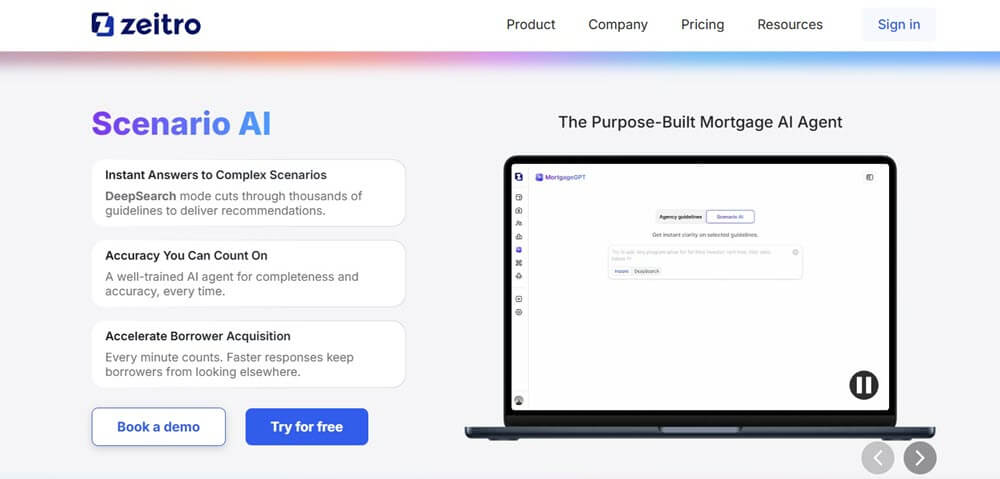
- Use Zeitro to Enhance Efficiency and Get Free Leads:This is the "cheat code" popping up in recent threads. New LOs often get bogged down by the Loan Origination System (LOS) clunkiness. Zeitro is an AI-driven layer that integrates with your LOS to automate document collection and income calculation.But here is the real kicker for new LOs: Zeitro allows you to create a Personal Brand Page. Instead of sending a boring 1003 link, you send a branded, professional page that captures leads naturally. It builds your "Organic Warm Leads" pipeline so you aren't reliant solely on your company. It effectively acts as your 24/7 digital assistant.
Key Factors to Consider As a New Loan Officer
When you are sitting in that interview, don't just ask "What's the comp?" Ask these three questions instead:
1. "What does the first 90 days of training look like?"
If the answer is "We give you a login and a phone," run. You need a structured curriculum, specifically on structuring files and analyzing income.
2. "Do you provide a marketing tech stack?"
You cannot survive in 2026 with an Excel spreadsheet. You need a CRM that automates birthday emails and loan anniversary checkpoints. Look for companies using modern stacks (or allowing tools like Zeitro).
3. "Who is my direct support?"
Will you have a dedicated processor? Or do you have to process your own loans? As a rookie, processing your own loans is good for learning, but bad for sales volume. Know what you are signing up for.
FAQs About Best Mortgage Companies for New LOs
Q1. What company pays loan officers the most?
Strictly speaking, Mortgage Brokerages pay the highest commission per loan, often ranging from 150 to 275 basis points (1.5% - 2.75%). Retail lenders (like Rocket or Fairway) typically pay less (50 - 120 bps) because they cover overhead, benefits, and sometimes provide leads. However, a lower percentage of a high volume of loans (Retail) can sometimes equal more take-home pay than a high percentage of zero loans (Broker).
Q2. How much commission do loan officers make on a $500,000 loan?
It depends on your "split" (commission rate).
At a Retail Bank (e.g., 100 bps/1%): You would make $5,000.
At a Broker Shop (e.g., 200 bps/2%): You would make $10,000.
At a Call Center (with base salary): You might make $2,500 commission, but you also have a guaranteed monthly paycheck.
Q3. Will MLO be replaced by AI?
No, but MLOs who don't use AI will be replaced by those who do. Best CRM tools for loan officers like Zeitro can handle data entry, income calculation, and document sorting, but they cannot hold a crying client's hand when an appraisal comes in low, or negotiate a complex counter-offer with a listing agent. The role is shifting from "Paperwork Gatherer" to "Strategic Advisor."
Q4. Is becoming an MLO worth it?
It is a career of high risk and high reward. The first 12-24 months are brutally hard. You will likely make less money than you expect. However, once you build a pipeline, it is one of the few careers where you can earn $200k+ without a college degree, with complete schedule flexibility.
Q5. What is a mortgage net branch, and is it right for a new LO?
A net branch lets you run your own branch under a larger company's license, giving you more independence than a standard employee role without the full overhead of starting your own brokerage. It generally works best for LOs who already have a couple of years of experience and an existing referral network, rather than someone fresh out of NMLS licensing.
Q6. Should I start at a retail lender or go straight to an independent broker?
For almost every new LO, starting retail makes more sense. You get structured training, a safety net, and often inbound leads while you learn how to actually structure a file. Once you've built a pipeline and a referral network of your own — typically after a year or two — moving to an independent brokerage or net branch tends to pay off far more than trying to go solo on day one.
Conclusion
The "best" company for you depends entirely on your personality. If you need structure and leads, go to Rocket. If you want a family feel and local presence, look at Fairway or Guild. If you are an independent hunter, find a mentor at a shop like Full Circle.
Regardless of where you land, remember that in 2026, efficiency is your currency. Don't let paperwork drown your sales time. Tools like Zeitro are essential for the modern LO, not just for processing loans faster, but for building a personal brand that generates business while you sleep. Start building your own pipeline today with Zeitro's intelligent tools and give yourself the fighting chance you deserve.
Check out Zeitro to see how it works.

![[Tips for Loan Officers] How Can I Lower Borrower DTI?](https://cdn.prod.website-files.com/6731bc6e813a541b54c30b10/6aa3b89e281a639e7a5c6fca_lower-debt-to-income-ratio-banner.jpg)