Written by

Eric
Share this article

.svg)
Subscribe to updates
Last checked and updated on July, 2026
I've been there. You find the perfect investment property, the numbers look incredible, and then your CPA reminds you that you wrote off so much income last year that you look "broke" on paper. It's the classic investor's dilemma: smart tax planning often wrecks your shot at a conventional mortgage.
That is exactly where a DSCR (Debt Service Coverage Ratio) loan saves the day. Unlike traditional financing, a DSCR loan doesn't care about your W-2s or tax returns. It cares about one thing: Does the property generate enough rent to pay for itself?
In 2026, lenders have tightened a few guidelines while loosening others, especially for short-term rentals. This guide walks you through the exact numbers you need to hit this year, so you can stop worrying about DTI (debt-to-income) ratios and start scaling your portfolio.
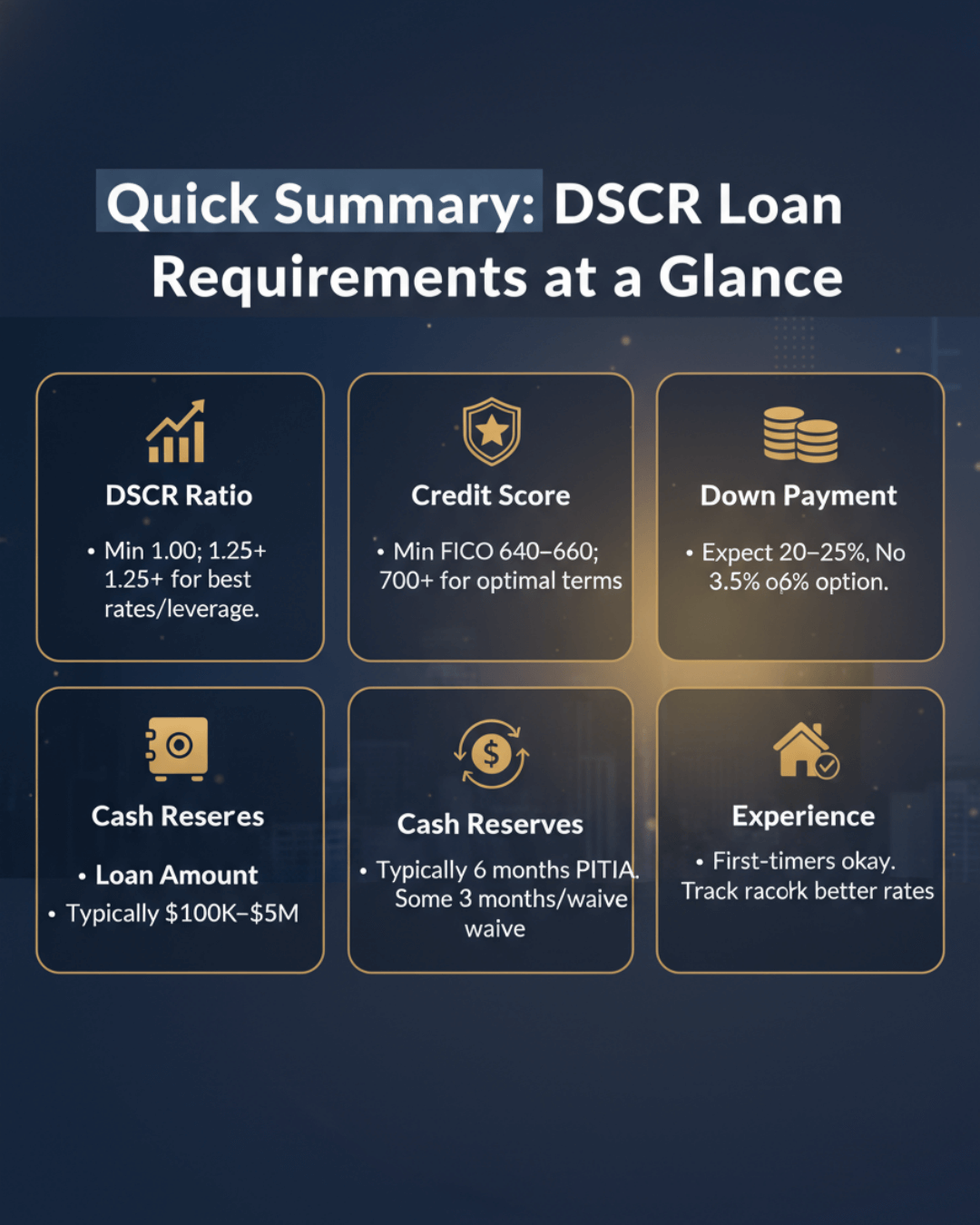
Quick Summary: DSCR Loan Requirements at a Glance
If you're in a hurry and just need the raw numbers, here's the current lending landscape at a glance.
To qualify for a DSCR loan in 2026, lenders typically look for:
- DSCR Ratio: A minimum of 1.00 or higher, with 1.25+ unlocking the lowest rates and maximum leverage.
- Credit Score: A technical floor of 620, though most lenders prefer 660–680, and 740+ earns the best pricing tier.
- Down Payment: 20% to 25%. Unlike FHA loans, there's no 3.5%-down option here.
- Interest Rate: As of mid-2026, DSCR rates generally run 6% to 8%, roughly 0.5–1.5 points above a comparable conventional investment property loan.
- Cash Reserves: 6 months of PITIA in liquid reserves after closing, though some programs accept 3 months or waive this for certain cash-out refinances.
- Loan Amount: Typically starts around $100,000–$150,000 and reaches $3–5 million for larger deals.
- Experience: First-time investors can qualify, but owning at least one other property often unlocks better pricing.
Minimum DSCR Ratio Lenders Look For
The "Ratio" is the heart of this loan. If you understand this math, you understand how to get approved.
The formula lenders use is simple: DSCR = Gross Rental Income ÷ Total Monthly Debt (PITIA)
PITIA includes Principal, Interest, Taxes, Insurance, and HOA fees.
DSCR lenders price your loan based on risk tiers. Here is what I am seeing in the market right now:
- The Safe Zone (1.25+): If rent is $2,500 and your mortgage payment is $2,000, your ratio is 1.25. This gets you the lowest rates and the smoothest underwriting.
- The Break-Even Zone (1.00–1.24): The property covers itself, but just barely. You can still get funded, though the rate creeps up a little.
- The No-Ratio Zone (below 1.00): Yes, you can still borrow even if the property runs a monthly loss, often the case in high-appreciation markets like Austin or Miami. Expect to put down 30–35% and accept a noticeably higher rate.
If your ratio sits close to the line, say 0.95, buying down the rate with points can push it back into passing territory. A lower rate means a lower payment, and a lower payment raises your DSCR.
Residential DSCR vs. Commercial DSCR: Know the Difference
One mix-up I see constantly: borrowers searching for "DSCR requirements" land on numbers meant for an entirely different product. Everything above applies to residential investment property loans on 1–4 unit homes, condos, and small multifamily buildings. Commercial real estate loans and SBA term loans use a stricter version of the same math, and lenders there typically want a minimum DSCR of 1.15 to 1.25 before they'll approve anything.
Larger apartment buildings (5 or more units) usually fall under this commercial bucket rather than the residential DSCR programs discussed here. If you're evaluating a 5-plus unit deal or a business term loan, plan around that higher 1.25 benchmark instead of the 1.00 floor that applies to residential rentals.
Credit Score & Borrower Qualifications for DSCR Loans
A common misconception I hear constantly: "Since they don't look at my income, my credit score doesn't matter." False. Because there's no income to review, your credit history becomes the main signal lenders have for judging how you'll handle the debt.
Technically, the floor sits around 620, but I wouldn't apply at that number unless you have no other option. Most active lenders price on a tiered scale:
- 740+ FICO: Unlocks the highest LTV (up to 80%) and the sharpest rates.
- 700–739 FICO: Solid pricing, usually capped around 75% LTV.
- 660–699 FICO: Workable, but you'll likely see a slightly higher rate and a bit less leverage.
- 620–659 FICO: Approvable at many lenders, though expect a cap closer to 65–70% LTV and a rate that runs 1–2 points above a top-tier borrower.
If you've been through a bankruptcy or foreclosure, most non-QM lenders want to see 2 to 4 years of seasoning before they'll approve a new DSCR loan, sometimes shorter with a larger down payment as a trade-off. That's a real advantage over the 7-year wait conventional loans often demand for investors rebuilding after a rough stretch.
I'd also recommend closing in an LLC. It's the standard structure among serious investors, and most lenders are set up for it, though a personal guarantee often still applies.
Down Payment, LTV, and Reserve Requirements
Let's talk cash to close. DSCR loans are commercial-grade products, so lenders want to see skin in the game.
In 2026, the standard down payment is 20% for a purchase. Push it to 25% and you'll usually land a slightly better rate.
- Purchase: Max 80% LTV.
- Cash-Out Refinance: Max 70–75% LTV. Lenders get more conservative the moment you're pulling equity out.
This is where a lot of first-timers get tripped up. You can't drain your account to zero at the closing table. Lenders require reserves, liquid cash left over once the down payment is covered.
- Requirement: Usually 6 months of PITIA.
- Example: If your payment is $2,000 a month, you need $12,000 sitting in the bank after closing.
- Acceptable Sources: Business accounts, personal savings, and sometimes stocks or 401k funds, though lenders often count only around 70% of the vested value.
- Seasoning: Most lenders want your down payment and reserve funds to sit in the account for at least 60 days before you apply. A large, unexplained deposit right before closing is one of the fastest ways to stall a file, so if you move money around, keep a paper trail and be ready to write a short letter of explanation.
If cash is tight, some lenders allow gift funds from family. Confirm this early, because not every DSCR lender accepts them.
Eligible Property Types & Loan Product Variations
One of the biggest shifts in 2026 is how lenders view Short-Term Rentals (STRs). A few years ago, financing an Airbnb with a DSCR loan was tough. Now, it's a standard product.
Eligible property types include the following.
- Standard: Single-Family Homes (SFR), Condos, Townhomes.
- Small Multi-Family: 2–4 Unit properties (Duplex, Triplex, Fourplex).
- Large Multi-Family: 5+ units usually fall under commercial multifamily loans, not residential DSCR.
If you are buying a vacation rental, you don't have a long-term lease to show the lender. Lenders now accept data from AirDNA or a 1007 Rent Schedule marked for short-term usage. Lenders will often cut the projected AirDNA income by 10-20% to be safe. Ensure your numbers still work with that "haircut."
To maximize cash flow, many investors look for Interest-Only DSCR loans. You only pay interest for the first 10 years. This lowers your monthly obligation significantly, which boosts your DSCR ratio and puts more cash in your pocket today, though you aren't paying down principal.
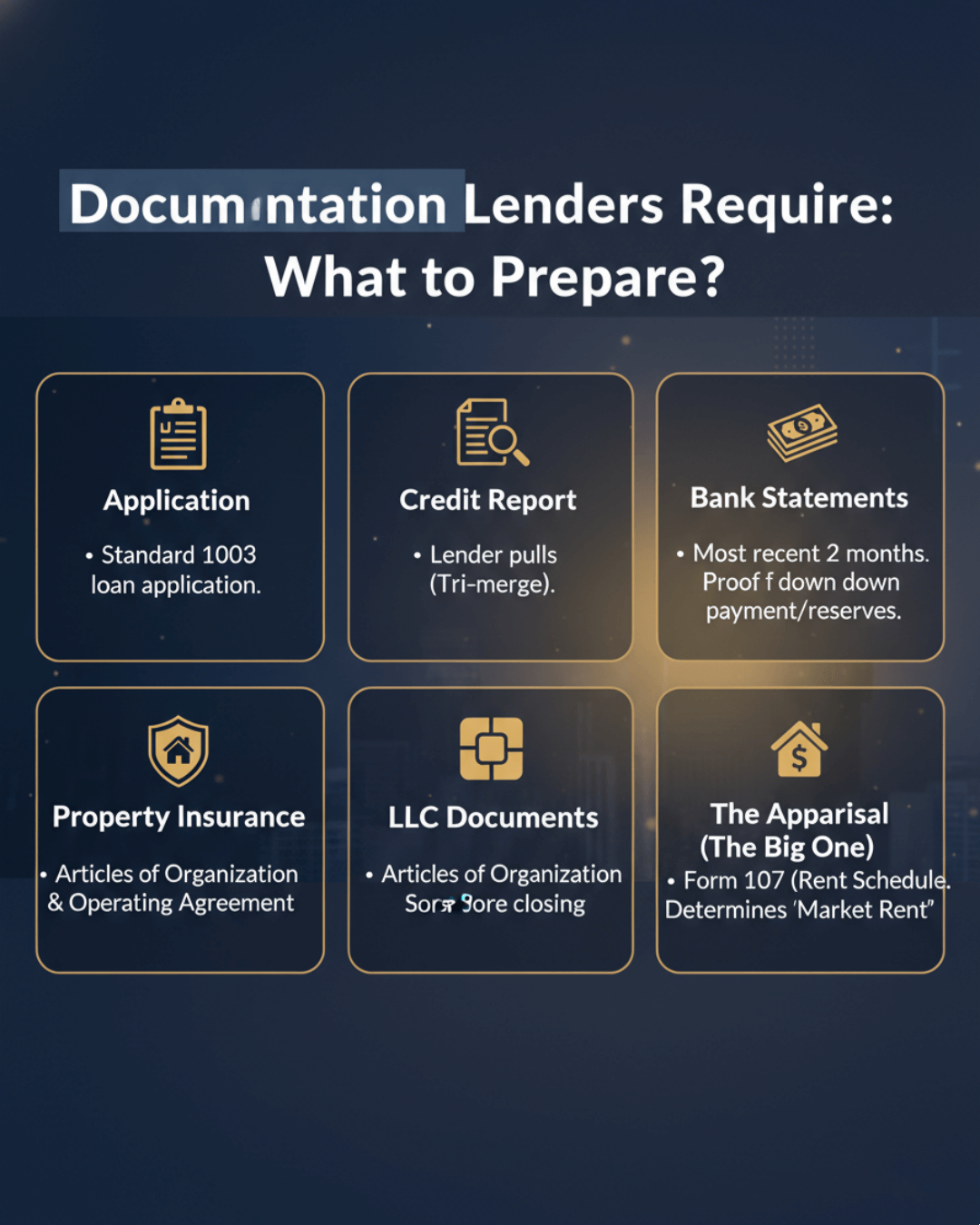
Documentation Lenders Require: What to Prepare?
The beauty of this loan is the lack of paperwork. You can skip the call to your accountant. But "low-doc" doesn't mean "no-doc."
Here's the checklist to have ready:
- Application: Standard 1003 loan application.
- Credit Report: The lender pulls a tri-merge report.
- Bank Statements: Usually the last 2 months, showing your down payment and reserves have been seasoned in the account.
- Property Insurance: A policy needs to be in place before closing.
- LLC Documents: Articles of organization and an operating agreement.
- The Appraisal: The appraiser completes a Form 1007 (Rent Schedule), which sets the "market rent" the lender uses. If you think the unit rents for $2,500 but the appraiser writes $2,000, the lender goes with the appraiser's number, and that can sink your ratio. Meet the appraiser at the property with rental comps in hand to make your case.
Current DSCR Loan Rates (Mid-2026 Snapshot)
Rates move week to week, so treat this as a snapshot rather than a quote. As of mid-2026, DSCR pricing generally runs from around 6% at the strongest tier (740+ credit, 1.25+ DSCR, lower LTV) up to 8% or slightly higher for thinner files with lower credit and a tight ratio. That typically puts DSCR loans somewhere between half a point and a point and a half above a comparable conventional investment property loan.
Your actual number depends on your credit tier, LTV, DSCR ratio, loan size, and whether you accept a prepayment penalty in exchange for a lower rate. Because pricing isn't standardized the way conforming loans are, two lenders can quote meaningfully different numbers on the exact same file. Getting a live quote from more than one source is the only way to know where you actually land.
A Quick Word on State-by-State Differences
DSCR loan requirements themselves don't change from state to state, the ratio math, credit tiers, and down payment ranges above hold nationwide. What does shift is the local environment around the loan. Insurance costs in states like Florida can be steep enough to drag your DSCR below where you expected, and some cities layer on short-term rental zoning rules or licensing requirements that sit entirely outside what your lender checks. Before you assume a deal pencils out, run your actual local insurance quote and confirm STR legality at the city level, not just the state level.
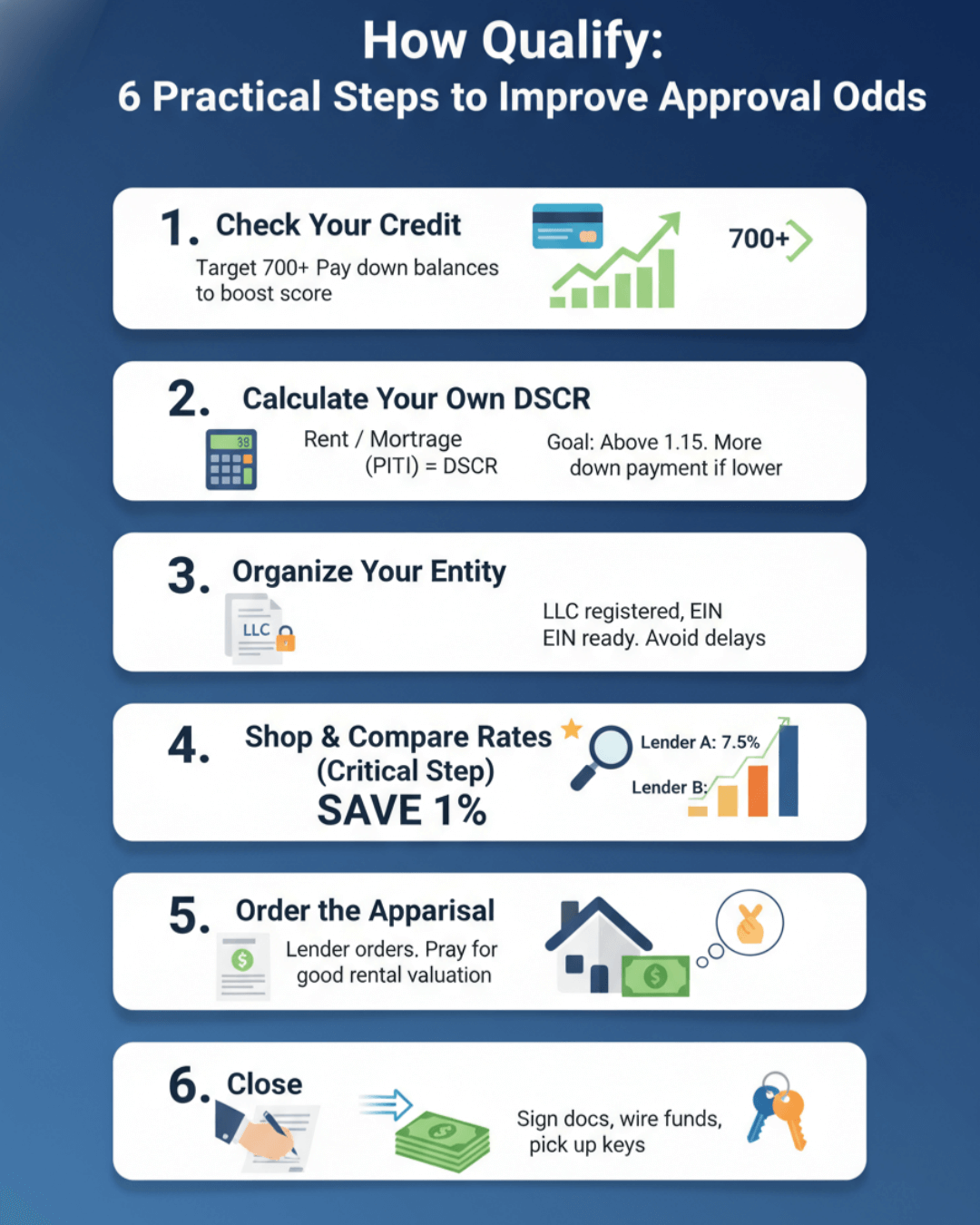
How to Qualify: 6 Practical Steps to Improve Approval Odds
Navigating the Non-QM (Non-Qualified Mortgage) world can be tricky because every lender has different rules. Here is my proven workflow to get from application to funding.
- Check Your Credit: Ensure you are above 700 if possible. If you are at 660, pay down some credit card balances to boost your score before applying.
- Calculate Your Own DSCR: Don't guess. Take the expected rent and divide it by the new mortgage payment (including taxes/insurance). If you are under 1.15, you might need to put more money down.
- Organize Your Entity: Have your LLC registered and your EIN ready. Lenders hate waiting on state paperwork.
- Shop and Compare Rates (Critical Step): Here is the secret: DSCR rates are not standardized like conventional mortgages. Lender A might quote you 7.5% while Lender B quotes 8.5% for the exact same deal. That 1% difference kills your cash flow. I strongly recommend comparing quotes from multiple specialized loan officers. You can do this easily at Bluerate.
- Order the Appraisal: Once you pick a lender, they order the appraisal. Pray for a good rental valuation.
- Close: Sign the docs, wire the funds, and pick up the keys.
Common DSCR Loan Requirements FAQs
Q1. Do DSCR loans typically require 20% down?
Yes. 20% is the industry standard minimum. While you might find a rare lender offering 15% down in a booming market, it usually requires an 800+ credit score and comes with a punishingly high interest rate.
Q2. Can equity be used for a DSCR down payment?
Yes. If you own another property with high equity, you can do a "Cash-Out Refinance" on that property first to generate the cash for the DSCR down payment. Some lenders also allow "Cross-Collateralization" loans, where you pledge two properties to secure one loan.
Q3. Is it difficult to qualify for a DSCR loan?
No, generally it is easier. Because there is no income verification or DTI calculation, the process is faster and less invasive than a conventional loan. If you have the cash for the down payment and a decent credit score, you will likely qualify.
Q4. What are the downsides of DSCR loans?
The main downsides are Rates and Prepayment Penalties. Expect an interest rate 1%–2% higher than a standard conventional loan. Also, most DSCR loans have a "Prepayment Penalty" (e.g., a 5-year step-down), meaning if you sell or refinance quickly, you pay a hefty fee.
Q5. How long are DSCR loan terms available for?
30 Years is standard. Most are 30-year fixed loans. However, 5/1 ARMs (Adjustable Rate Mortgages) and 40-year Interest-Only terms are also available if you need lower monthly payments to make the cash flow work.
Q6. Do DSCR loans show up on your personal credit report?
This question comes up in almost every consultation, so let's settle it. DSCR loans are business-purpose loans, and there's no federal rule forcing lenders to report them to Experian, Equifax, or TransUnion the way conventional mortgages get reported. Close the loan under an LLC with no personal guarantee, and it typically stays off your personal file entirely. Sign a personal guarantee, though, and a serious late payment or default can still land on your credit report even with an LLC in place. The safest move is to ask your lender directly, before you sign anything, whether this particular loan gets reported and under what conditions.
Q7. What if you bought the property as a long-term rental and later want to switch to short-term?
It's usually doable, but don't just list it on Airbnb without a heads-up. Most lenders want to know before you make the switch, since the insurance policy changes (you'll need short-term rental coverage), the income documentation changes, and some lenders will re-run your DSCR using STR projections rather than the original lease-based rent. Skipping that step can violate your loan terms even if the switch itself would have been approved.
Conclusion: Is a DSCR Loan Right for Your Investment?
In the 2026 real estate market, agility is everything. If you are a self-employed investor, or if you simply want to keep your personal debt-to-income ratio clean for a future primary home purchase, the DSCR loan is arguably the best tool in your arsenal.
Yes, the rate is slightly higher, and you need a solid down payment. But the ability to scale your portfolio without handing over your tax returns is a superpower.
If you are ready to see what numbers you can qualify for, don't just take the first offer you get. Compare live quotes. It's the smartest way to ensure your new investment starts profitable from day one.
People Also Read
- Are Mortgage Rates Expected to Go Down in 2026? Expert Forecasts
- 8 Best Non-QM Mortgage Lenders: Which to Choose?
- 6 Best Loan Origination Software for LOs/Brokers
- Detailed Guide: How to Become a Loan Officer with No Experience?

![[Tips for Loan Officers] How Can I Lower Borrower DTI?](https://cdn.prod.website-files.com/6731bc6e813a541b54c30b10/6aa3b89e281a639e7a5c6fca_lower-debt-to-income-ratio-banner.jpg)