Written by

Eric
Share this article

.svg)
Subscribe to updates
When clients ask me how to win a home in a competitive market, my answer is always upfront pre-approval. But diving into loan paperwork without a clear roadmap feels overwhelming. To help you breeze through underwriting without nasty surprises, here is the exact documentation checklist I pull from borrowers before submitting an application to Fannie Mae, Freddie Mac, or government loan programs.
Key Takeaways
- Core Pillars: You must assemble identity records, typically two years of income verification (W-2s or tax returns), sixty days of liquid asset statements, and signed lender authorizations.
- W-2 vs. 1099: Self-employed applicants face deeper scrutiny, requiring full personal and corporate tax schedules plus year-to-date profit-and-loss records.
- Zero Omissions: Underwriters discard partially uploaded bank statements. Submit every single page, even those marked completely blank.
- Strategic Leverage: Gathering files early transforms a casual pre-qualification into a fully documented, pre-underwritten pre-approval, giving your purchase offer cash-like strength.
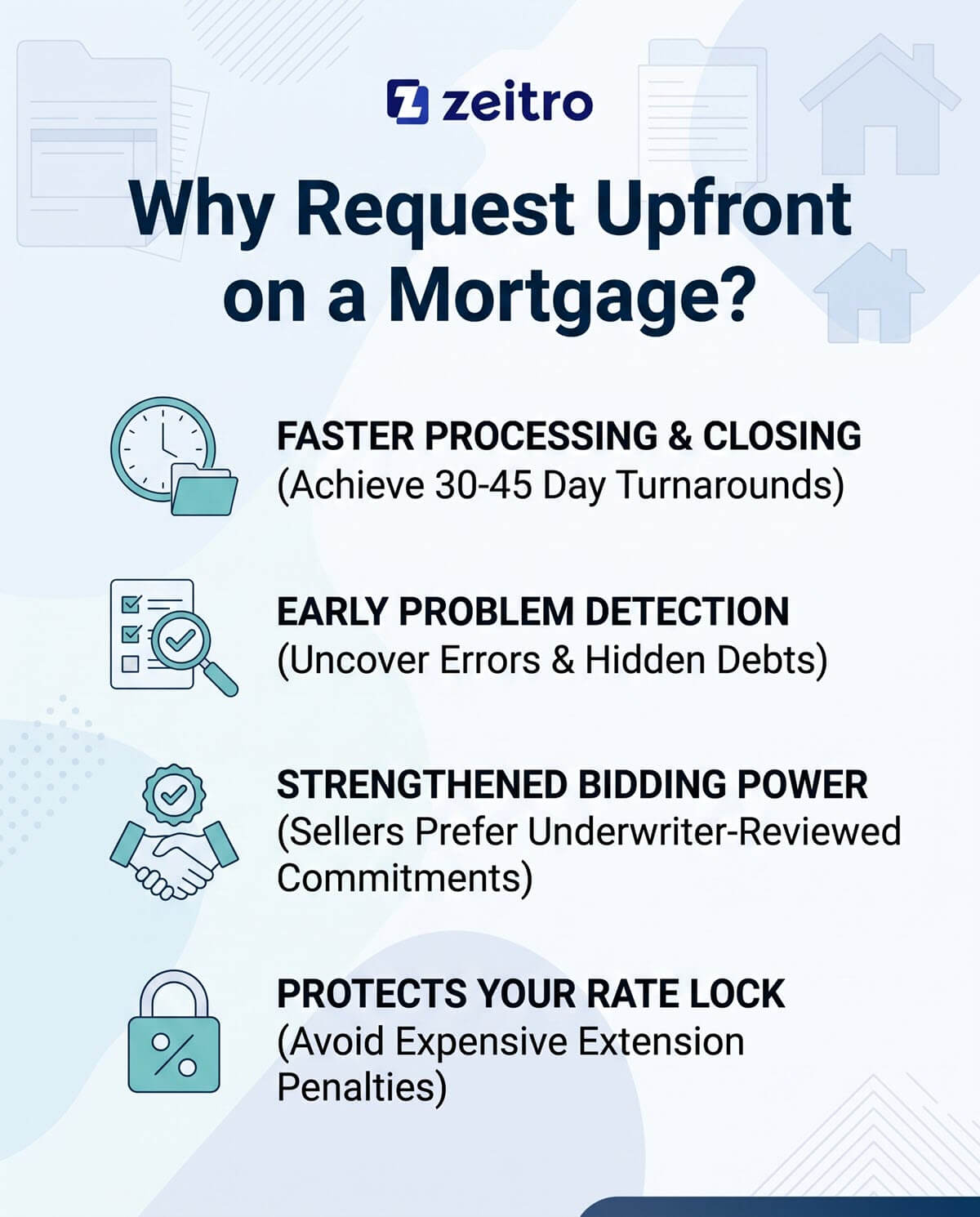
Why Request Upfront on a Mortgage?
In my years originating residential loans, the smoothest closings always started with front-loaded files. Skipping thorough upfront collection leaves blind spots that blow up financing contingencies days before settlement.
- Slashes Turnaround Deadlines: Clearing conditions before house hunting cuts processing intervals drastically, often allowing you to close within 30 to 45 days—and in some cases even faster.
- Uncovers Hidden Pitfalls Early: Pulling records immediately flags unseasoned bank transfers, reporting errors, or undisclosed debts before an earnest money deposit is on the line.
- Strengthens Your Bidding Power: Sellers prefer buyers backed by an underwriter-reviewed commitment over someone holding an unverified pre-qualification slip.
- Shields Your Locked Interest Rate: Swift processing prevents expensive lock extension penalties when market volatility strikes.
What Documents to Request Upfront for a Mortgage?
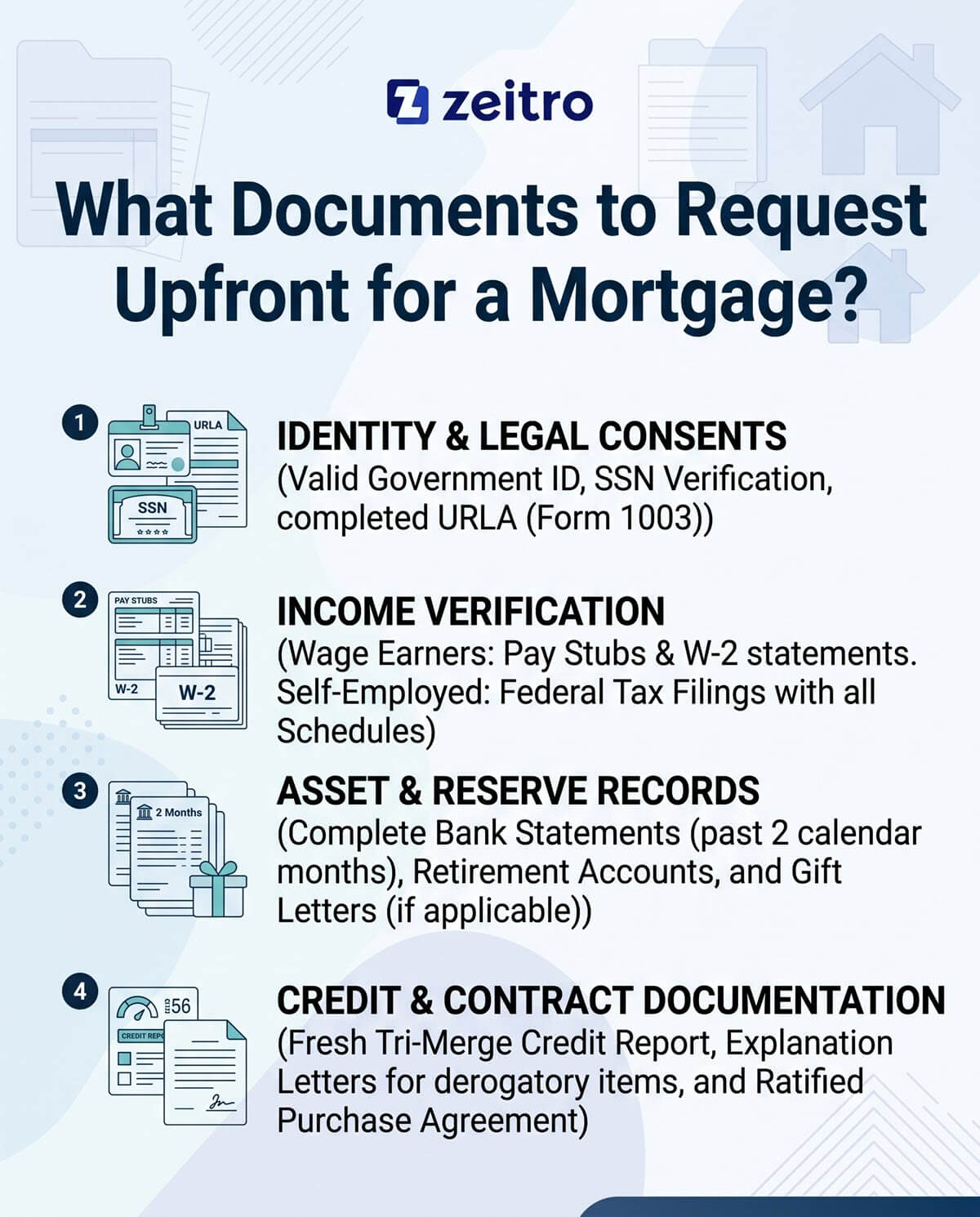
While specialized agency products like FHA or VA loans have distinct quirks, standard underwriting relies on four primary document tiers that I verify during intake.
Identity & Legal Consents: Valid government photo identification (driver's license or passport), Social Security number verification, a completed Uniform Residential Loan Application (URLA, commonly known as Form 1003), and a signed blanket authorization form. I also request IRS Form 4506-C upfront to pull official tax transcripts directly.
Income Verification:
- Wage Earners: Consecutive pay stubs covering the last 30 to 60 days showing year-to-date earnings, plus W-2 statements spanning the prior two tax years.
- Self-Employed & 1099 Workers: Two consecutive years of federal tax filings (including 1040s with all schedules, such as Schedule C for sole proprietors). If you own 25% or more of a business entity (S-corp, partnership, LLC taxed as such), also provide corporate returns (1120-S or 1065) and all Schedule K-1s, plus a signed year-to-date profit-and-loss statement.
Asset & Reserve Records: Complete bank statements for checking and savings accounts covering the past two calendar months. Include the most recent two months of statements for 401(k), IRA, brokerage, or mutual fund accounts (or the most recent quarterly statement if your account only issues quarterly reports). If family members provide down payment funds, attach an executed gift letter paired with the donor's paper trail.
Credit & Contract Documentation: A fresh tri-merge credit report and signed letters of explanation for any past derogatory items. Once you have a property under contract, you will also need to provide the fully ratified purchase agreement, including all counteroffers and addenda.
Tips to Check First If You Want to Request Upfront
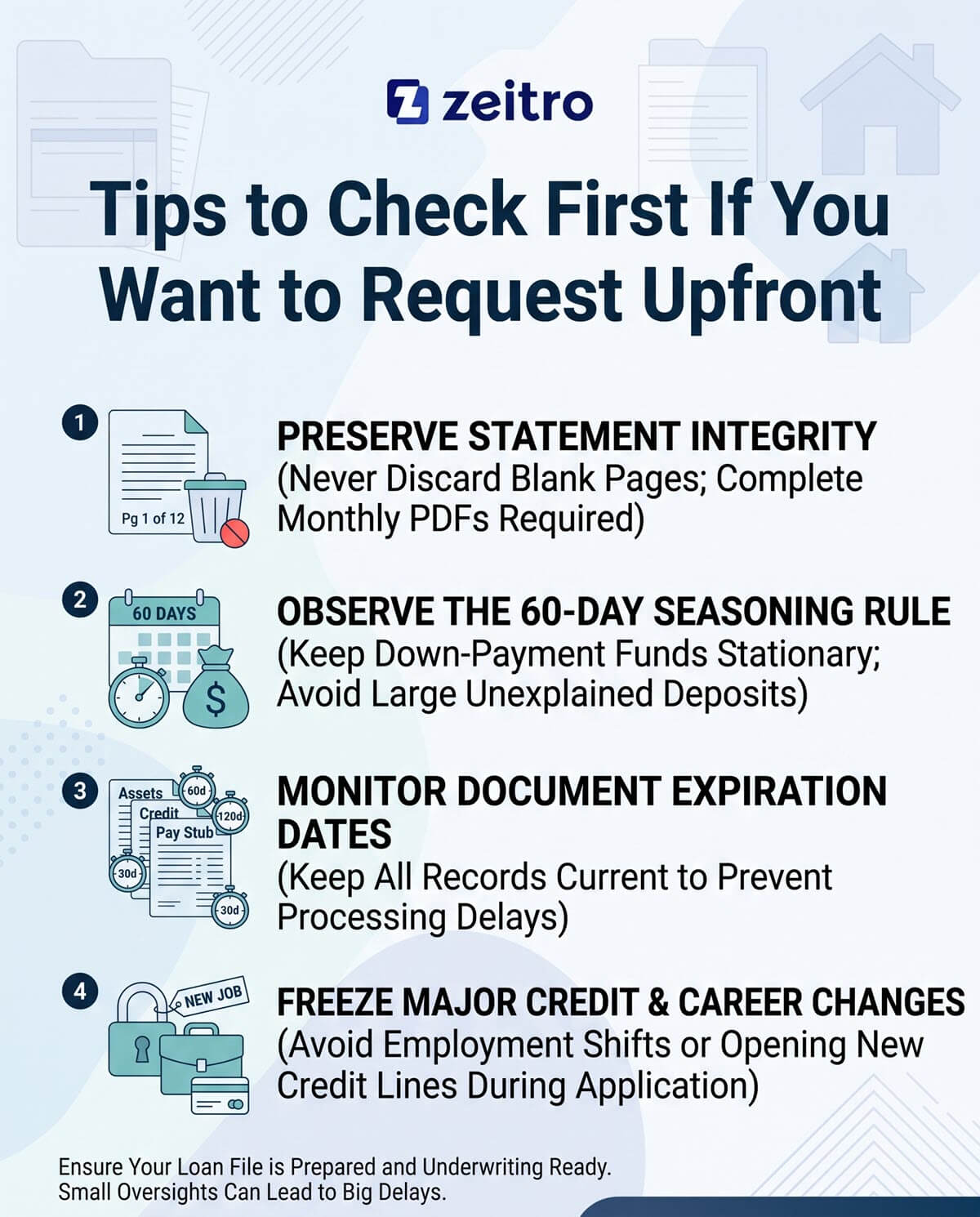
Handing over paperwork is only half the battle. How those records look determines whether underwriting approves or rejects your file. Keep these real-world pointers in mind:
- Preserve Statement Integrity: Never discard blank or advertisement pages from your monthly bank PDF. Missing page numbers immediately trigger audit delays.
- Respect the 60-Day Seasoning Rule: Large unexplainable cash deposits trigger anti-money-laundering flags. Keep down-payment funds stationary in your depository account for at least two billing cycles.
- Watch Expiration Deadlines: Asset statements (bank, brokerage, retirement) are typically valid for 60 days. Credit reports are generally valid for up to 120 days. Ensure current pay stubs are dated within 30 days of application.
- Freeze Career and Credit Shifts: Avoid switching between W-2 employment and freelance work, opening store credit lines, or financing large purchases during the verification window.
Conclusion
Treating upfront documentation as an offensive strategy rather than an administrative chore will put you miles ahead of competing home shoppers. By assembling these verified records before you tour properties, you sidestep eleventh-hour underwriting logjams and lock in your mortgage with peace of mind. Consult a trusted mortgage professional early to review your file and customize this checklist to your exact financial profile.
People Also Read
- When are Bank Statements Required on a Mortgage?
- When are Profit and Loss Statements Required for a Mortgage?
- What Income Documents are Needed for Underwriting? Learn Here
- What Documents Do I Need for a Self-Employed Borrower?
- What Documents are Required for Rental Income on Mortgage?
- Why is Underwriting Asking for More Documents in Mortgage?

![[Tips for Loan Officers] How Can I Lower Borrower DTI?](https://cdn.prod.website-files.com/6731bc6e813a541b54c30b10/6aa3b89e281a639e7a5c6fca_lower-debt-to-income-ratio-banner.jpg)