Written by

Eric
Share this article

.svg)
Subscribe to updates
I still vividly remember the sheer panic of buying my first place. The endless paperwork and confusing real estate jargon felt like a second full-time job. With 2026 mortgage rates hovering around the low‑ to mid‑6% range, diving into the market right now is intimidating.
But you don't have to wing it. We've broken down the entire journey based on hard data and insider advice from actual real estate pros. Think of this guide as your cheat sheet to getting the keys without losing your mind.
Key Takeaway
Short on time? Here is the absolute baseline you need to know:
- Assess your wallet: Pinpoint what you can genuinely afford before scrolling through Zillow.
- Secure a pre-approval: Sellers won't even blink at your offer without a bank letter.
- Never skip the inspection: A fresh coat of paint often hides a rotting foundation.
- Build your squad: Your local Realtor and mortgage broker are your biggest lifelines.
What are the Requirements to Buy a House for the First-Time?
Before touring open houses and daydreaming about renovations, you've got to prove to a lender that you're a safe bet. Based on the latest 2026 lending standards from major players like Fannie Mae and the FHA, here is exactly what banks want to see:
- Credit Score: While many conventional lenders still prefer a credit score of 620 or higher, Fannie Mae has eliminated its 620 minimum floor and now evaluates borrowers more holistically, including rent payment history. Going the FHA route? You'll need at least a 580 to unlock that sweet 3.5% down payment.
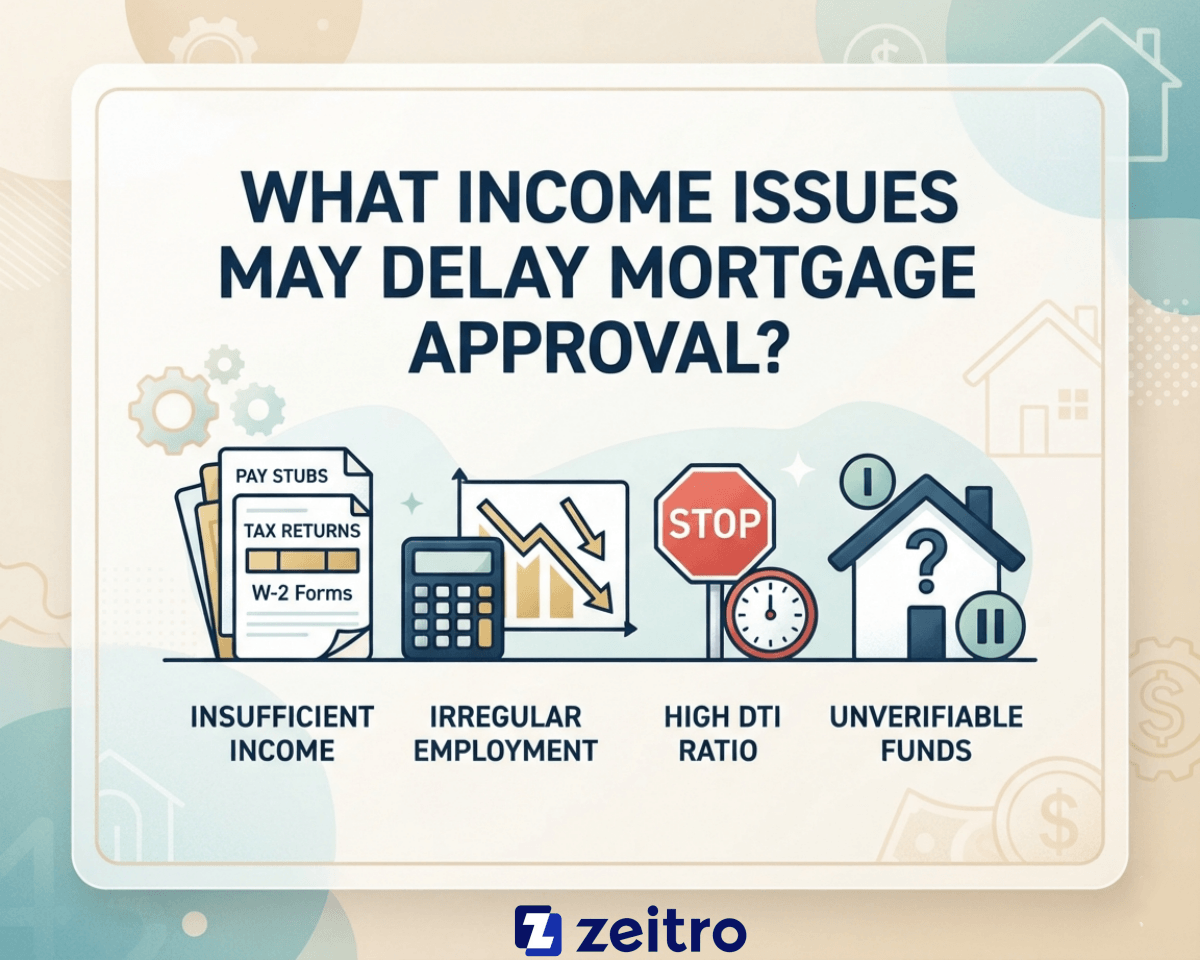
- Debt-to-Income (DTI) Ratio: This number compares your gross monthly income against your recurring debts. Many lenders, especially FHA lenders, use a back‑end DTI of about 43% as a key guideline, but some may allow higher ratios depending on your overall financial strength and compensating factors.
- Solid Job History: Expect to hand over two years of W-2s, recent pay stubs, and tax returns. Job-hopping right before applying is a major red flag.
- Clean Down Payment Sources: You can't just show up with a briefcase of cash. Whether it's hard-earned savings or a gift from your parents, the money trail must be completely documented and legal.
Also Read:
- Max DTI for Mortgage: Requirements By Loan Types
- Max LTV: Check Maximum Loan-to-Value Ratios By Loan Types
- Must-Read Tips for Paying Off Mortgage Early
- Ultimate Guide to Biweekly Mortgage Payments: Is It Worth It?
- [Solved] How Much Will My Monthly Payment Be?

Overview of Buying a House for the First Time
Trying to fast-track this process usually ends in a rejected offer or a drained bank account. Buying property is extremely linear. If you want to keep your sanity intact, follow these eight steps in this exact order.
- Assess Finances: Pull your credit and check your debts.
- Set a Budget: Factor in closing costs and future repairs.
- Get Pre-approved for a Mortgage: Secure hard proof of your buying power.
- Find a Real Estate Agent: Hire someone to protect your interests.
- Shop for a Home: Separate your absolute dealbreakers from wish-list items.
- Make an Offer and Negotiate: Use earnest money and contingencies smartly.
- Get an Inspection and Appraisal: Double-check the home's condition and value.
- Finalize Loan & Close: Sign the paperwork and get those keys.

Step-by-Step Guide for First-Time Homebuying Journey
The quickest way to get your heart broken is touring homes before securing your financing. Sticking strictly to this timeline prevents you from falling head over heels for a property you legally cannot buy.
STEP 1. Assess Finances
Simply put, this step means taking a brutal, honest look at your credit report and every dollar you owe. Why start here? Because your financial health directly controls the interest rate lenders will offer you. Even a tiny, forgotten medical bill on your credit file can bump your rate up, costing you thousands over a 30-year loan.
Start by pulling your free reports from the three major credit bureaus. Dispute any errors and focus on paying down high-interest credit cards to improve your utilization rate. The golden rule here: absolutely do not open new lines of credit. I once saw a friend finance living room furniture weeks before closing, and the sudden credit hit instantly killed his mortgage approval. Put your spending on ice.
STEP 2. Set a Budget
Setting a budget is about calculating exactly how much cash you need to close the deal, plus mapping out your future monthly payments. You need this reality check because your mortgage is just the tip of the iceberg—property taxes, HOA fees, and maintenance add up incredibly fast. The biggest shock for most beginners? Closing costs.
These sneaky fees usually run between 2% and 5% of your loan. If you're buying a $300,000 place, you might need to scrape together an extra $15,000 just to finalize the paperwork. Beyond the down payment and closing fees, stash some cash away for an emergency fund. Trust me, the water heater always seems to break during your first month of homeownership, and you don't want to rely on credit cards to fix it.
STEP 3. Get Pre-approved for a Mortgage
Getting pre-approved means a bank has rigorously checked your income, assets, and credit, and then handed you a letter stating exactly how much they are willing to lend you. In the hyper-competitive 2026 housing market, this letter is your VIP pass.
If you submit an offer without one, sellers will simply throw it in the trash. To get yours, you'll need to hand over your W-2s, tax returns, and bank statements to a few different lenders to shop around for the best rate. Pay attention to the terminology: being "pre-qualified" is basically a guess based on unverified numbers you tell the bank. A true "pre-approval" is hard proof that you have the cash backing you up, giving you a massive leg up in a bidding war.
STEP 4. Find a Real Estate Agent
This step is all about hiring a licensed, local Realtor to guide you through the chaotic transaction process. Why wouldn't you just use Zillow and do it yourself? Because real estate contracts are legal minefields. Plus, hiring a buyer's agent is essentially getting a free expert on your side. Their commission is typically covered entirely by the home seller.
Take your time interviewing two or three agents before signing anything. You want someone who knows your target neighborhood inside and out and actively works with first-timers. Don't use the agent whose name is on the "For Sale" sign in the yard. That's called dual agency, and it means they are trying to negotiate for both you and the seller. Get someone who is 100% in your corner.
STEP 5. Shop for a Home
Now comes the exciting part: actually touring properties that fit your budget and pre-approval amount. This phase is crucial because it forces you to figure out what you genuinely need for your daily life versus what just looks pretty on Instagram. Before stepping foot in a single house, sit down and write a strict "Needs vs. Wants" list.
Maybe a home office is a non-negotiable need, but a farmhouse sink is just a want. When walking through an open house, train your eyes to ignore the seller's gorgeous furniture. It's leaving when they do. Instead, look at the big-ticket items. Check the age of the roof, the condition of the HVAC unit, and the neighborhood traffic. You can easily tear out ugly carpets, but you can never change a bad location.
STEP 6. Make an Offer and Negotiate
Making an offer is when your agent drafts a legally binding contract detailing how much you are willing to pay and the conditions of the sale. It kicks off the negotiation dance with the seller. To prove you aren't just messing around, you'll put down "Earnest Money"—think of it as a good‑faith deposit, commonly 1% to 3% of the purchase price, though it can be higher in competitive markets.
The secret weapon here is contingencies. These are protective clauses built into the contract that allow you to walk away and get your deposit back if things go south. For example, a financing contingency protects you if your mortgage falls through at the last minute. Never let a pushy seller convince you to drop these protections; they are your financial safety net during the transaction.
STEP 7. Get an Inspection and Appraisal
These are two completely separate property evaluations that happen right after your offer is accepted. An inspection is for your protection, while an appraisal protects the bank. You'll hire a licensed inspector to crawl through the attic, test the plumbing, and check the foundation for hidden defects.
Meanwhile, your lender sends out an appraiser to ensure the house is actually worth the $400,000 they are lending you. Here is the most important advice I can give: absolutely never waive the home inspection. I've watched buyers skip this step to win a bidding war, only to uncover a massive termite infestation a month after moving in. If the inspector finds something major, you can use that report to demand the seller fix it or drop the price.
STEP 8. Finalize Loan & Close
This is the finish line where your mortgage gets its final stamp of approval, funds are transferred, and you legally take ownership. You can't just coast through this week, though. Before the bank wires a single dollar, you are required to buy a Homeowners Insurance policy.
You'll also do a "Final Walkthrough" about 24 hours before signing. This is your chance to verify the seller actually moved out, didn't punch a hole in the drywall while carrying out the couch, and left the appliances they promised.
Once the bank's underwriter is happy, they issue a "Clear to Close." On closing day, bring a photo ID and prepare to sign a mountain of paperwork. Once the title company records the deed, the keys are officially yours!
What to Know before Buying a House for the First-Time?
Going from renting an apartment to owning property is a massive leap, and the learning curve is steep. Looking back at my own experience, there are a handful of vital tips I wish someone had drilled into my head before I started.
- Explore First-Time Buyer Programs: So many people delay buying because they think a 20% down payment is mandatory. It's absolutely not. Dive into state-level Down Payment Assistance (DPA) grants. Look into FHA loans that only require 3.5% down, or VA loans offering 0% down for veterans. These programs are designed specifically to help you break into the market.
- Don't Overextend (Avoid the "House Poor" Trap): Just because a lender approves you for a massive loan doesn't mean you should spend every penny of it. If your mortgage eats up your entire paycheck, you are "house poor." Leave plenty of breathing room in your budget for property taxes, sudden roof leaks, and, you know, actually having a life.
- Keep Your Credit Rock Solid: I cannot emphasize this enough. Lenders will pull your credit report one final time right before closing. If they see you suddenly quit your job, bought a brand-new SUV, or maxed out a credit card, they can and will pull your loan approval on the spot.

FAQs About Purchasing a Home
Q1. What is the best first step to buying a house?
Before you even peek at real estate apps, sit down and check your financial health. Pull your credit score, calculate your debts, and reach out to a lender for a mortgage pre-approval. Knowing exactly what a bank is willing to lend you prevents you from wasting time looking at properties way outside your actual budget.
Also Read:
- Ultimate Guide: How to Calculate Monthly Mortgage Payment?
- [Tutorial] How to Estimate What Mortgage You Can Afford?
- Guide: How to Apply for Down Payment Assistance?
Q2. What is the 28/36 rule in real estate?
It's a classic lending formula to keep you from going broke. The rule states your monthly housing costs (mortgage, property taxes, insurance) shouldn't eat up more than 28% of your gross income. Furthermore, your total debt, combining that new mortgage with car payments and student loans, should stay under 36% of your pre-tax pay.
Q3. What are the biggest first time home buyer mistakes?
The quickest way to a housing nightmare is shopping without a hard budget or pre-approval letter. Another huge mistake is draining every last dime of your savings for the down payment, completely forgetting about closing costs and emergency repairs. Finally, waiving the home inspection just to beat other buyers is a massive, incredibly risky gamble.
Q4. What's the minimum down payment for a $300,000 house?
If you qualify for a standard conventional loan, you can put down as little as 3%, which is $9,000 for a $300,000 home. If you go with an FHA loan, the minimum down payment is 3.5% of the purchase price, but only if your credit score is 580 or higher. Borrowers with scores between 500 and 579 must put at least 10% down, which would be $30,000 on a $300,000 home.
Conclusion
Making the jump into homeownership is honestly pretty terrifying, but keeping a level head will get you through it. Remember that this is a marathon, not a sprint. The 2026 market might be competitive, but patience and solid prep work are your best weapons.
By tackling your finances early on and surrounding yourself with a killer team—a knowledgeable mortgage broker and an honest real estate agent—you strip away most of the stress. You really don't need to know every single real estate law right now. You just have to take the right first step.
Ready to get the ball rolling? Start today by pulling your free credit report or reaching out to a local loan officer for a laid-back, zero-pressure consultation.
People Also Read
- Mortgage Application Form 1003 (URLA): Everything You Need to Know
- Tutorial: How to Generate a 1003 Form in 3 Ways?
- When Does PMI Go Away? How to Get PMI Removed?
- Mortgage Rates Impact Affordability: The Lower, The Better
- Best First-Time Home Buyer Programs: Get the Right Choice

![[Tips for Loan Officers] How Can I Lower Borrower DTI?](https://cdn.prod.website-files.com/6731bc6e813a541b54c30b10/6aa3b89e281a639e7a5c6fca_lower-debt-to-income-ratio-banner.jpg)