Written by

Eric
Share this article

.svg)
Subscribe to updates
I still remember applying for my first apartment. The landlord casually asked for my "recent bank statements," and I honestly panicked a little. What exactly did he want to see? If you're trying to get a mortgage, secure a car loan, or even apply for a visa, you will run into this exact request.
Basically, a bank statement is just an official summary of the money moving in and out of your account. Let's break down exactly what's inside these documents, the easiest way to grab them, and why they matter so much.
Key Takeaways
- It's a monthly snapshot from your bank detailing every deposit, withdrawal, and fee.
- You can usually download digital versions (e-statements) for free through your bank's website or mobile app.
- Lenders rely on them heavily to verify your income and track spending habits.
- For tax-related records, keep them for at least three years, and longer in cases where the IRS retention period may extend to six or seven years.
What is a Bank Statement?
Think of it as a detailed financial report card. A bank statement is a formal document your bank or credit union issues, usually every single month, that tracks every penny moving through your account. Because it is issued by a financial institution, it serves as an official financial record.
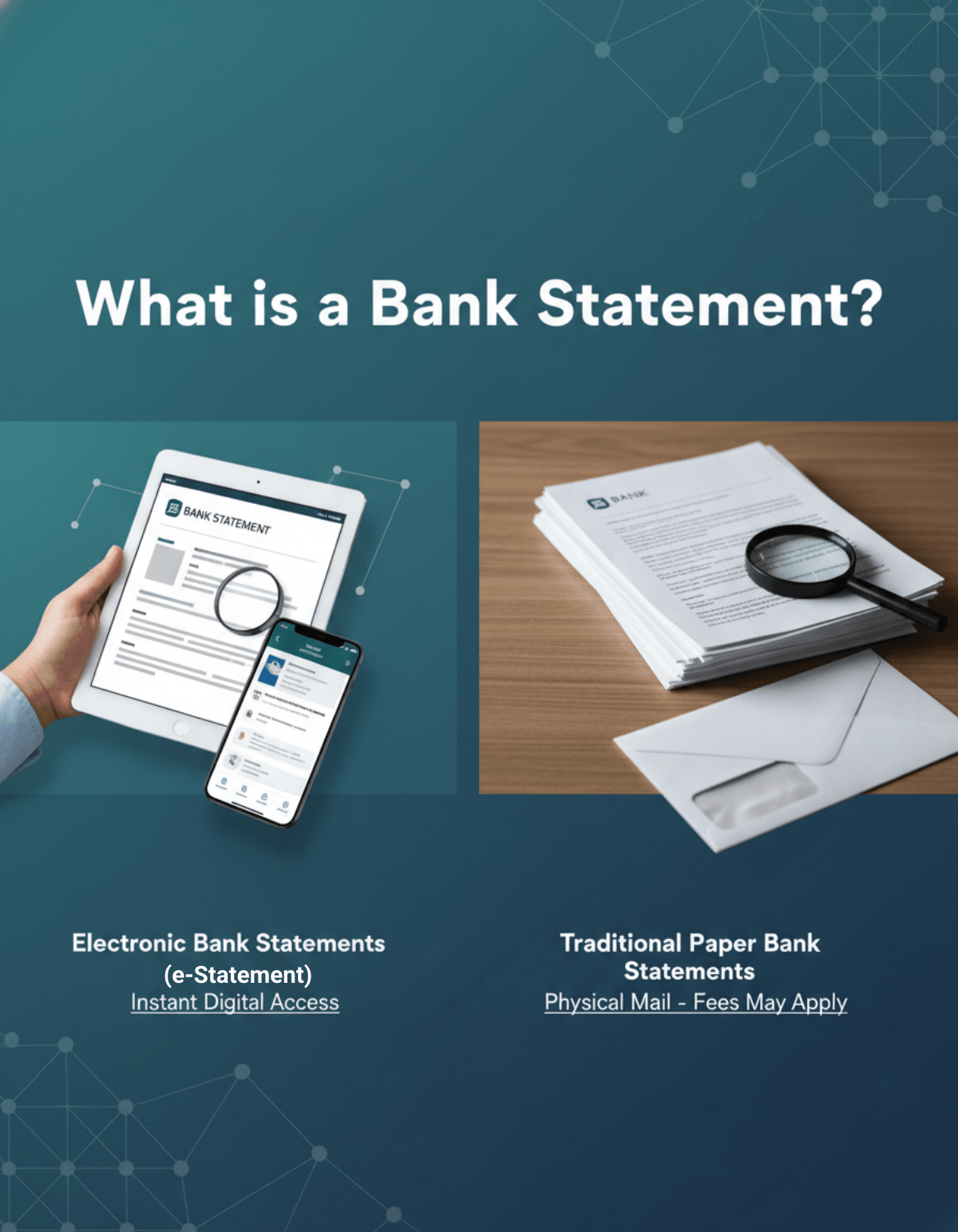
Nowadays, you mainly deal with two versions. First up are Electronic Bank Statements (e-Statements). I honestly prefer these. They are digital PDFs you can download instantly, and they usually contain the same information as paper statements. Then you have traditional Paper Bank Statements. Sure, getting physical mail is nice, but be careful. Some banks charge a monthly fee for paper statements, but the amount varies by institution.
What is Included in a Bank Statement?
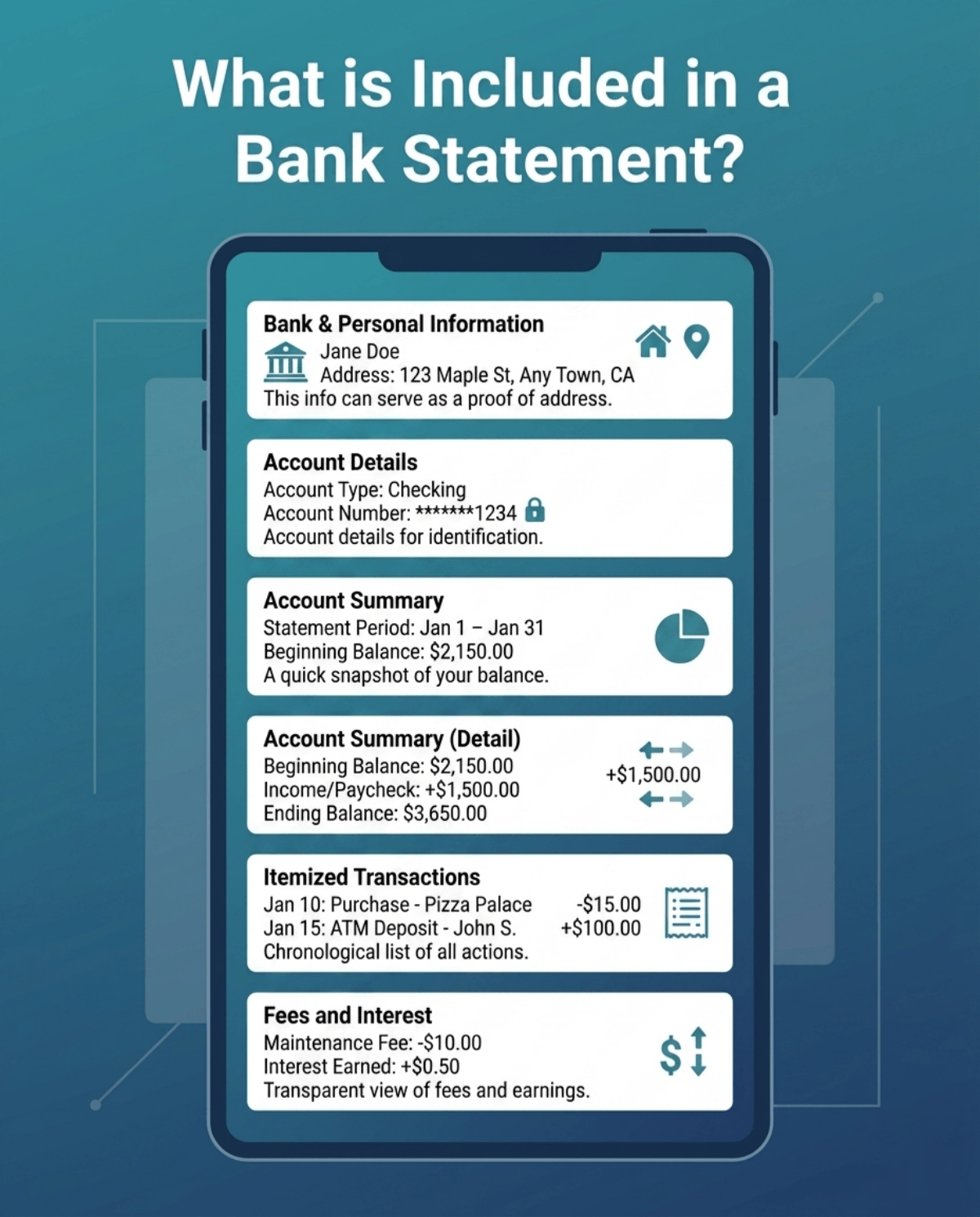
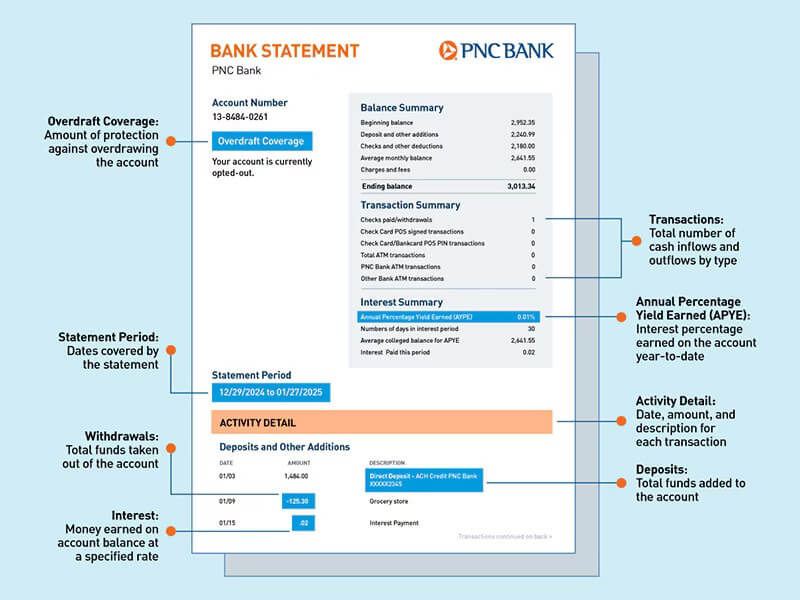
Opening a PDF packed with tiny numbers might trigger a headache, but the layout is surprisingly predictable once you know what to look for. Here is the standard breakdown:
- Bank & Personal Information: Up top, you'll spot the bank's logo alongside your full name and registered home address. Because this info is verified, these documents can sometimes be used as proof of address if they show your name, current address, and a recent issue date.
- Account Details: This section shows your account type (like checking or savings) and your account number, though they usually hide the first few digits for security.
- Account Summary: A quick snapshot highlighting the specific dates covered (the statement period), exactly what you started with (beginning balance), and what you had left at the end.
- Itemized Transactions: This is the main event. It's a chronological list of every single action—paychecks hitting your account, that late-night pizza slice, ATM trips, and Zelle transfers.
- Fees and Interest: A transparent look at any maintenance fees, painful overdraft charges, or the APY interest your money earned that month.
What is a Bank Statement Used For?
You might wonder why anyone besides you cares about these logs. In the real world, these documents unlock a lot of doors. I've personally had to hand them over for a few major life events:
- Mortgage & Loan Applications: When you apply for a mortgage, lenders review bank statements to verify the source of funds and check for irregular deposits, alongside other documents used to calculate your debt-to-income ratio.
- Proof of Address: Government agencies and utility providers love seeing these because they instantly verify where you actually sleep at night.
- Renting an Apartment: Landlords use them to double-check that you make enough money to cover the monthly rent without struggling.
- Tax Preparation: Come April, your CPA will want these to verify self-employment income or prove those business expenses you're writing off.

The Importance of a Bank Statement
Even if you aren't trying to secure a loan right now, ignoring these monthly summaries is a bad idea. Making a habit of reviewing them is arguably the best thing you can do for your personal finances.
- Security & Fraud Detection: Skimming your transactions is the fastest way to catch a stolen credit card number or weird subscription charges before they drain your account.
- Budgeting & Cash Flow: It forces you to face reality. Seeing exactly how much you spent on takeout makes adjusting your budget much easier.
- Accuracy: Banks aren't flawless. I've personally caught accidental double-charges and sneaky hidden fees just by paying attention.
- Documentation: Having a solid paper trail saves you if you ever face a tax audit or need to prove a specific bill was paid on time.
Bank Statement Example
If you've never really examined one, picture a clean, highly structured letter. The top right corner proudly displays the bank's logo, while your name and address sit across from it on the left. Just below that personal info, a bolded summary box highlights the crucial math: your starting cash, total money in, total money out, and what's left.
The bottom portion takes up the most space. It's basically a massive, chronological receipt showing the exact date and amount for every coffee, paycheck, and bill payment.
How to Get a Bank Statement?
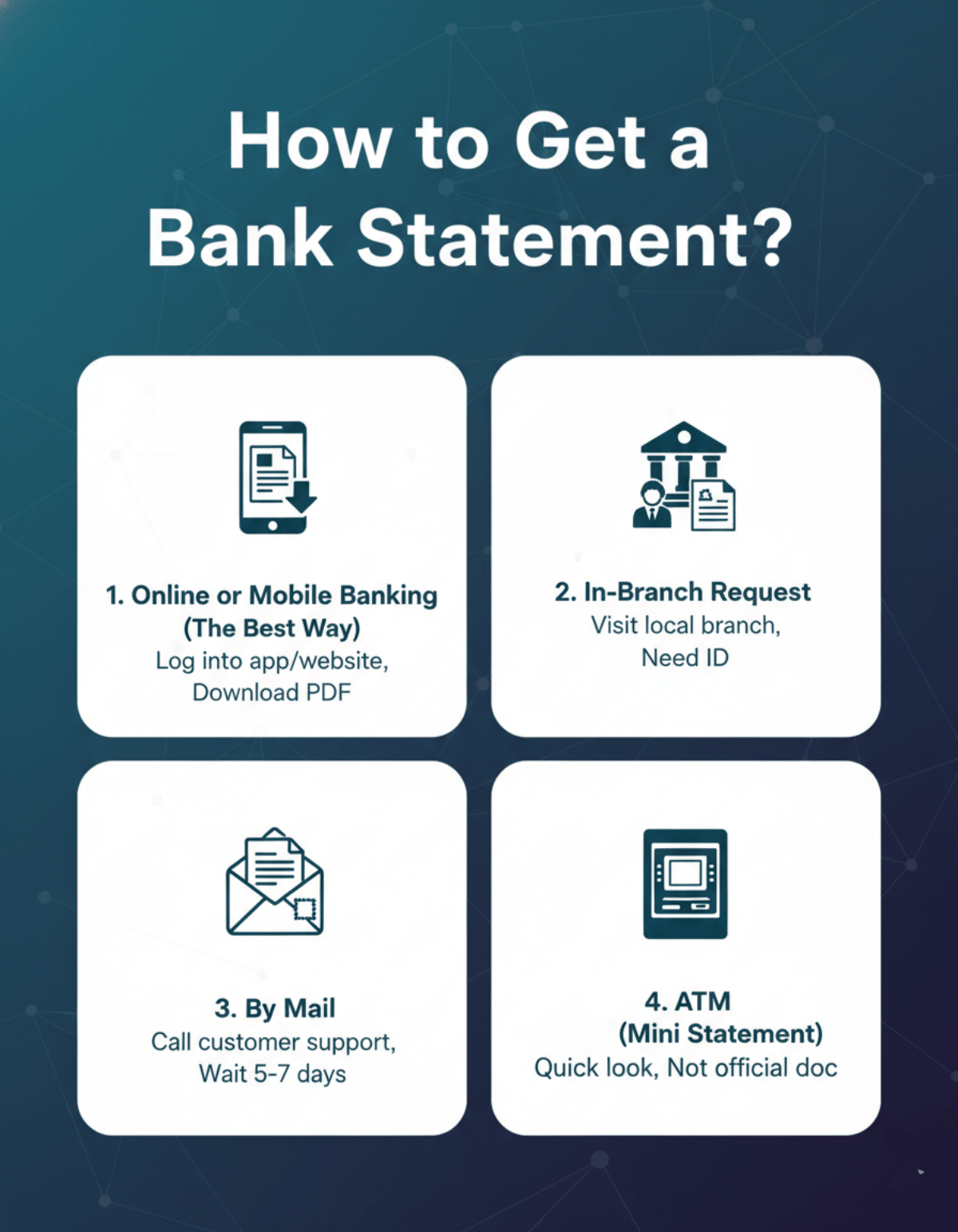
So, your lender needs your records by tomorrow. Don't panic. You have a few different ways to grab them, ranging from instant to waiting on the mailman:
- Online or Mobile Banking (The Best Way): I rarely do things in person anymore. Just log into your banking app or website, find the "Statements & Documents" section, and pick the months you need. Always hit the download button to save an official PDF. Trust me, loan officers will immediately reject a rough screenshot from your phone.
- In-Branch Request: If you happen to be near your local branch or need someone to physically stamp the paper, walk right in. Hand the teller your driver's license, and they'll print it for you. Just watch out. Some branches charge a couple of bucks per page.
- By Mail: You can always call customer support and request a paper copy of a specific month. You could also tweak your account settings to get paper mail regularly again. Keep in mind, the postal service takes about 5 to 7 business days.
- ATM (Mini Statement): Need something quick? ATMs can print a tiny receipt showing your last few transactions. Just remember, nobody accepts this as an official document.
How to Read a Bank Statement?
You definitely don't need an accounting degree to figure this out. I always start by glancing at the top: does the final balance actually match the cash I thought I had? From there, quickly scan your withdrawals. You are hunting for unusually large numbers, subscriptions you swore you canceled, or payee names you don't recognize.
This quick check-up is called "reconciling." You're just comparing your own mental notes or budget app against the bank's official log. If the math feels off, call them right away.
How Long Should You Keep Bank Statements?
I used to stuff every piece of financial mail into a shoebox until I finally learned the actual rules. For everyday checking accounts, keeping statements for at least one year is a common rule of thumb, though longer retention may be needed for tax or legal purposes.
However, taxes change the game. The IRS suggests holding onto them for three to seven years if they back up a business expense, home purchase, or major tax deduction. Instead of drowning in paper, I highly recommend downloading the PDFs and tossing them into a secure, encrypted cloud folder.
FAQs About a Bank Statement
Q1. What are bank statement mortgage guidelines?
When you apply for a house, lenders usually ask for two solid months of records. They often want to see every page, including any blank pages, to make sure nothing is missing and to check for stable paychecks and flag any mysterious large deposits.
Also Read: Bank Statement Mortgage Guidelines: What Is It? How to Verify?
Q2. Can a bank statement be used as proof of address?
Absolutely. Some DMV offices, government agencies, and landlords may accept bank statements as proof of address, provided they meet the organization's date and format requirements. Just make sure your name and address match your application perfectly and the date is recent (usually within 90 days).
Q3. Are screenshots of a bank statement acceptable?
Screenshots are usually not accepted because they are harder to verify than an official PDF from the bank. Mortgage brokers and government agencies will reject cell phone screenshots because they are too easy to fake in Photoshop. Always provide the unedited, official PDF directly from your bank's website.
Q4. Does everyone have bank statements?
Bank statements are issued for many types of financial accounts, including checking, savings, money market, and other eligible accounts. If you operate entirely in cash or use prepaid debit cards, you are considered "unbanked" and won't get these official summaries.
Q5. How often are bank statements issued?
Most of the time, they hit your inbox once a month. However, if you have a slow-moving savings or investment account that calculates interest differently, you might only see one every quarter (three months).
Q6. How to reconcile a bank statement?
It's just matching things up. Pull up your personal budget tracker or receipts and compare them against the bank's log line by line. You want to make sure no money vanished and no extra fees sneaked in.
Conclusion
Honestly, getting comfortable with these documents is a huge step toward taking control of your financial life. Whether you are prepping to buy your first home, trying to rent a better apartment, or just wanting to spot where your cash is leaking, these summaries tell the real story.
Do yourself a favor and switch to e-statements if you haven't already. It stops mail theft, saves trees, and keeps annoying fees out of your life. Take five minutes this week to download your latest copy and see exactly where you stand.
People Also Read
- 10 First-Time Home Buyer Tips: What to Know?
- At What Income Level Do You Lose Mortgage Interest Deduction?
- Gross vs. Net Income for a Mortgage: What Lenders Use & Why
- How to Check Mortgage Eligibility? Quick and Accurate with Sources
- 1099 Form Explained: What Is It? What Is Used for?


![[Tips for Loan Officers] How Can I Lower Borrower DTI?](https://cdn.prod.website-files.com/6731bc6e813a541b54c30b10/6aa3b89e281a639e7a5c6fca_lower-debt-to-income-ratio-banner.jpg)