Written by

Eric
Author from Zeitro

Share this article

Subscribe to updates

Thank you! Your submission has been received!
Oops! Something went wrong while submitting the form.

I am thrilled to announce a significant milestone in our journey. As of March 2026, our flagship product, formerly known as Scenario AI and GuidelineGPT, has officially been rebranded as Zeitro Strata AI. This change isn't just about a new name. It reflects a massive leap in our technology.

By moving to an advanced agentic framework, we've built a tool that does more than just answer questions—it serves as the foundational decision layer for the modern mortgage enterprise. Whether you are a broker or a lender, I'd like to introduce you to the next generation of mortgage intelligence.

Introduction to Zeitro

At our core, Zeitro is an AI-native technology company that has been pushing the boundaries of the mortgage industry since 2018. We operate as an independent entity, meaning we aren't tied to any specific lender. This neutrality is something I am particularly proud of because it allows us to serve the entire mortgage ecosystem with total objectivity.

Our team is a unique blend of veteran mortgage experts and elite AI engineers from tech giants like Google and Apple. We've combined deep domain knowledge with enterprise-grade security, evidenced by our SOC 2 Type II certification. We understand that in this industry, accuracy and data protection aren't optional—they are the bedrock of trust. We built Zeitro to remove the manual grind from guideline research, giving professionals the instant, transparent answers they need to close loans faster.
Introduction to Zeitro

Learn: What Zeitro Strata AI Is?

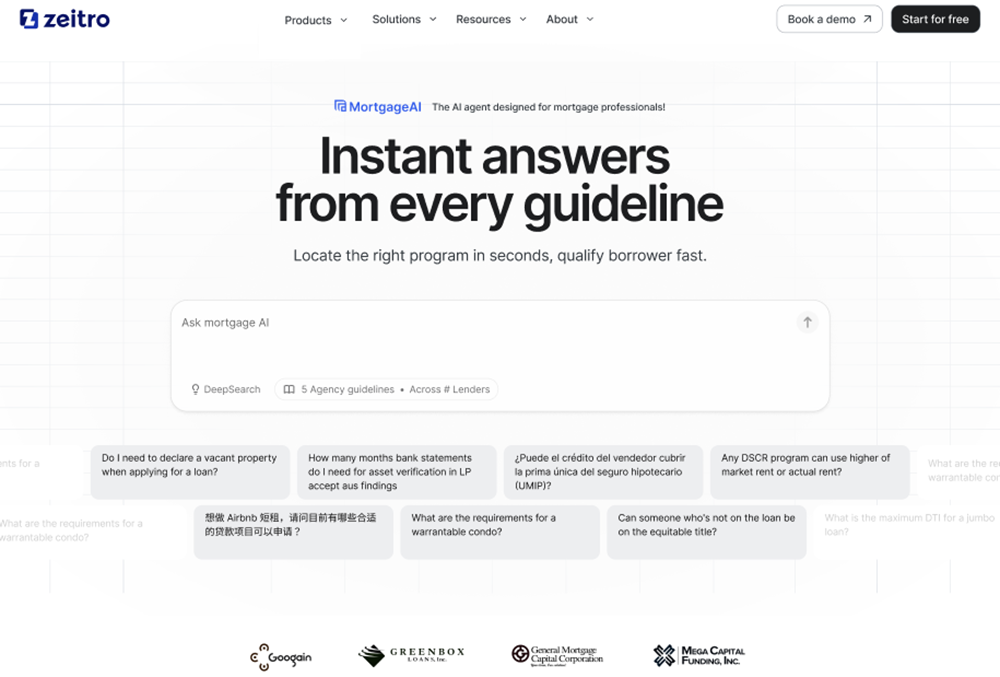
So, what exactly is Zeitro Strata AI? Think of it as your most experienced underwriting assistant, available 24/7. It is an AI-powered mortgage guideline agent designed specifically for the U.S. market. It's the perfect fit for Loan Officers, Brokers, and Wholesalers who are tired of digging through 500-page PDF manuals.

In today's 2026 market, Non-QM loans, like DSCR and bank statement programs, have grown to represent nearly 15% of all originations. This complexity makes Zeitro Strata AI more essential than ever. It handles everything from simple "what is" questions to complex eligibility scenarios across both QM and Non-QM products. I've seen it help teams deliver pre-qualifications 2.5x faster while cutting manual guideline work entirely. It's not just a search bar. It's a decision-support engine that helps you say "yes" to more borrowers with total confidence.
Learn: What Zeitro Strata AI Is?

Explore the Features of Zeitro Strata AI

When we designed the features for Zeitro Strata AI, our goal was to eliminate the "black box" feel of traditional AI. Here is what makes it a game-changer for your daily workflow:

  • DeepSearch Technology: It cross-checks guidelines from over 100 investors, like AAA Lending and Freedom Mortgage, in seconds, not minutes.
  • Massive Guideline Library: We cover a variety of loan types, including specialized products like Asset Utilization, ITIN, and Foreign National loans.
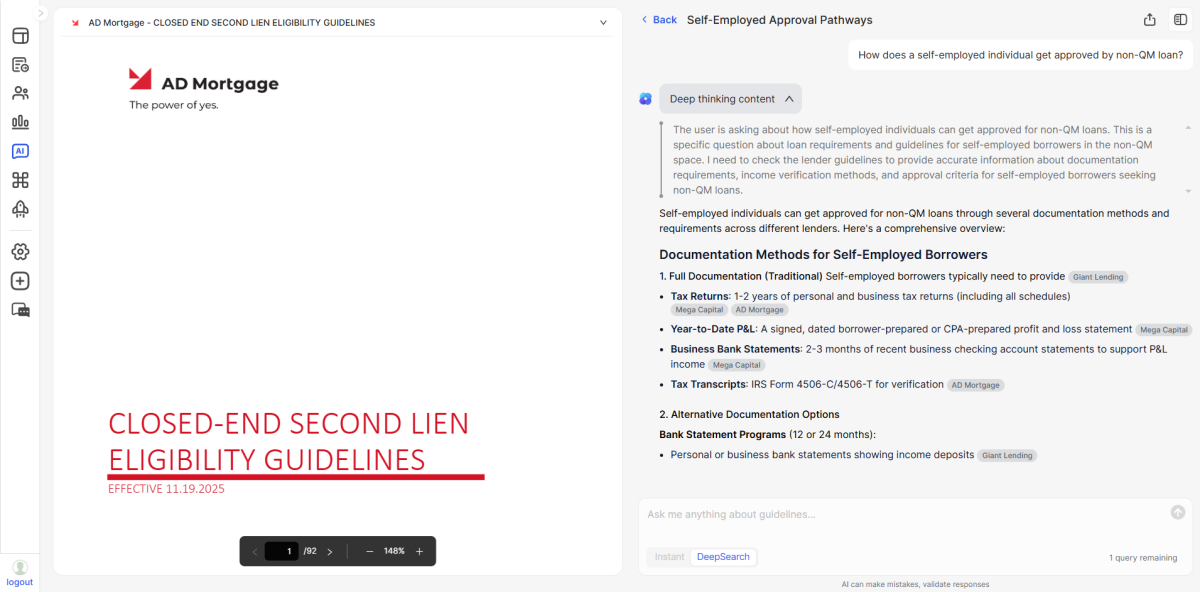
  • Full Source Transparency: Every answer comes with a Citation. You can click through to see exactly which page of the investor's manual the information came from.
  • Explain Function: If a guideline is particularly dense, you can use the "Explain" feature to get a secondary breakdown of the requirements.
  • Multi-language Support: I love that our users can input queries in English or Chinese and receive professional, accurate responses.
  • Seamless Sharing: You can instantly share a specific answer via an email link to keep your borrowers and partners in the loop.

Tutorial: How to Use Zeitro Strata AI?

Getting started is incredibly simple. I've seen new users master the platform in under two minutes. Here is the typical four-step process:

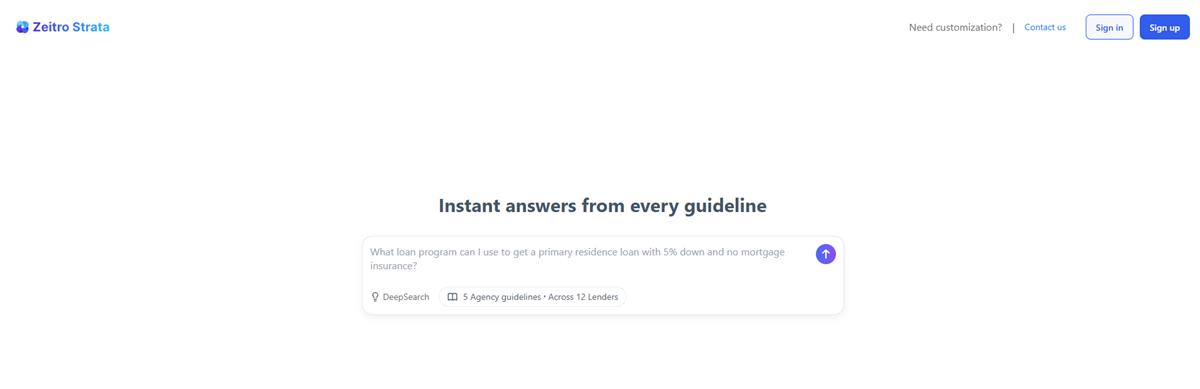
  1. Select Your Scope: Start by using customizable tags. You can narrow your search to specific lenders or loan types like DSCR or Jumbo to ensure the results are relevant.
  2. Ask Your Question: Type in your scenario. You don't need to be a prompt expert. You can ask specific questions like "What is the max LTV for a 12-month bank statement loan with a 680 FICO?" or more vague situational queries.
  3. Review and Explain: Within seconds, Zeitro Strata AI will provide a precise answer. If you need more detail, click the "Explain" button for a deeper dive.
  4. Verify and Export: Check the citations to confirm the source. From there, you can share the findings or move the data into our Digital 1003 system to finalize the application.
FAQs About Zeitro Strata AI

Q1. How often are the mortgage guidelines updated?

We update our database continuously. Our system tracks over 100 investors to ensure you are looking at the most current requirements for 2026.

Q2. Can I use Zeitro Strata AI for free?

Yes! We offer an Explorer Plan which is completely free. It includes 3 Mortgage AI queries per day and access to our personal website and pricing engine tools.

Q3. Does the "Explain" feature cost extra queries?

Yes, the Explain feature functions as a new deep-search query based on your selected range to ensure the highest accuracy, so it does consume a query from your daily limit.

Q4. What makes the name "Strata" different from the old "Scenario AI"?

"Strata" signifies the "foundational layer." While the old tool was great for scenarios, Zeitro Strata AI is built on an agentic framework meant to be the core decision layer for your entire mortgage business.

Q5. Is my borrower's data safe when using the AI?

Absolutely. Security is our priority. We are SOC 2 Type II certified, which means we follow the highest industry standards for data protection and operational privacy.

Conclusion

The transition from Scenario AI to Zeitro Strata AI marks a new era for mortgage professionals. In a market where speed and accuracy define success, you can't afford to spend seven hours per loan file on manual research. I truly believe that by using Zeitro Strata AI, you aren't just adopting a new tool. You're gaining a competitive edge that allows you to close 30% more loans.

Whether you're dealing with a complex Non-QM investor or a standard FHA file, our agentic AI is here to provide the clarity you need in seconds. I invite you to try the Explorer Plan today for free. Experience firsthand how the foundational decision layer of Zeitro can transform your workflow and help you grow your business in this evolving 2026 housing market.

People Also Read

Keep reading

Why Have Mortgage Rates Risen When Oil Prices Increase?
Blog

5 min read
Arrow icon on dark background
Why Have Mortgage Rates Risen When Oil Prices Increase?
As oil prices surge in March 2026, mortgage rates are following suit. Discover the link between gas prices and interest rates, plus expert tips for today's homebuyers.

I was filling up my tank in suburban Atlanta this morning, and the numbers on the pump were hard to stomach—$3.90 a gallon and still ticking. But for my clients looking to buy a home this spring, the pain doesn't stop at the gas station. It's March, 2026, and we are seeing a frustratingly familiar pattern: as Brent crude remains above the $110 mark, mortgage lenders are hiking their rates in tandem.

Why does a supply crunch in the Middle East or a refinery breakdown in Texas make your monthly house payment more expensive? It's not just bad luck. It's a tight economic loop that we need to unpack.

How Do Oil Prices Affect Mortgage Rates?

Let's be clear: your mortgage lender isn't checking the price of a barrel of oil to set your interest rate. Instead, they are watching the bond market, which is incredibly sensitive to energy costs. When oil prices spike, it acts like a massive injection of heat into the Consumer Price Index (CPI). Since oil is used to move almost everything we buy, expensive fuel means expensive groceries and consumer goods. This is the definition of inflation.

In my experience, the real "hidden thread" is the 10-Year Treasury Yield. When investors see oil driving up inflation, they demand higher returns on bonds to protect their purchasing power. As they sell off bonds, yields rise. Because mortgage-backed securities (MBS) compete for the same investors, mortgage rates almost always move in the same direction as those 10-year yields.

On top of that, the Federal Reserve hates "energy-led inflation." If they see high oil prices threatening to keep inflation above their 2% target, they'll keep the federal funds rate higher for longer. It's a cascading effect: oil drives inflation, inflation drives bond yields, and those yields dictate exactly what you'll pay for a 30-year fixed loan.

Why Are Oil Prices Rising?

The primary driver right now is the ongoing OPEC+ production cuts, extended earlier this year. But there's a deeper, more structural issue I've been tracking: the "energy transition gap." While we are moving toward renewables, investment in traditional oil infrastructure has lagged, leading to a massive supply squeeze as global travel demand hit record highs this quarter.

Combined with the recent maritime security tensions in the Red Sea, the cost of getting oil to U.S. refineries has surged. Contrary to earlier fears, the latest EIA Short-Term Energy Outlook forecasts growing global oil inventories, averaging an increase of 1.9 million barrels per day in 2026, which explains why we're seeing these prices at the pump, and in our loan estimates.

What Happens to Interest Rates When Oil Prices Go Up?

I've been keeping a close eye on the spreadsheets over the last 90 days, and the correlation is undeniable. Back in early January, when WTI crude was trading around $75, you could still snag a 30-year fixed rate near 6.16%. Fast forward to today, March 23, and with oil hovering at around $100, those same loans are being quoted at 6.34%.

This isn't just a rounding error. For a family taking out a $450,000 mortgage, that recent uptick from around 6.2% to 6.4% adds about $60 a month to their payment. That's essentially a "double tax" on your lifestyle, paying more to commute and more to sleep in your own home.

What Factors Make Mortgage Rates Go Down?

If you're looking for a silver lining, it usually comes from "bad news" elsewhere. Mortgage rates tend to soften when the economy shows signs of a slowdown. If the upcoming April jobs report shows a significant cooling in hiring, or if we see "demand destruction", where people simply stop spending because gas is too expensive, investors will flock back to the safety of bonds.

This "flight to quality" pushes bond prices up and yields down. Additionally, any de-escalation in global conflicts that allows oil supply to flow freely would take the wind out of the inflation sails. Basically, we need the "economic engine" to idle a bit before we see rates dip back into the low 6s.

What to Do When Mortgage Rates Are Affected by Oil Prices?

If you're in the middle of a home search right now, my advice is to stop trying to perfectly time the bottom. I'm telling my own clients to lock their rates immediately if they find a house they love. With oil being this volatile, waiting two weeks could cost you another quarter-point in interest.

If the current 7% plus rates are pushing you out of your comfort zone, it might be time to look at 5/1 or 7/1 ARMs (Adjustable-Rate Mortgages). These are becoming popular again in 2026 because they offer a lower entry rate, giving you a 5-to-7-year window to refinance when the energy market eventually stabilizes. Another strategy is to ask for Seller Concessions to buy down your rate. In this high-rate environment, some sellers are willing to pay upfront to lower your interest rate by 1% for the first two years. Don't just sit on the sidelines. Look for the "workarounds" that make the math make sense for your specific budget.

FAQs About Oil Prices and Mortgage Rates

Q1. Who benefits from oil price increases?

Mainly energy producers and shareholders in oil-and-gas companies. For everyone else, it's a net negative. However, states like Texas or North Dakota sometimes see a local economic boost, which can actually keep their local real estate markets hotter than the national average.

Q2. What is causing mortgage interest rates to rise?

It's the combo-meal of high inflation, a bond market sell-off, and the Federal Reserve's refusal to cut rates while energy costs are still volatile. They don't want to repeat the mistakes of the 1970s.

Q3. What happens to mortgage rates when the economy is bad?

They usually fall. When people stop spending and the "vibe" of the economy turns sour, the Fed lowers rates to encourage borrowing, and investors buy bonds for safety, which brings mortgage costs down.

Q4. Will mortgage rates drop to 3% again?

Honestly, I'd bet against it. The 3% era was a once-in-a-century event. We should get used to the "new normal" being somewhere between 5.5% and 6.5% once this 2026 oil spike settles.

Q5. Is there going to be a housing crash in 2026?

I don't see it happening. We still have a massive shortage of homes. Even with high rates, there are more buyers than houses, which keeps prices from cratering as they did in 2008.

Q6. Will mortgage rates go down in 2027?

Most of the analysts I talk to expect a slow slide downward by 2027, assuming energy production catches up and the Fed finally hits their inflation targets.

Conclusion

At the end of the day, the link between your gas tank and your mortgage is a reminder of how interconnected our world is in 2026. While it's frustrating to see oil prices dictate your buying power, understanding this relationship gives you an edge. You'll know that when you see oil headlines starting to cool off, that's your signal to call your loan officer and get ready to lock.

Don't let the short-term noise ruin your long-term goal of homeownership. Markets move in cycles, and while we're in a "high-heat" cycle right now, the key is to stay flexible, stay informed, and be ready to move when the data finally shifts in your favor.

People Also Read

[Solved] How Long Does Mortgage Underwriting Take?

Blog

5 min read
Arrow icon on dark background
[Solved] How Long Does Mortgage Underwriting Take?
Get the facts on the mortgage underwriting timeline. Most loans take 3-14 days. Find out what slows it down and how to reach "clear to close" without the stress.

I know that feeling of hitting "submit" on your mortgage application and then... waiting. It feels like your entire future is sitting in a black box. Having navigated the mortgage world for years, I can tell you that mortgage underwriting typically takes 1 to 3 weeks (5 to 15 business days), though it can be as short as 2-3 days for simple cases or longer for complex ones.

While some "clean" files can breeze through in 48 hours, others involving complex self-employment income or property issues might take longer. In this guide, I'll break down exactly what's happening behind the scenes during those days and, more importantly, how you can speed up the clock so you can finally get those keys.

How Long Does a Mortgage Take Once It Goes to Underwriting?

Once your loan file hits the underwriter's desk, the clock truly starts ticking. According to recent data from ICE Mortgage Technology (as of September 2025), the average time to close a purchase loan is about 42 days, of which underwriting comprises a significant portion (often 1-3 weeks). Here is a realistic timeline I've observed in the current US market:

  • Automated Underwriting (AUS): This happens almost instantly. Systems like Fannie Mae's Desktop Underwriter (DU) flag major issues within minutes.
  • Initial Human Review: 3 to 7 business days for document verification and initial assessment. This is where an underwriter manually verifies your debt-to-income ratio (DTI) and credit history.
  • Conditional Approval: Issued after initial review, often within a few days if issues are flagged. Not necessarily within 24 hours.
  • Final Sign-off: 1 to 3 days after conditions are met.

During peak seasons, high volumes can extend the total closing timeline, but specific underwriting delays vary and may add several days depending on lender backlog.

How Long Does Mortgage Underwriting Take?

List of Common Mortgage Underwriting Conditions

Don't panic if you get a "conditional approval"—it's actually great news. In my experience, it's rare to see a file go through without at least a few requests. These conditions are simply the underwriter's way of "double-checking the math." Common items include:

  • Letter of Explanation (LOX): A brief note explaining a gap in employment or a recent large deposit in your bank account.
  • Updated Paperwork: Since bank statements and paystubs expire, they might ask for the most recent month's version.
  • Sourcing of Funds: If a family member gave you money for the down payment, you'll need a signed "gift letter."
  • Appraisal Repairs: If the appraiser flagged a safety issue, the mortgage underwriter needs proof it has been fixed before funding.
List of Common Mortgage Underwriting Conditions

What Factors Will Slow Down Mortgage Underwriting?

I've seen loans get stuck for weeks over things that could have been avoided. The biggest bottleneck is often incomplete documentation. If you send a bank statement but forget page 6 of 6 (even if it's blank), the underwriter has to stop and move on to the next file until you provide it.

Other major delays include:

  1. Credit Changes: Opening a new credit card or financing furniture mid-process is a huge mistake. It forces a total re-calculation of your DTI.
  2. Unresponsive Third Parties: Sometimes, the delay isn't the lender. It's waiting for a landlord to verify rent or an employer to return a phone call.
  3. Property Issues: Discovering a title cloud or an undisclosed tax lien on the property can halt the process for days while the legal team investigates.
What Factors Will Slow Down Mortgage Underwriting?

Tips to Speed Up Mortgage Underwriting

If you want to move your file to the top of the pile, you need to be proactive. Here are my top two insider tips:

  • For Underwriters and Lenders: Efficiency starts with the right tools. I highly recommend integrating Zeitro into your workflow. Zeitro connects directly to your Loan Origination System (LOS) and uses AI-powered tools to automate data extraction. By reducing manual entry, it allows underwriters to clear files significantly faster with fewer human errors.
  • For Borrowers: Don't just settle for any lender. I suggest using Bluerate to connect with top-tier loan officers. Bluerate allows you to track your loan origination process in real-time. By having a clear view of the "milestone tracker," you can see exactly where the hold-up is and nudge the right person immediately.
  • Be a "Document Ninja": Respond to all requests within 24 hours. Use a high-quality scanner—not a blurry phone photo—to ensure the underwriter can read every digit on your tax returns.

What Happens After Underwriting Approval?

Once you receive "Clear to Close" (CTC), underwriting is complete. The lender then issues the Closing Disclosure (CD) at least three business days before closing, per federal TRID rules, which outlines your final loan terms and closing costs. By federal law, you have a three-day "cooling-off" period to review this document before you can sign your final papers.

I always tell my clients to use this time to double-check their wire instructions and confirm their homeowners' insurance is active. After the three days, you'll attend the closing meeting, sign the stack of papers, and the house is yours.

FAQs About the Timeline of Mortgage Underwriting

Q1. What not to do during underwriting?

Do not quit your job, do not make large cash deposits that can't be sourced, and absolutely do not apply for any new credit. Any change in your financial profile can trigger a "denial" even at the last minute.

Q2. Do mortgages get declined at the underwriting stage?

Yes, they can. Most declines at this stage happen because the underwriter discovered undisclosed debt or the borrower's income couldn't be verified as originally claimed.

Q3. Does closing disclosure mean underwriting is done?

Yes, the Closing Disclosure is issued only after underwriting approval and Clear to Close, with a mandatory three-business-day review period before closing.

Q4. Should I be worried about underwriting?

Not if you've been honest. It's a standard verification process. Think of the underwriter as a "fact-checker" whose job is to ensure the loan is safe for both you and the bank.

Conclusion

Navigating the mortgage underwriting timeline can feel like a test of patience, but remember that the average window of 3 to 14 days is just a small step in your homeownership journey. The secret to a fast approval lies in the combination of your own preparation and the technology your lender uses.

  • If you are a borrower looking for transparency and speed, head over to Bluerate to find a loan officer who keeps you in the loop every step of the way.
  • If you are an underwriter or work for a lending firm, consider how Zeitro can transform your LOS with automation tools that eliminate the "paperwork lag."

By choosing the right partners and staying organized, you can turn a stressful waiting game into a smooth path to your new front door.

People Also Read

Manual Mortgage Underwriting Explained: An Ultimate Guide 2026

Blog

5 min read
Arrow icon on dark background
Manual Mortgage Underwriting Explained: An Ultimate Guide 2026
What is manual mortgage underwriting? Discover requirements for FHA & Non-QM loans, and learn to deliver 2.5x faster pre-qualifications with expert AI assistants.

In my years navigating the US mortgage landscape, I've seen countless borrowers get rejected by a computer algorithm simply because their lives don't fit into a tidy little box. That's where manual mortgage underwriting comes in.

If you've ever wondered what happens when the "automated system" says no, you're in the right place. In this guide, I'll break down exactly how this human-led process works, why it's a lifesaver for complex files in 2026, and how we as professionals can handle it without losing our minds.

What is Manual Mortgage Underwriting?

When I talk about manual underwriting, I'm referring to a process where a human underwriter, not a piece of software like Fannie Mae's DU or Freddie Mac's LP, personally reviews every line of a loan application. In the standard automated world, an algorithm decides your fate in seconds. But for manual underwriting, a professional digs deep into the borrower's "Three Cs": Credit, Capacity, and Collateral.

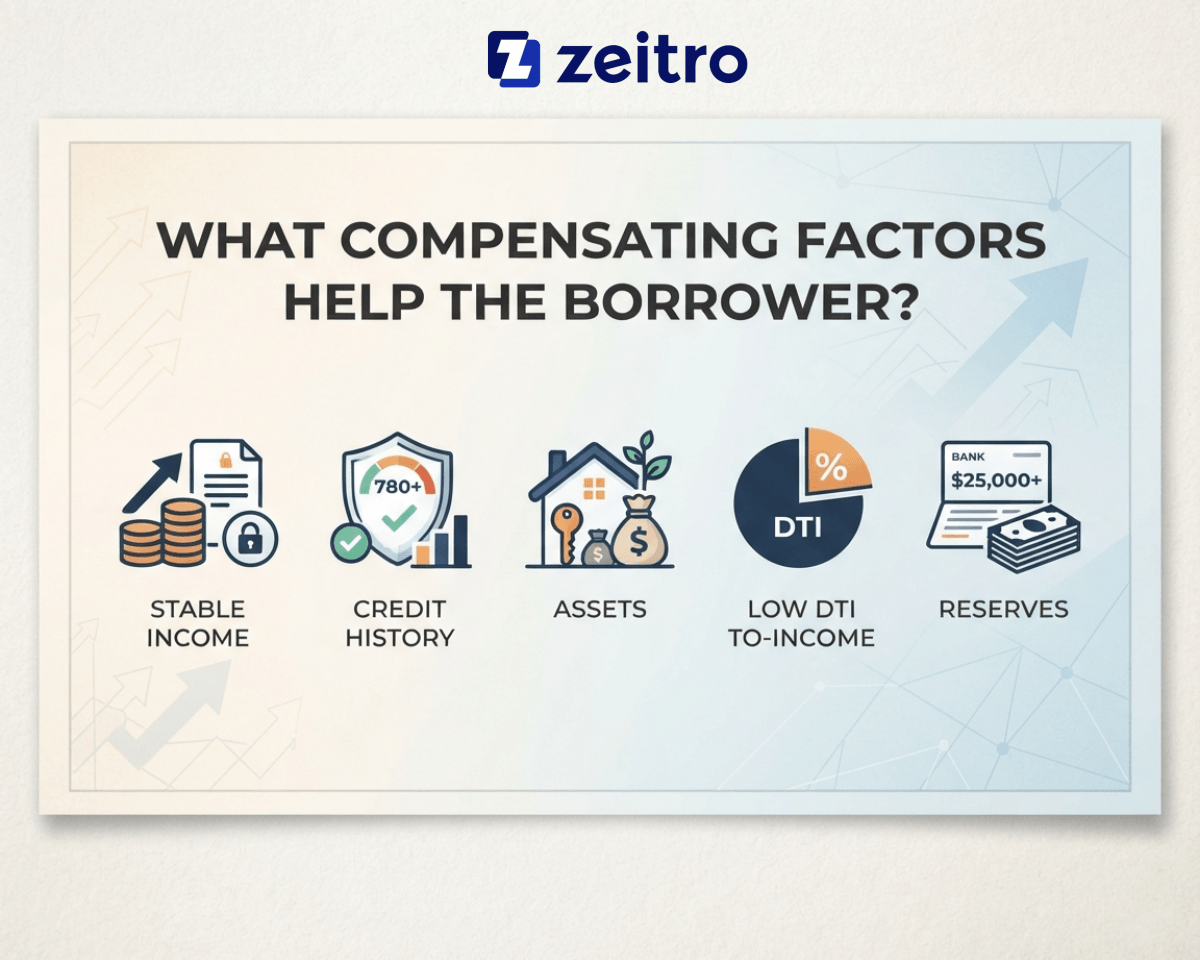
We need this because automation is rigid. If a borrower has a "thin" credit file or a recent life event like a bankruptcy, the computer often defaults to a "Refer" status. Manual underwriting is the secondary path that allows us to use common sense and "compensating factors" to approve a loan that a machine would otherwise ignore.

What is Manual Mortgage Underwriting?

Requirements for Manual Underwriting in Mortgage

Navigating the requirements for a manual file is definitely more demanding than an automated one. Through my experience, I've found that you have to be much more meticulous with the paper trail. Here is what is typically required:

  • Stricter DTI Limits: FHA manual underwriting guidelines set the maximum back-end DTI at 43% with no compensating factors, 47% with one compensating factor, and up to 50% with two or more. The front-end DTI follows similar tiers (31%, 37%, 40%). Automated FHA approvals via TOTAL Scorecard can allow higher DTIs up to 56.9% in some cases, so manual limits are not always stricter but more structured around compensating factors.
  • Verification of Non-Traditional Credit: If there's no FICO score, I have to document 12 months of on-time payments for things like rent, utilities, or even phone bills.
  • Cash Reserves: Lenders usually want to see 1-3 months of "PITI" (Principal, Interest, Taxes, and Insurance) sitting in the bank after closing.
  • Detailed LOX: A "Letter of Explanation" isn't optional here. It's a narrative tool to explain any credit dings or income gaps.
  • Asset Documentation: Every large deposit must be sourced and seasoned. There's no "skipping" the fine print.
Requirements for Manual Underwriting in Mortgage

Process of Manual Mortgage Underwriting

The process is a bit of a marathon, not a sprint. I usually describe it to my clients as a "forensic audit" of their financial life. Here is how it typically unfolds:

  • Initial Application & Trigger: We run the file through the AUS. If it returns a "Refer with Caution," we pivot to the manual path.
  • Comprehensive Data Gathering: I collect full tax returns, W-2s, and every page of bank statements. Nothing is left to chance.
  • The Human Review: The underwriter manually calculates the qualifying income and analyzes credit history patterns.
  • Compensating Factor Analysis: This is the "secret sauce" where the underwriter looks for reasons to say "yes," like a large down payment or significant savings.
  • Final Determination: The underwriter issues a manual approval, a counter-offer, or a denial based on their professional judgment.
Process of Manual Mortgage Underwriting

Pros and Cons of Manual Mortgage Underwriting

Every tool has its place, and manual underwriting is no different. I've seen it save deals, but it also tests everyone's patience.

Benefits:

  • Flexibility for "Non-QM" Borrowers: It's the best way to help self-employed individuals or those with unique income streams.
  • Human Empathy: A human can understand that a medical emergency caused a one-time credit dip. A computer can't.
  • Higher Approval Potential: It opens doors for borrowers who are creditworthy but don't meet "cookie-cutter" standards.

Drawbacks:

  • Slow Turnaround: Let's be real. It takes much longer. We're talking days or weeks instead of minutes.
  • Higher Scrutiny: The "condition list" can be miles long, which can frustrate borrowers.
  • Subjectivity: One underwriter might be more conservative than another, leading to less predictable outcomes.

When is Manual Mortgage Underwriting Done?

In my daily workflow, I don't choose manual underwriting unless I have to. It's typically triggered in specific scenarios that 2026's diverse economy often presents:

  • FHA "Refer" Status: When the automated system doesn't give an "Accept" on an FHA loan, manual is the only way forward.
  • Credit Challenges: This includes borrowers coming out of a Chapter 13 bankruptcy or those with recent foreclosures.
  • Non-Traditional Credit: For borrowers (often younger or new to the US) who simply don't have a credit score.
  • High DTI with Compensating Factors: When the debt ratio exceeds standard limits, but the borrower has massive cash reserves.
  • Complex Income: When a borrower has multiple businesses, and the AUS can't make sense of the 1040s.

Manual Underwriting vs. Automated Underwriting

Efficiency and Speed

The biggest divide is time. In the automated world, I can get a "Conditional Approval" in about the time it takes to brew a coffee. Manual underwriting, however, is notoriously labor-intensive. Traditionally, researching guidelines across different lenders could take me 30 minutes per query. This is why I've started relying on Zeitro Strata AI. It cuts that manual guideline lookup from half an hour down to seconds by cross-checking 100+ investors. It essentially gives manual underwriting the "speed" of an automated system.

Accuracy and Compliance

With automated systems, the "Black Box" does the math, but you don't always know why it rejected a file. In manual underwriting, the risk of human error is high. It's easy to miss a specific lender "overlay." Using tools like Zeitro has been a game-changer for me because it provides full citations. When I'm verifying a complex VA guideline or Non-QM guideline, I get an answer with a link to the source. This reduces manual work by 100% and ensures that when I submit a file, it actually meets the latest 2026 standards.

The "Human Factor" in Decision Making

Automated underwriting is binary—zero or one. Manual underwriting is a conversation. I've found that by using Zeitro, I can save over 7 hours per loan file. That's time I can spend actually talking to my underwriters and explaining the "why" behind a borrower's situation. Instead of getting buried in PDFs and guidelines from lenders like AAA Lending or Greenbox, I use AI to handle the "data" so I can handle the "human" side of the deal.

Zeitro

FAQs About Manual Mortgage Underwriting

Q1. Do lenders still do manual underwriting?

Absolutely. While many big retail banks prefer the ease of automation, many wholesale lenders and specialists, like those in the Non-QM space, rely on manual underwriting to capture the 20-30% of the market that doesn't fit standard criteria.

Q2. What are the benefits of manual underwriting mortgage?

The primary benefit is opportunity. It allows borrowers with high DTI, low credit scores, or complex income to achieve homeownership. It's about looking at the whole person, not just a score.

Q3. What are the disadvantages of manual underwriting?

The "paperwork fatigue" is real. It requires much more documentation, more time (often 20% slower closing times), and can sometimes result in higher interest rates due to the perceived risk.

Q4. What are the fees associated with manual underwriting mortgage?

Generally, the fees are similar to standard loans, but some lenders may charge a slightly higher "Underwriting Fee", ranging from $500 to $1,500, because of the extra man-hours required to review the file.

Conclusion

Manual mortgage underwriting remains a vital pillar of the industry in 2026. It is the bridge between a "no" from a machine and a "yes" for a family. However, as professionals, we can't afford to work the old-fashioned way. The "manual" part should refer to the decision, not the drudgery of searching through 300+ guidelines.

I've found that by integrating tools like Zeitro, I can deliver 2.5x faster pre-qualifications even on complex manual files. Whether you are a broker or a loan officer, your goal is to close loans faster and with more confidence. Don't let manual guidelines slow you down. If you want to see how I save 7+ hours per file while staying 100% compliant, I highly recommend checking it out. It's the smartest way to make "manual" feel "automatic."

People Also Read

Try Zeitro today and transform your loan origination workflow!

Get started free