Written by

Eric
Share this article

.svg)
Subscribe to updates
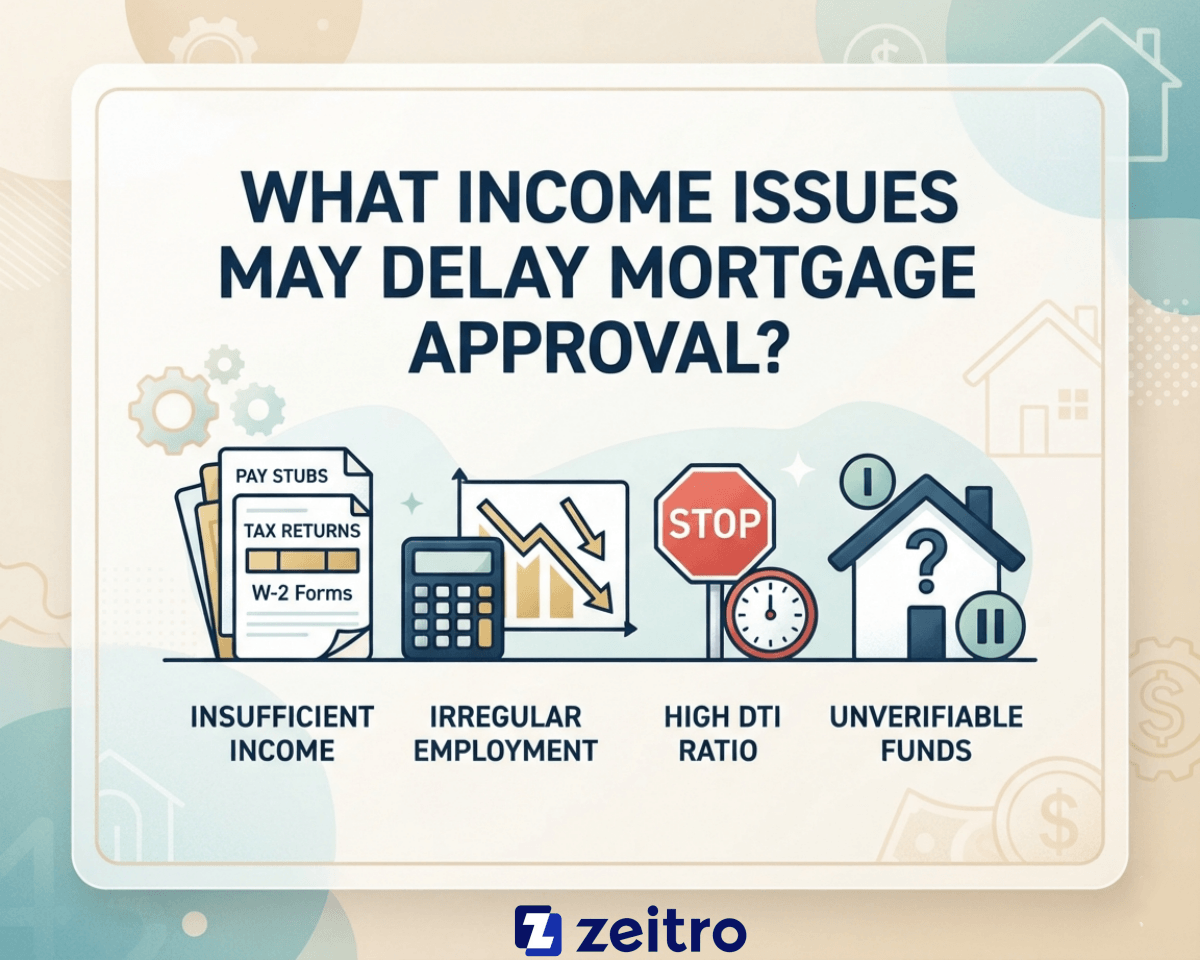
Last week, a client walked into my office baffled after automated underwriting flagged their application. On paper, their bank deposits looked fantastic, yet the desktop underwriter returned an ineligible verdict. That disconnect happens all the time in mortgage lending. Paper wealth does not automatically equal underwriting cash flow. Here is why your earnings might be failing loan guidelines and how we can salvage your approval.
Key Takeaways
- Lender Standards Trump Gross Pay: Agency rules from Fannie Mae and Freddie Mac require stable, verifiable earnings with a reasonable expectation of lasting at least three years.
- Tax Deductions Hurt Borrowing Power: Aggressive write-offs reduce taxable net income, which is the exact figure underwriters evaluate for 1099 independent contractors and small business owners.
- Downbeat Trajectory Triggers Disqualification: Declining bonus, commission, or overtime earnings are either heavily discounted or completely excluded during loan review.
- Alternative Loan Products Fill the Void: When standard conventional or government loan parameters reject your profile, Non-QM options like bank statement programs can rescue the transaction.
Guideline Requirements for Qualifying Income
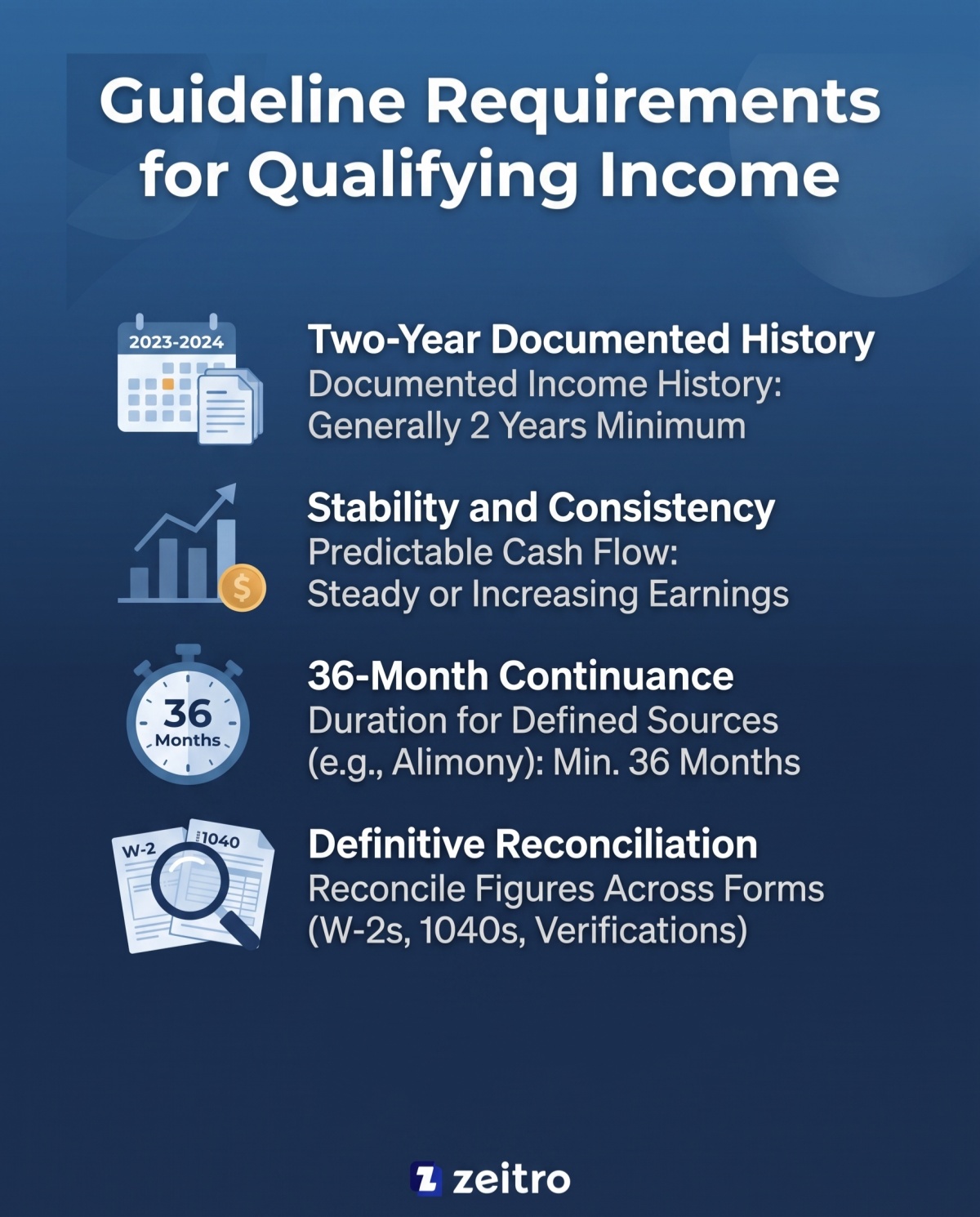
When I review files before submitting them to underwriting, I evaluate documentation through the lens of Fannie Mae, Freddie Mac, and FHA lending handbooks. Underwriters typically do not focus on top-line revenue alone. They prioritize predictable, durable cash flow that satisfies established lending matrices. For your earnings to be approved toward a mortgage, they must pass four foundational checks:
- Documented History: You generally need an uninterrupted two-year track record earning income within the same profession or identical compensation structure.
- Stability and Consistency: Your earnings must be steady or increasing over time. Irregular swings introduce unhedged default risk into automated underwriting algorithms.
- Three-Year Continuance: Income sources with defined expiration dates, such as child support, alimony, or temporary disability, must be verified to continue for at least 36 months post-closing to be fully counted.
- Definitive Verification: Figures must reconcile cleanly across W-2s, 1040 tax transcripts pulled via IRS Form 4506-C, and formal third-party employer verifications.
Note: To quickly verify guidelines, try Zeitro Strata AI, which can also add your lender's agency guidelines.
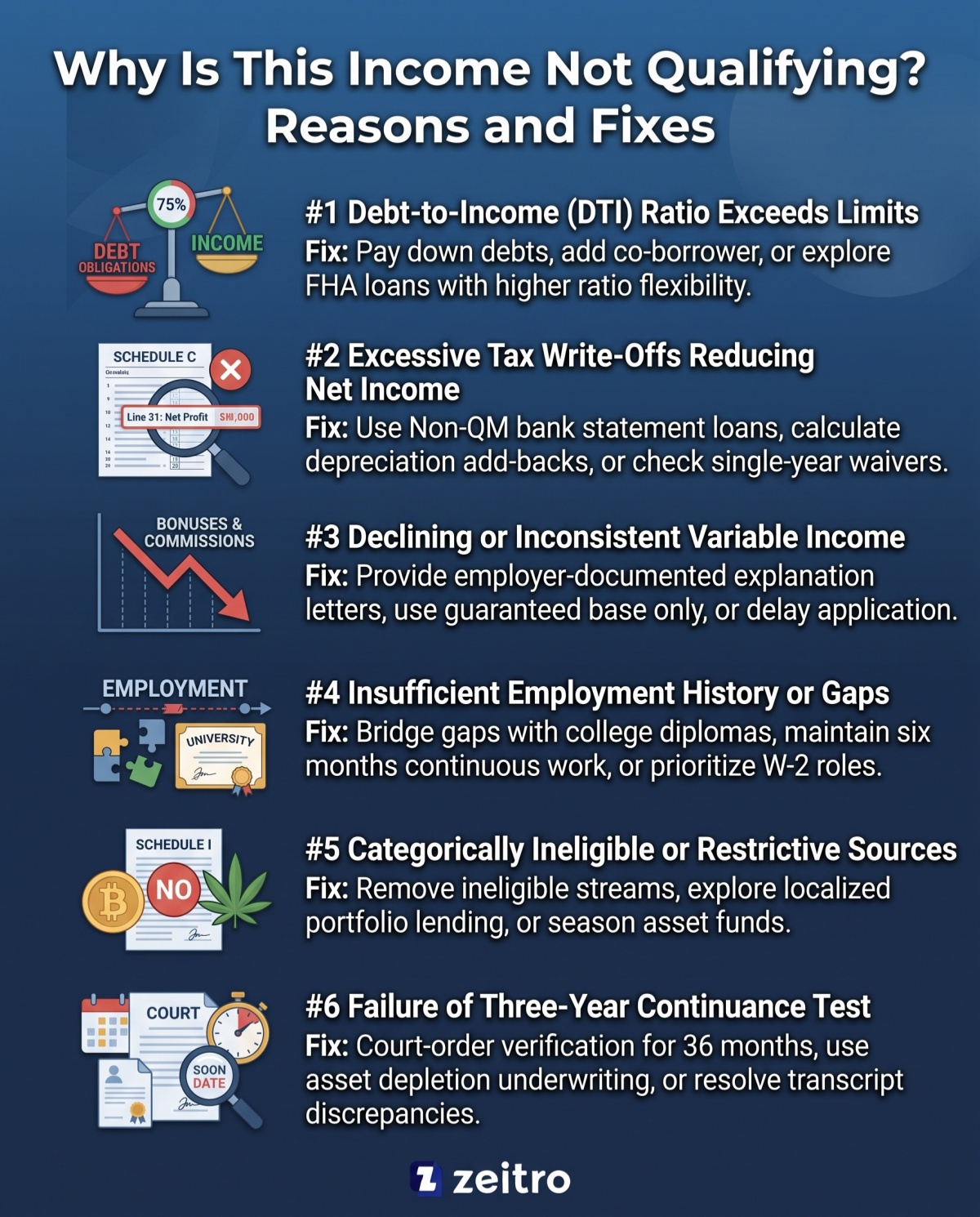
Why Is This Income Not Qualifying? Reasons and Fixes
Over my career, I have seen solid loan files stall out simply because an income source ran afoul of obscure underwriting formulas. Identifying the breakdown is the first step toward fixing it. Here are the six most common culprits behind disqualified income, paired with actionable solutions.
#1 Debt-to-Income (DTI) Ratio Exceeds Program Limits
Your income might be completely legitimate, but if your monthly obligations eat up too much of it, automated systems will reject the file. Conventional guidelines generally cap total debt-to-income (DTI) at 45% to 50%, while many lenders set internal overlays closer to 43%.
When student loans, auto financing, and minimum credit card payments balloon your monthly balance sheet, your qualifying income simply cannot support a new mortgage payment.
How to fix it:
- Pay down revolving credit lines or personal debt to immediately reduce your monthly fixed obligations.
- Add a credit-worthy co-borrower or non-occupant co-signer to incorporate their income into the total household calculation.
- Switch from conventional financing to an FHA loan, which allows total debt-to-income ratios up to 56.99% with automated underwriting approval and strong compensating factors.
#2 Excessive Tax Write-Offs Reducing Self-Employed Net Income
Self-employed borrowers and independent contractors often boast great revenue, but tax strategies designed to minimize Uncle Sam's take work directly against homeownership. Mortgage underwriters do not look at your gross invoices.
They calculate eligibility using adjusted taxable net profit from Schedule C Line 31 or partnership K-1s. If aggressive deductions wipe out your taxable earnings on paper, your qualifying income drops right alongside them.
How to fix it:
- Have your loan officer calculate non-cash paper add-backs, such as depreciation, depletion, and business miles, which can be legally credited back to your qualifying baseline.
- Pivot to a Non-QM bank statement loan, which calculates purchasing capacity based on 12 or 24 months of actual commercial bank deposits rather than tax filings.
- Check if your file qualifies for a single-year tax return waiver via automated underwriting findings if your business has operated successfully for over five years.
#3 Declining or Inconsistent Variable Income (Bonuses, Overtime, Commissions)
Variable pay is subject to strict trend analysis under agency guidelines. When your overtime, bonus, or sales commissions show steady year-over-year gains, underwriters average the past 24 months. However, if your year-to-date earnings or latest W-2 reflect a downward trend, guidelines prohibit averaging.
Underwriters must either downgrade your income to the lower recent figure or exclude that fluctuating income stream entirely from the file.
How to fix it:
- Supply a letter of explanation alongside employer documentation confirming that the dip resulted from a one-time anomaly, like medical leave, and that earnings have stabilized.
- Qualify solely using your guaranteed base salary if your underlying compensation is sufficient to carry the debt without variable bonuses.
- Delay your application until the end of the current fiscal year so your updated documentation confirms an upward earnings recovery.
#4 Insufficient Employment History or Unexplained Gaps
Lenders want reassurance that your earnings are durable, which is why standard guidelines expect a continuous two-year work history. Red flags emerge whenever a borrower takes extended, unexplained career breaks or switches compensation structures abruptly.
Moving from a steady W-2 salaried role to a straight-commission or 1099 freelance role resets your evaluation clock, because underwriters require two full tax cycles to gauge ongoing earning capacity.
How to fix it:
- Bridge an employment gap by providing university diplomas or transcripts, which count toward the two-year requirement if you recently graduated into your field.
- Return to work for at least six uninterrupted months before applying if you experienced a prolonged personal or medical hiatus.
- Transition back into a W-2 salaried position in the same industry to bypass the mandatory waiting period required for independent contractors.
#5 Categorically Ineligible or Restrictive Income Sources
Certain income categories are explicitly barred under federal agency rules regardless of how much cash they generate. For instance, compensation derived from cannabis dispensaries remains ineligible because marijuana is classified as a federal Schedule I substance.
Similarly, lenders cannot qualify borrowers using cryptocurrency payments or draw disbursements without a documented history. However, boarder rent collected from rooms in your primary residence may be eligible if supported by a lease agreement and proof of receipt.
How to fix it:
- Remove the ineligible income stream from the loan application entirely and qualify using standalone compliant earnings or verifiable retirement distributions.
- Explore portfolio lending programs through localized credit unions or private banks that hold loans on their own balance sheets without selling to Fannie Mae.
- Liquidate digital currency assets into conventional cash accounts well ahead of time, ensuring funds are seasoned for at least sixty days.
#6 Failure of the Three-Year Continuance Test & Documentation Gaps
Underwriting rules stipulate that non-employment income must demonstrably continue for at least 36 months past your note date. Child support, alimony, fixed-term annuities, or temporary disability benefits will be dismissed if they are scheduled to terminate sooner.
Furthermore, even valid income fails if paperwork is missing, whether that means unfiled tax schedules, unsigned divorce decrees, or an employer declining to complete a formal verification.
How to fix it:
- Document a consistent six-month history of receipt for child support or alimony while presenting court orders proving payments run for three more years.
- Utilize asset depletion underwriting methods, which calculate monthly qualifying income by dividing your liquid net worth across an eligible multi-year framework.
- Order clean IRS tax transcripts early using Form 4506-C to resolve discrepancies before your file reaches an underwriter's desk.
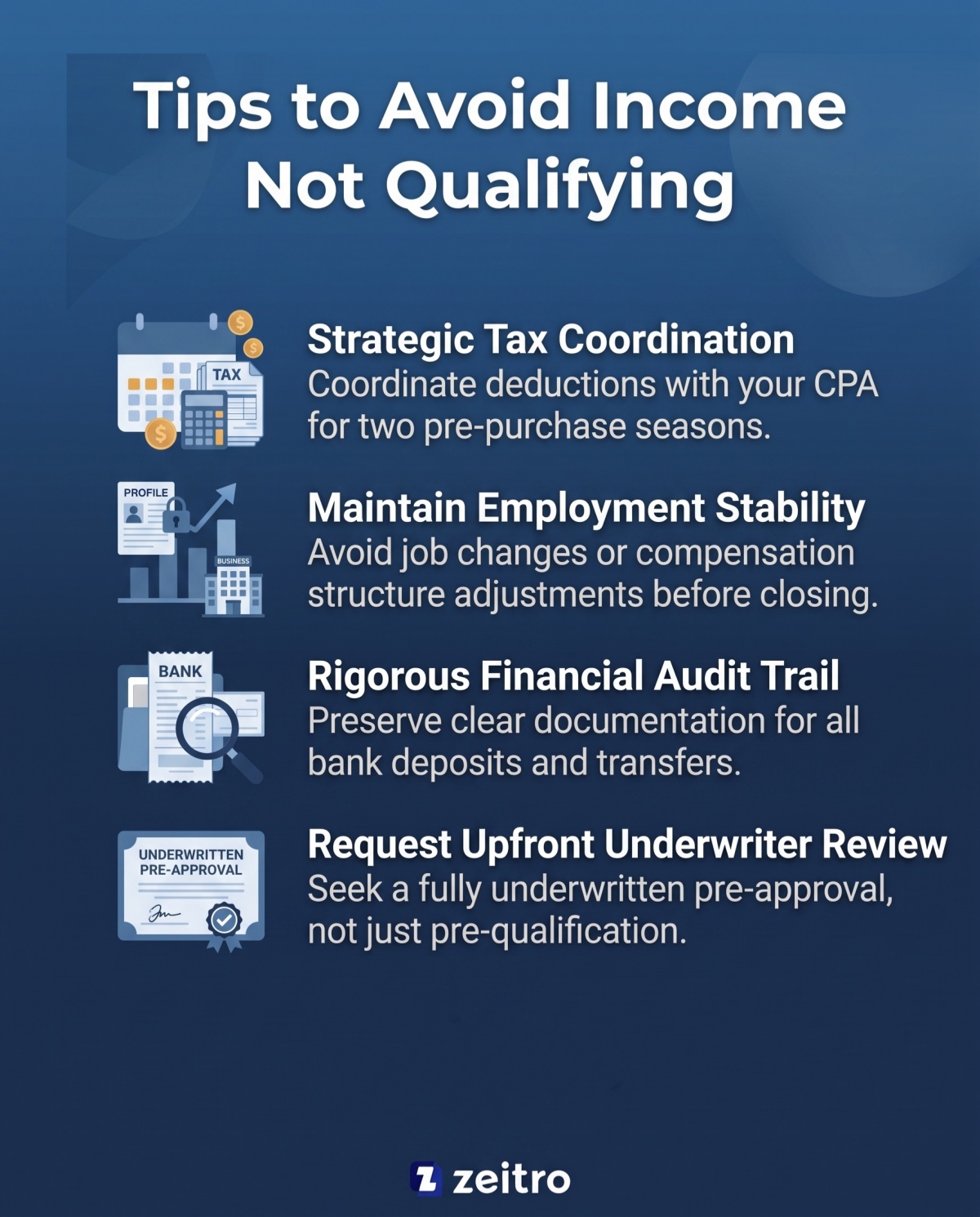
Tips to Avoid Income Not Qualifying
In my experience, preserving your qualifying income is largely about avoiding unforced financial errors before you apply. A few strategic choices made months ahead can protect your borrowing power:
- Coordinate with your CPA before filing: Balance your write-offs against your homebuying targets for the two tax seasons leading up to your purchase.
- Freeze your employment profile: Avoid switching jobs, moving to commission-only compensation, or launching a side venture during the underwriting window.
- Preserve a strict audit trail: Keep clear documentation for all bank deposits, avoiding undocumented cash transfers that underwriters cannot source.
- Request an upfront underwriter review: Ask your loan officer for a fully underwritten pre-approval rather than an automated pre-qualification to catch calculation snags early.
FAQs About Income Not Qualifying
Q1. How is income determined for a mortgage?
Underwriters calculate income differently depending on your employment status.
For salaried W-2 workers, they use gross monthly income before payroll taxes.
For hourly workers with steady schedules, they multiply your hourly wage by your contracted weekly hours.
For variable compensation, overtime, and self-employment, lenders typically review two years of federal tax filings and average the net amounts, applying strict trend evaluations to ensure the revenue stream is dependable and recurring.
Q2. How do mortgage companies verify income?
Lenders rely on a layered verification process. They collect your recent 30-day paystubs and two years of W-2s or 1040s. Then, they cross-examine those files with the IRS using Form 4506-C transcripts. Before final clearance, the processing team orders a written Verification of Employment (VOE) from your employer and performs a verbal check within ten business days of closing to ensure you are still actively employed.
Q3. Why don't I qualify for a mortgage?
Disqualification usually traces back to four foundational underwriting pillars: debt-to-income ratio, credit history, down payment assets, or property condition. Even if you bring home substantial revenue, substantial recurring credit payments, low taxable net income, recent job switches, or an unseasoned employment history can instantly trip up automated underwriting software. Mortgages are approved on risk assessment rules rather than overall wealth or personal bank account balances.
Q4. Do mortgage lenders use gross or net income for self-employed?
For self-employed borrowers, lenders calculate qualification based on adjusted net taxable income, not gross revenue. Underwriters begin with the bottom-line profit reported on Schedule C or corporate returns, then add back non-cash business expenses like depreciation and depletion. However, underwriters begin with the bottom-line profit reported on Schedule C or corporate returns, then add back non-cash business expenses like depreciation and depletion to determine the final adjusted net profit used for automated loan approval.
Final Word
Receiving news that your income does not qualify can feel discouraging, but it rarely means your journey to homeownership is over. In many cases, it simply highlights a mismatch between standard agency guidelines and your personal financial layout.
Review your tax structures, address lingering short-term liabilities, and partner with a knowledgeable mortgage professional who can identify workarounds or alternative lending programs tailored to your exact scenario.
People Also Read
- 1099 vs W2: What's the Difference in 2026? Full Guide
- What Documents Should I Request Upfront for a Mortgage?
- Mortgage Underwriting Condition: What and How to Clear?
- Max DTI for Mortgage: Limits by Loan Type
- Max LTV: Check Maximum Loan-to-Value Ratios By Loan Types

![[Tips for Loan Officers] How Can I Lower Borrower DTI?](https://cdn.prod.website-files.com/6731bc6e813a541b54c30b10/6aa3b89e281a639e7a5c6fca_lower-debt-to-income-ratio-banner.jpg)