
Written by

Eric
Share this article

.svg)
Subscribe to updates
Facing today's elevated home prices and 2026 mortgage rates sitting near 6.5%, I hear the same anxiety from homebuyers every day: "Do I actually make enough to get approved?"
As a loan professional, I always tell my clients that understanding the exact mortgage income requirements and lender guidelines before applying is your strongest weapon. Let me take you behind the underwriter's desk to reveal exactly how we evaluate your earnings.
Key Takeaways
- Loan types matter: Conventional, FHA, and Non-QM loans each weigh your earnings differently. What gets denied by one program might easily be approved by another.
- It's not just what you make: Underwriters scrutinize your Debt-to-Income (DTI) ratio and residual income just as closely as the gross pay on your check.
- Calculations are complex: The 2026 guidelines around self-employment and variable pay are incredibly strict. I highly recommend using specialized tools like Zeitro Strata or Zeitro Mortgage Income Calculator to verify your actual qualifying numbers rather than just guessing.
Mortgage Income Requirements By Loan Types
When I sit down with a new client, the first thing we look at isn't just their salary—it's matching that income profile to the right loan program.
- Conventional Loans: Backed by Fannie Mae and Freddie Mac, these are the industry gold standard. They generally demand a tighter back-end DTI (usually capped around 45% to 50%) and a front-end DTI of no more than 28%, and rely heavily on consistent, traditional W-2 income.
- FHA & VA Loans: If your debt is a bit higher, government-backed loans are much more forgiving. FHA loans are fantastic for moderate earners with higher debt loads, while VA loans uniquely focus on "residual income", ensuring veterans actually have enough cash left over after paying the bills.
- Non-QM Loans: This is where the mortgage industry is seeing a massive shift in 2026. For freelancers, gig workers, and real estate investors, standard W-2s just don't tell the whole story. Non-QM loans allow us to use 12 to 24 months of Bank Statements or 1099 forms to prove actual cash flow instead of traditional tax returns.
💡 Pro Tip: Since mortgage guidelines are constantly changing and extremely complex in 2026, using automated verification tools like Zeitro Strata can help both borrowers and loan officers verify income accurately and instantly, saving weeks of back-and-forth.

Key Income Metrics to Learn
Underwriters don't look at your bank account the same way you do. We rely on very specific mathematical metrics to decide your fate.
- Gross Monthly Income: This is the big one. We base your loan qualifications on your pre-tax income, not the net amount deposited into your checking account after taxes and health insurance are stripped out.
- Debt-to-Income (DTI) Ratio: I evaluate two numbers here. The "front-end" DTI is simply your proposed housing expense divided by your gross income. The "back-end" DTI includes all other monthly obligations like car loans, credit cards, and student debt.
- Residual Income: Think of this as your real-world survival money. Especially critical for VA loans, this metric calculates the actual dollar amount remaining in your pocket each month after all debts and living expenses are covered.
Key Income Rules to Learn
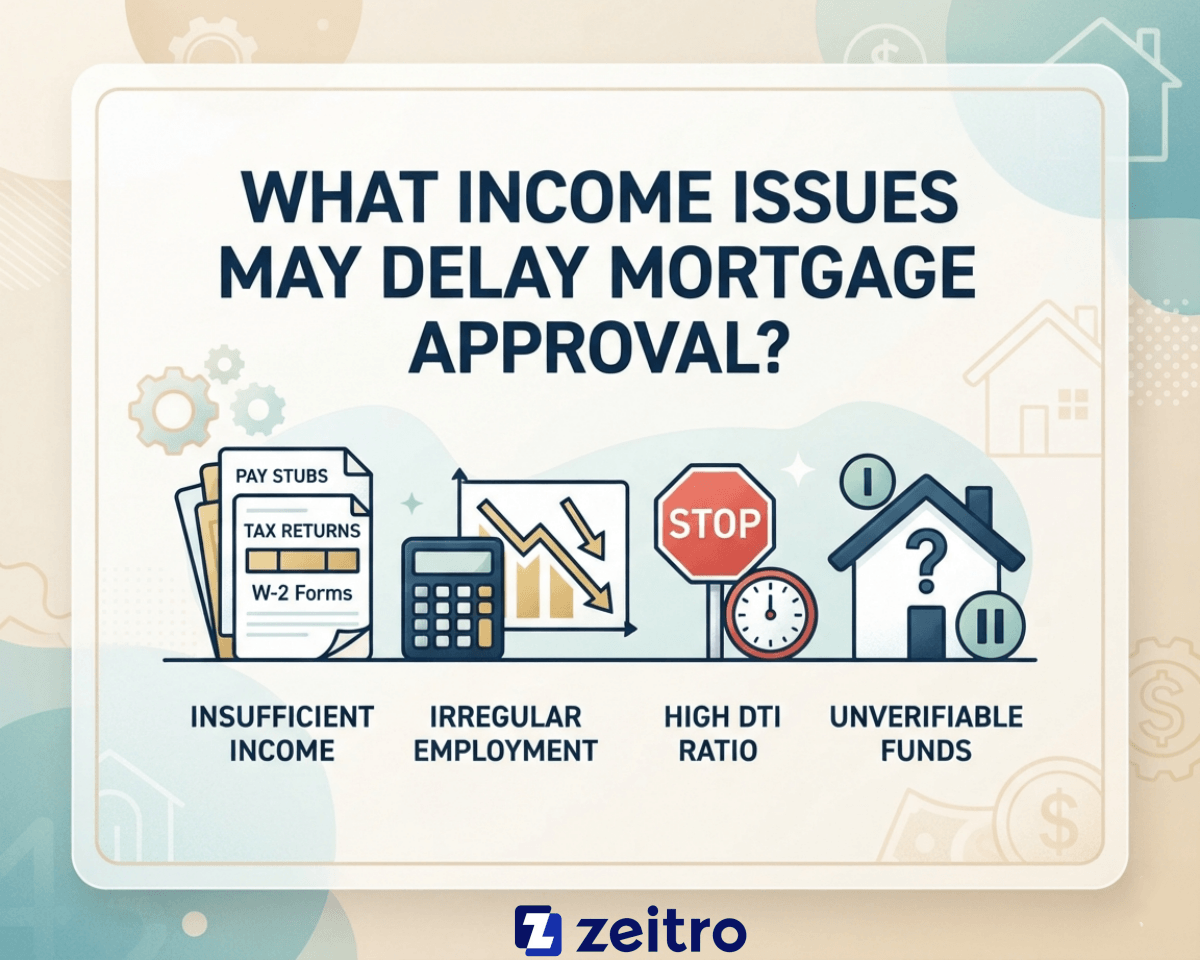
Beyond the raw numbers, the quality of your earnings is everything. In my experience, this is exactly where most pre-approvals fall apart if you aren't prepared.
- The 2-Year Rule: We generally need to see a stable, two-year history in the same line of work. Job hopping isn't a dealbreaker if it's within the same industry, but a sudden career pivot right before applying will raise red flags.
- Income Stability & Continuity: Relying on bonuses, commissions, or overtime to boost your budget? You must prove you've received this extra money consistently over the last 24 months, and your employer needs to confirm it's likely to continue.
- Self-Employed Hurdles: If you own a business, we look at your net income after all those clever tax write-offs. Many entrepreneurs aggressively write down their business income to save on taxes, only to discover it accidentally disqualifies them for a traditional mortgage.

How to Calculate Your Income Required for a Mortgage?
I rarely encourage buyers to do these calculations entirely by hand. Figuring out exact DTI ratios while factoring in projected property taxes, homeowner's association (HOA) fees, and private mortgage insurance (PMI) gets messy fast.
Instead, I suggest running your numbers through trusted online calculators first to get a solid baseline:
- Mortgage Affordability Calculator: This is my go-to recommendation for clients who want to run highly detailed scenarios with various tax and insurance inputs.
- NerdWallet Calculator: If you just want a quick, clean, and incredibly user-friendly interface to evaluate your buying power, start here.
Keep in mind, these estimates are just a starting point. Your final approved amount will shift based on your personal credit score and the exact interest rate we lock in.
Also Read:
- Borrower Income Analysis: Ultimate Guide for Loan Officers
- What Income Can Be Used for Qualification? Learn Now
Examples of Income Required for a Mortgage
To give you a realistic picture, I've mapped out some common loan amounts.
Disclaimer: These estimates assume a 2026 average interest rate of 6.5%, a 20% down payment on a 30-year fixed loan, and a target front-end DTI of 28%. Property taxes and insurance are estimated national averages.

Seeing the numbers laid out like this usually helps my clients realize exactly how their target home price aligns with their current salary.
Mortgage Income Documents Required
The underwriting phase is essentially a massive audit of your financial life. Having your paperwork perfectly organized prevents frustrating closing delays. Here is exactly what I ask my clients to pull together:
- For W-2 Employees: I need your most recent 30 days of pay stubs, plus your W-2 forms and full federal tax returns from the past two years.
- For Self-Employed/Non-QM: If we are skipping tax returns, I'll need your 1099 forms, 12 to 24 months of complete business or personal bank statements, and a recent Profit & Loss (P&L) statement prepared by your accountant.
- General Assets: Regardless of your job type, expect to provide the last two months of bank statements to prove you have the required funds for closing.
Always ensure every document is fully up-to-date and completely unaltered. Missing pages are the number one cause of delays.
FAQs About Mortgage Income Requirements
Q1. How much loan can I qualify for based on income?
Your exact loan limit depends heavily on your Debt-to-Income (DTI) ratio. Most lenders allow a maximum DTI of 43% to 50%, meaning your total monthly debts plus your new mortgage payment cannot exceed half of your gross income.
Q2. What is the minimum income to get a mortgage?
There is actually no legally mandated minimum income required to buy a house. As long as your earnings comfortably cover the monthly payment while keeping your DTI within guidelines, you can qualify. Lower-income buyers often succeed using FHA or USDA loans.
Q3. Can I use bonus, overtime, or commission to qualify?
Yes, but you have to prove a two-year track record of receiving it. We average that extra income over the last 24 months, and your employer must officially indicate that this variable pay is highly likely to continue.
Q4. How do self-employed borrowers prove income?
Traditionally, we analyze your last two years of Tax Returns to find your net qualifying income. However, by utilizing a Non-QM loan, you can bypass tax returns entirely and use 12 to 24 months of business bank statements to prove your real cash flow.
Q5. Can I use rental income or a co-borrower to boost my qualifications?
Absolutely. Adding a co-borrower combines your incomes, which significantly lowers your DTI. Similarly, documented rental income from an investment property or a compliant ADU can be legally added to your gross income to boost your borrowing power.
Final Word
Proving your income is arguably the most critical, and stressful, part of the entire home-buying journey. One simple miscalculation on variable pay or self-employed deductions can easily derail a purchase. Whether you are a homebuyer trying to figure out your realistic budget, or a loan officer wrestling with complex 2026 guidelines, getting the math right on day one saves everyone a massive amount of heartache.
Ready to streamline your mortgage process? Say goodbye to manual calculations and complex guideline checks. Visit Zeitro Strata to verify income securely, accurately, and instantly.
People Also Read
- Ultimate Guide: How to Calculate LTV Ratio for Mortgage?
- [Guide] How to Calculate DTI Ratio for Mortgage?
- Max DTI for Mortgage: Requirements By Loan Types
- Max LTV: Check Maximum Loan-to-Value Ratios By Loan Types
- Best Mortgage Pipeline Management Software: Streamline Workflow
- Ultimate Guide: How to Calculate Net Income for a Mortgage?
- 2026 Guide: How to Calculate Gross Income for a Mortgage
- Income Needed for Mortgage: Methods, Examples & Requirements
- Mortgage Income Verification Guide for Loan Officers

![[Solved] What Red Flags Would a Mortgage Underwriter See?](https://cdn.prod.website-files.com/6731bc6e813a541b54c30b10/6aa24ca70b95e62dd7bbeefd_red-flags-mortgage-underwriting-banner.png)