Written by

Eric
Share this article

.svg)
Subscribe to updates
Last Checked and Updated on August, 2026
I still remember the phone call. I'd found what I thought was the perfect condo for a client, we were three weeks into the process, and then the loan officer said the words nobody wants to hear: "The building is non-warrantable." Fannie Mae wouldn't touch it. The buyer's first reaction was panic — she assumed the deal was dead.
It wasn't. It just meant we needed a different kind of lender.
That's the thing most people don't realize about a non-warrantable condo: it's not a red flag on the unit itself. It's a label on the building. And there's a whole corner of the mortgage industry — portfolio lenders and Non-QM shops — built specifically to finance these properties. You just have to know where to look.
Instead of cold-calling banks one by one, you can let Bluerate do the matching for you. Its system connects you with a local loan officer who already knows how to underwrite these files, and the consultation is free. Here's a closer look at the lenders worth calling this year, plus what changed in the rules that got you into this situation in the first place.
Key Takeaways
- Traditional lenders reject non-warrantable condos because they don't meet Fannie Mae or Freddie Mac guidelines.
- You'll need specialized portfolio or Non-QM lenders to finance these unique properties.
- Expect slightly higher down payments and interest rates compared to standard mortgages.
- Finding a local expert is crucial. Use Bluerate AI Agent's smart matching to quickly connect with top-rated loan officers near you.
- New 2026 guideline changes (more on this below) mean more buildings are landing in non-warrantable territory than in past years, even ones that would have qualified in 2025.
What is a Non-Warrantable Condo Lender?
When a condo project doesn't check every box Fannie Mae or Freddie Mac requires — think reserve funding, insurance, ownership concentration, or pending lawsuits — the whole building gets labeled non-warrantable. It has nothing to do with your credit or income. A non-warrantable condo lender is simply a bank or private lender that offers Non-QM (Non-Qualified Mortgage) or portfolio loans instead of loans meant to be sold to the government-backed agencies.
Because these lenders hold the mortgage on their own books rather than selling it off, they get to write their own underwriting rules. That flexibility is exactly what makes financing possible. Millions of these units change hands every year — you just need an institution that's comfortable keeping the loan.
2026 Fannie Mae and Freddie Mac Rule Changes You Should Know About
Here's something worth flagging before we get into lender picks: the rules around condo warrantability shifted significantly this year, and a lot of older articles on this topic are already out of date.
On March 18, 2026, Fannie Mae and Freddie Mac rolled out coordinated updates that reshape how condo projects get reviewed. A few changes matter most for buyers:
- Reserve requirements jumped from 10% to 15% of the HOA's annual budget. Associations that were scraping by on thinner reserves may now fail the review outright.
- A $50,000 per-unit insurance deductible cap took effect July 1, 2026. If the building's master policy carries a higher deductible, the project is treated as non-warrantable regardless of anything else.
- Limited Review is being phased out starting August 3, 2026, which previously covered roughly 40% of condo transactions through a faster, lighter-touch process.
- The old 50% investor-concentration rule was relaxed for established projects. A building with more renters than owner-occupants isn't automatically disqualified anymore, though newer or under-construction projects still face tighter scrutiny, and individual lenders can still apply their own stricter overlays.
- Single-owner concentration limits are more nuanced now. In buildings with 21 or more units, no single entity can own more than 20% of them. In smaller buildings of 5 to 20 units, no one person can own more than two units.
Practically speaking, this means a condo that was financeable through conventional channels last year could be non-warrantable today, and vice versa. It's worth asking your lender to run the building through current guidelines rather than relying on what you read (or what a previous buyer was told) even a few months ago.
Typical Non-Warrantable Loan Requirements
Since these lenders are taking on more risk, their underwriting looks a bit different from a standard conventional file. Based on what I've seen across the market, here's what to prepare for.
Also Read: Non-Warrantable Condo Guidelines: Verify Eligibility in Seconds
- Higher down payment: 3% down isn't happening here. Expect 10% to 20% for a primary home, and up to 25% to 30% on an investment property.
- Solid credit score: Most programs want 680 or above, though a few will work with you lower if your reserves and down payment are strong.
- Bigger cash reserves: Lenders generally want to see several months of mortgage payments sitting in savings, since a surprise HOA special assessment is always a risk with these buildings.
- A rate premium: As of late August 2026, the average conventional 30-year rate is hovering around 6.5% to 6.8%, according to Freddie Mac's weekly survey. Non-warrantable pricing typically runs about 0.5 to 1.5 percentage points above that, so figure roughly 7% to 8.5% depending on your credit and the building's specific issues.
- Jumbo balances need extra scrutiny: If you're financing a non-warrantable condo above the conforming loan limit — say, $1 million or more — expect lenders to cap the loan-to-value ratio more tightly, often around 70%, even if you'd otherwise qualify for a smaller loan at a higher LTV.

Condotels: A Special Case Worth Knowing About
If your building operates more like a hotel — front desk, daily housekeeping, a rental program run by management — you're not just dealing with a non-warrantable condo. You're dealing with a condotel, and the rules get tighter still.
Most condotel programs cap financing around 60% to 75% loan-to-value, with the lower end reserved for investment purchases. Down payments commonly run 25% for a primary or second home and up to 40% for an investment unit. Lenders also tend to ask for a full year of reserves, and many investors lean on a DSCR loan to qualify — more on that next.
What About DSCR Loans for Condo Investors?
A Debt Service Coverage Ratio (DSCR) loan looks at the property's rental income instead of your personal paycheck. If the projected rent covers the mortgage payment, you can often qualify without tax returns or W-2s at all.
This matters a lot for non-warrantable condos and condotels, since these units are frequently bought as rentals in the first place. Several of the lenders below, including Deephaven, run active DSCR programs. If you want the full breakdown of how these loans are priced and who offers the strongest terms right now, our guide to DSCR loan lenders goes deeper.
6 Best Non-Warrantable Condo Lenders Near Me
While the companies below are fantastic national players, having a local loan officer who understands your specific building's HOA quirks is a game changer.
Angel Oak Mortgage Solutions
Suitable for: Best for real estate investors and self-employed buyers seeking flexible Non-QM options.
NMLS: #1160240
Angel Oak is a true heavyweight in the alternative lending space. Over the years, they've built a stellar reputation by focusing almost entirely on Non-QM loans, meaning they aren't scared off by unconventional borrower profiles or tricky property types. Whether you're a freelancer or an investor, they have a solution.
Their dedicated non-warrantable condo loan program is a lifesaver. Because they manage a massive portfolio of these specialized mortgages, their underwriters are highly skilled at navigating complex HOA documents, pending litigations, and high rental concentrations that make traditional banks run away.

Pros:
- Very fast underwriting times tailored specifically to non-warrantable projects.
- Gladly accepts buildings with high investor or rental unit ratios.
- Flexible income verification, including bank statement loans for freelancers.
- Primary residence down payments can sometimes be as low as 10%.
- Excellent customer support with a broad network of local representatives.
Cons:
- Interest rates can be noticeably higher than standard conventional options.
- Stricter cash reserve requirements, especially if buying an investment property.
Deephaven Mortgage
Suitable for: Best for borrowers needing innovative portfolio products and Expanded-Prime loans.
NMLS: #958425
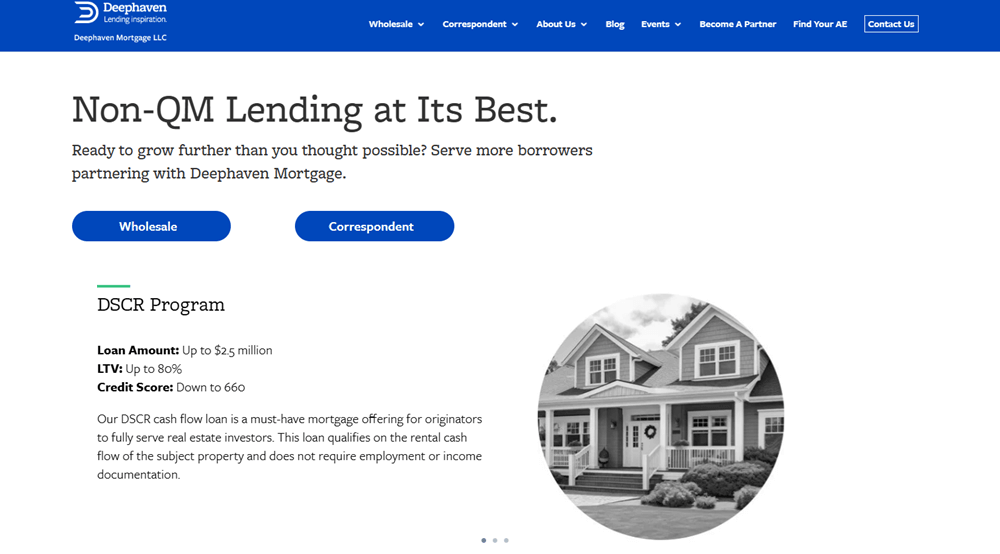
Deephaven Mortgage was founded with a clear mission: to rebuild the non-government mortgage market. They are pioneers in the Non-QM sector, offering common-sense underwriting that looks at the big picture rather than just checking rigid boxes.
When it comes to non-warrantable condos, their Expanded-Prime program truly shines. I love how they evaluate the actual risk of the building instead of immediately denying the file over a technicality like single-entity ownership. They are heavily focused on serving the underserved, making them a fantastic ally.
Pros:
- Outstanding Expanded-Prime product for borrowers who barely miss traditional guidelines.
- Very friendly toward real estate investors utilizing DSCR (Debt Service Coverage Ratio) loans.
- Smooth digital portal makes the application process much less stressful.
- Offers stand-alone second liens, allowing you to tap equity later.
- Strong appetite for complex and unique property scenarios.
Cons:
- Minimum credit score requirements can be rigid depending on the specific program.
- Not directly available in every single state.
First National Bank of America (FNBA)
Suitable for: Best for buyers with past credit events or those utilizing ITINs.
NMLS: #413209
Since 1955, First National Bank of America has been doing business differently. They started as a local Michigan bank and grew into a nationwide force by refusing to conform to the standard banking mold. FNBA prides itself on providing alternative mortgage financing to folks who don't fit the typical cookie-cutter profile.
Their non-warrantable condo financing is robust because they are a true portfolio lender. They literally hold the loans they originate. This gives them the ultimate final say, allowing them to finance unique properties and work with buyers who might have past credit hiccups, bankruptcies, or who use an ITIN.

Pros:
- True portfolio lender, meaning decisions stay entirely in-house.
- Extremely forgiving with past credit events or thin credit histories.
- Open to ITIN borrowers, which is incredibly rare in the condo space.
- Finances other unique properties like condotels and mobile homes.
- Operates securely across all 50 states.
Cons:
- Can carry hefty origination fees depending on your risk profile.
- You might need a much larger down payment if your credit score is heavily bruised.
PrimeLending
Suitable for: Best for buyers seeking a streamlined, highly digital application experience with an established national bank.
NMLS: #13649
PrimeLending, a PlainsCapital Company, is a massive nationwide lender with nearly four decades of experience. While they offer standard government-backed loans, their robust portfolio division allows them to fund deals that traditional lenders turn away.
What makes PrimeLending stand out in the non-warrantable space is their incredible technology and efficiency. They boast a 97% overall customer satisfaction rating because they utilize advanced validation tools to speed up underwriting. If your condo building has minor HOA compliance issues, their experienced local loan officers usually know how to push the file across the finish line smoothly.

Pros:
- Extremely fast processing and underwriting thanks to top-tier digital tools.
- Massive network of highly rated loan officers accessible locally.
- 97% overall borrower satisfaction rating in recent industry surveys.
- Wide variety of loan options, including renovation financing for older condos.
- Seamless communication from application all the way to closing.
Cons:
- They might be more conservative with severe non-warrantable issues, like active litigation.
- Rates may not be as competitive as specialized purely Non-QM lenders.
The Federal Savings Bank
Suitable for: Best for veterans, first-time homebuyers, and buyers wanting a true federally chartered bank experience.
NMLS: #411500
The Federal Savings Bank is the privately held, veteran-owned and operated federally chartered bank in America. They focus heavily on educating their clients and controlling the entire lending timeline, from processing to writing the final check at the closing table.
As a federally chartered bank, they can originate loans nationwide, subject to state licensing. This gives them immense power to fund non-warrantable condo purchases quickly. They are deeply experienced with complex condo questionnaires and are exceptionally good at helping veterans navigate non-traditional property types.

Pros:
- Veteran-owned with a deep understanding of VA lending and unique property overlaps.
- Complete in-house control over underwriting and closing means fewer delays.
- Federally chartered, allowing originations in all 50 states seamlessly.
- Very responsive loan officers who prioritize borrower education.
- Strong secondary investor relationships offer diverse loan options.
Cons:
- Large corporate structure can sometimes feel less personalized.
- Not every loan officer specializes exclusively in non-warrantable properties, so matching is key.
Hurst Lending
Suitable for: Best for buyers who need aggressive, short-term solutions like bridge loans or cash offers to win a bidding war.
NMLS: #267051
Based in Dallas, Texas, Hurst Lending is a family-managed business with deep roots in real estate investing. They are completely dedicated to reinventing the home loan process by offering innovative products that solve real-world buyer problems.
If you're eyeing a non-warrantable condo in a competitive market, their "Dominate with a Cash Offer" program is a secret weapon. They can provide short-term portfolio funds to help you secure the property quickly, even if the HOA is a mess. You can then stabilize the investment or refinance later. It's perfect for aggressive investors or desperate homebuyers.

Pros:
- Incredible short-term bridge loans and cash-offer programs.
- Investor-friendly mindset created by founders who invest themselves.
- Fast, common-sense underwriting that ignores traditional red tape.
- Great for buying a non-warrantable unit before selling your current home.
- Highly personalized, family-business customer service feel.
Cons:
- Only licensed in a handful of states (mostly TX, CO, FL, GA, etc.).
- Short-term portfolio solutions carry higher interest rates and origination costs.
Common Reasons for Non-Warrantable Status
Why did your dream condo get slapped with this label? Based on my time navigating the real estate market, it usually boils down to the building's HOA structure. Here are the most frequent culprits:
- Investor-Heavy Complexes: If over 50% of units are rented out rather than owner-occupied, it's deemed too risky.
- Concentrated Ownership: When a single person or investment group owns more than 20% of the units.
- Condotels & Short-Term Rentals: Buildings operating like hotels, with front desks or heavy Airbnb activity, are strictly prohibited.
- Excessive Commercial Space: If ground-floor shops or offices take up more than 35% of the total square footage, traditional banks walk away.
- Pending HOA Litigation: If the building is involved in litigation related to safety, structural soundness, habitability, or functional use, conventional lenders will typically reject it.
Also Read:
- [Explained] What is a Warrantable Condo for Homebuyers?
- Warrantable vs Non-Warrantable Condo: What's the Difference?
FAQs About Non-Warrantable Condo Loans
Q1. How to finance a non-warrantable condo?
The best way to finance this type of property is to bypass big-box traditional banks and find a Non-QM or portfolio lender. These institutions use their own money, so they don't have to follow strict government-backed rules.
To secure a non-warrantable condo loan, you should:
- Save up for a larger down payment (usually 10-20%).
- Keep your credit score in solid shape.
- Gather the complete HOA condo questionnaire early.
- Work with a specialized mortgage broker or use a matching platform to find a local expert.
Q2. Is a non-warrantable condo a bad investment?
Not necessarily. In fact, many real estate investors specifically hunt for these properties because they face less buyer competition and often carry a lower purchase price.
However, keep in mind:
- Your initial financing costs will be slightly higher.
- Reselling the property can take longer since your future buyer will also face financing hurdles.
- Rental yields are often fantastic, compensating for the lack of liquidity.
Q3. What is the minimum down payment for a non-warrantable condo?
While conventional loans might let you squeak by with 3% to 5% down, you should expect a higher barrier to entry here. Because the lender cannot sell the loan on the secondary market, they need you to have more skin in the game.
Typically, you will need:
- 10% to 20% down for a primary residence.
- 20% to 25% down for an investment property.
- Proof of cash reserves in the bank to cover several months of expenses.
Q4. Are interest rates higher for non-warrantable condos?
Yes, you should expect to pay a premium on your interest rate. Lenders price their loans based on risk. Since non-warrantable properties carry higher default risks and cannot be sold to Fannie Mae or Freddie Mac, the lender absorbs that burden.
Generally, you will see rates that are:
- About 0.5% to 1.5% higher than standard conventional rates.
- Sometimes offered as Adjustable-Rate Mortgages (ARMs) rather than 30-year fixed terms.
Q5. Can a non-warrantable condo become warrantable?
Absolutely. A building's status isn't permanent. It changes as the financial and physical realities of the complex evolve. I've seen many buyers purchase a unit under Non-QM terms and refinance into a cheaper conventional loan a few years later.
A building can become warrantable if:
- The HOA settles its active legal disputes.
- The ratio of owner-occupied units rises above 50%.
- A single investor sells off units so they own less than 20% of the building.
Q6. How can I check if a condo is on Fannie Mae's "do not lend" list?
Fannie Mae maintains an internal Condo Project Manager system that flags ineligible buildings, sometimes called the "blacklist," but it's only accessible to approved lenders — you can't look it up yourself. The fastest way to find out is to ask your loan officer to run the building's address through the system, or request the HOA's most recent condo questionnaire directly.
Q7. Can I get a reverse mortgage on a non-warrantable condo?
Usually not through a standard HECM (Home Equity Conversion Mortgage), since FHA requires the condo project to be on its approved list. If your building is non-warrantable, you'd generally need to look at a proprietary (non-FHA) reverse mortgage product instead, which has its own eligibility rules and is offered by a smaller pool of lenders.
Conclusion
Finding out your condo is non-warrantable feels like a gut punch, but it's rarely a dead end. With the right portfolio lender, and an understanding of how the 2026 guideline changes affect your specific building, you can still close the deal and get your keys.
The lenders worth calling this year: Angel Oak Mortgage Solutions, Deephaven Mortgage, First National Bank of America, PrimeLending, The Federal Savings Bank, and Hurst Lending.
Matching your building's specific quirks to the right lender takes time you probably don't have. That's why I'd point you toward Bluerate — its free smart matching tool connects you with an experienced local loan officer in minutes, someone who already knows how to get a file like yours approved.
People Also Read
- Best USDA Loan Lenders: Top-Rated List
- Best DSCR Loan Lenders: Which to Choose from?
- Best No Income Verification Mortgage Lenders

![[Tips for Loan Officers] How Can I Lower Borrower DTI?](https://cdn.prod.website-files.com/6731bc6e813a541b54c30b10/6aa3b89e281a639e7a5c6fca_lower-debt-to-income-ratio-banner.jpg)